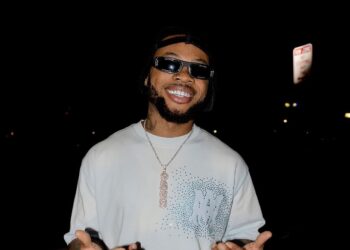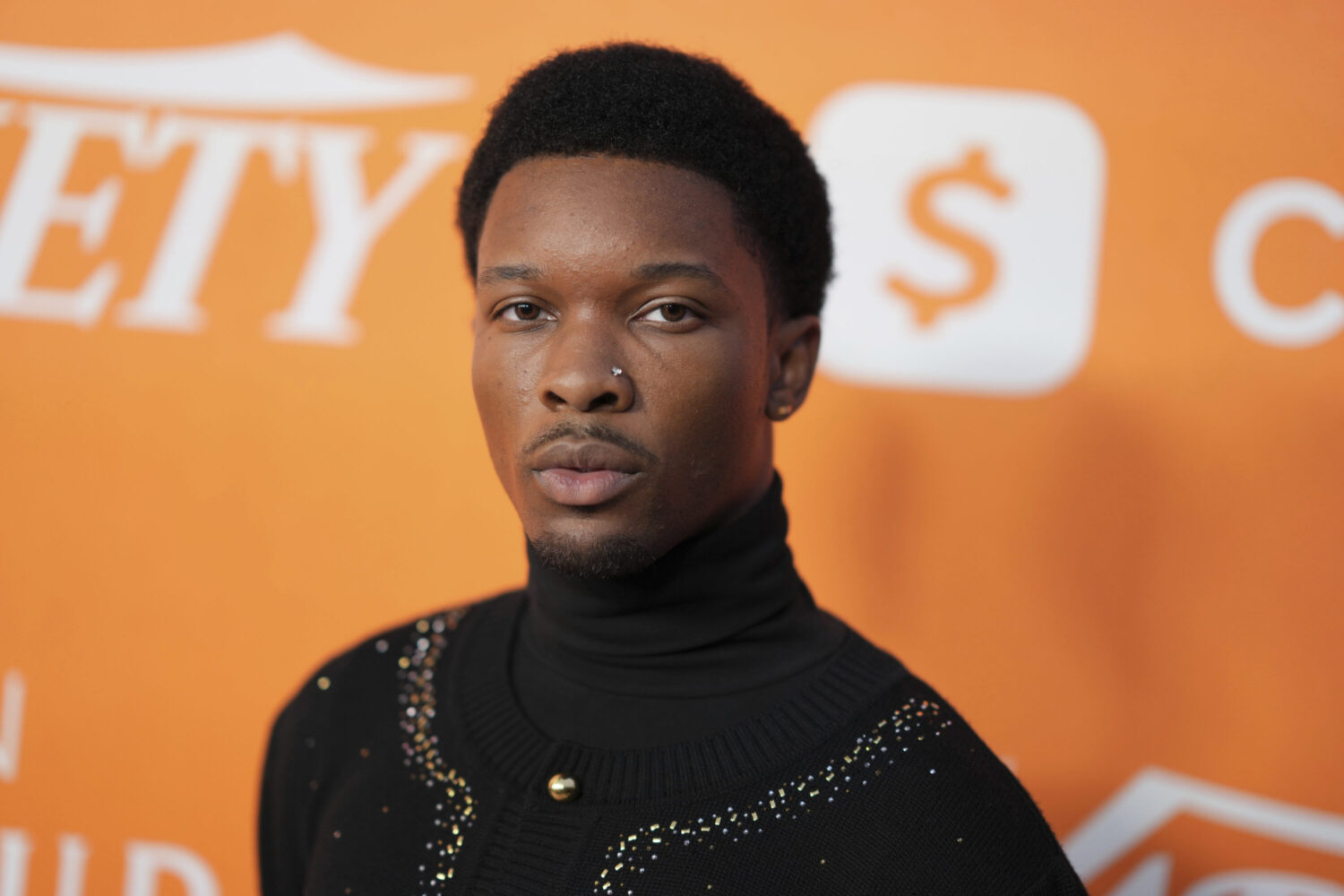
Advocacy groups, artists, and the public are demanding that streaming platforms take action against D4vd amid deeply disturbing criminal allegations.
David Anthony Burke, known professionally as D4vd, was arrested last week and subsequently charged with first-degree murder, continuous sexual abuse of a child under the age of 14, and the unlawful mutilation of human remains.
He has entered a not-guilty plea and remains in custody without the possibility of bail. Prosecutors allege that the victim, 14-year-old Celeste Rivas Hernandez, was killed in April 2025.
Her remains were not discovered until several months later, when they were found inside a vehicle linked to Burke. The details, as they have emerged, have left little room for neutrality, and many in the industry appear unwilling to offer it.
At the forefront of the campaign to remove D4vd’s music from major platforms is Industry Blackout, an advocacy group that has launched a pointed and unambiguous petition directed at Spotify and Apple Music. The petition has already gathered hundreds of signatures, and its language pulls no punches.
“When an artist has been charged with the sexual abuse and murder of a minor, a child who was drawn into his orbit through his music and public persona,” the group stated, “continuing to stream, promote, and profit from his catalog is a choice. It is not a neutral one.”
That framing that inaction is itself a decision strikes at the philosophical heart of what may become a defining debate for the streaming era. Platforms have long shielded themselves behind arguments of neutrality and due process, but critics contend that generating revenue from an artist’s work while allegations of this magnitude hang over them cannot be reconciled with the corporate responsibility pledges many of these companies have made in recent years.
As of the time of this report, neither Spotify nor Apple Music has issued an official statement on the matter.
The petition does not stand alone. Behind the scenes, a quiet but significant exodus appears to be underway. Industry sources indicate that several artists who had previously worked with D4vd have moved to remove their joint recordings from streaming platforms.
Among those named are Kali Uchis, Holly Humberstone, Laufey, and Damiano David, an eclectic group of collaborators whose collective reach spans millions of listeners worldwide.
Crucially, these removals are said to have been carried out with the backing of Universal Music Group, one of the three dominant forces in the global recorded music industry. That institutional support lends weight to what might otherwise be dismissed as individual acts of conscience, suggesting that at least some corners of the major label ecosystem are prepared to act, even in the absence of a conviction.
D4vd had himself been signed to Darkroom Records, the boutique imprint operating under the Interscope/UMG umbrella. However, according to industry reports, he was dropped from that label in the months preceding the filing of formal charges—a timeline that raises questions about what the label may have known and when.
Of the major platforms, it is YouTube that has moved most swiftly. The video-sharing giant has demonetised D4vd’s account, invoking its Creator Responsibility policy, which allows the platform to take punitive financial measures against creators whose conduct off-platform is deemed harmful to the YouTube community.
It is a policy that implicitly acknowledges what many advocates have long argued: that a platform’s relationship with a creator is not merely transactional and that monetization carries with it a degree of moral endorsement.
Spotify and Apple Music, by contrast, have remained conspicuously silent. D4vd’s catalogue, which had garnered him a devoted fanbase and a reputation as one of the more compelling voices to emerge from the bedroom-pop and indie-R&B space in recent years, remains fully accessible and, presumably, continues to generate streaming royalties.
The contrast in responses is unlikely to go unnoticed. In an environment where streaming platforms are routinely scrutinized for their handling of everything from artist compensation to content moderation, the optics of inaction may ultimately prove untenable.
This case does not exist in a vacuum. It arrives amid a years-long conversation within the music industry about how platforms, labels, and the wider ecosystem should respond when artists are credibly accused of serious wrongdoing.
From the ongoing discourse around R. Kelly, whose music Spotify briefly removed from playlists in 2018 under a since-abandoned “hate content” policy, to debates around XXXTentacion, the industry has repeatedly struggled to establish any coherent or consistent standard.
D4vd’s case, however, may prove harder to sidestep. The victim is a child. The alleged crime is one of extraordinary violence. And prosecutors contend that it was the artist’s music and public persona that brought the victim into his orbit, a detail that Industry Blackout has placed front and center in its campaign and one that directly implicates the role of streaming platforms in amplifying that persona.
The question being asked in boardrooms, editorial meetings, and social media threads alike is not merely a legal one. It is a moral one: at what point does continued distribution cross from passive availability into active complicity?
As of now, the silence from the industry’s most powerful gatekeepers is deafening. But if the pace of signatures on Industry Blackout’s petition and the speed with which collaborators are distancing themselves are any indication, that silence is becoming increasingly difficult to sustain.
WHAT YOU SHOULD KNOW
The D4vd case has forced a moment of uncomfortable clarity on the music streaming industry: silence is a stance. While YouTube has acted and collaborators have walked away, Spotify and Apple Music have yet to respond, leaving a catalog allegedly connected to the abuse and murder of a 14-year-old girl generating streams and revenue as usual.
The most critical point is this: Celeste Rivas Hernandez was 14 years old, and prosecutors allege it was D4vd’s music and public persona that drew her into his orbit. That single detail makes platform inaction not just a business decision but a moral one. The industry can debate due process, but it cannot claim ignorance. Every stream is a choice.