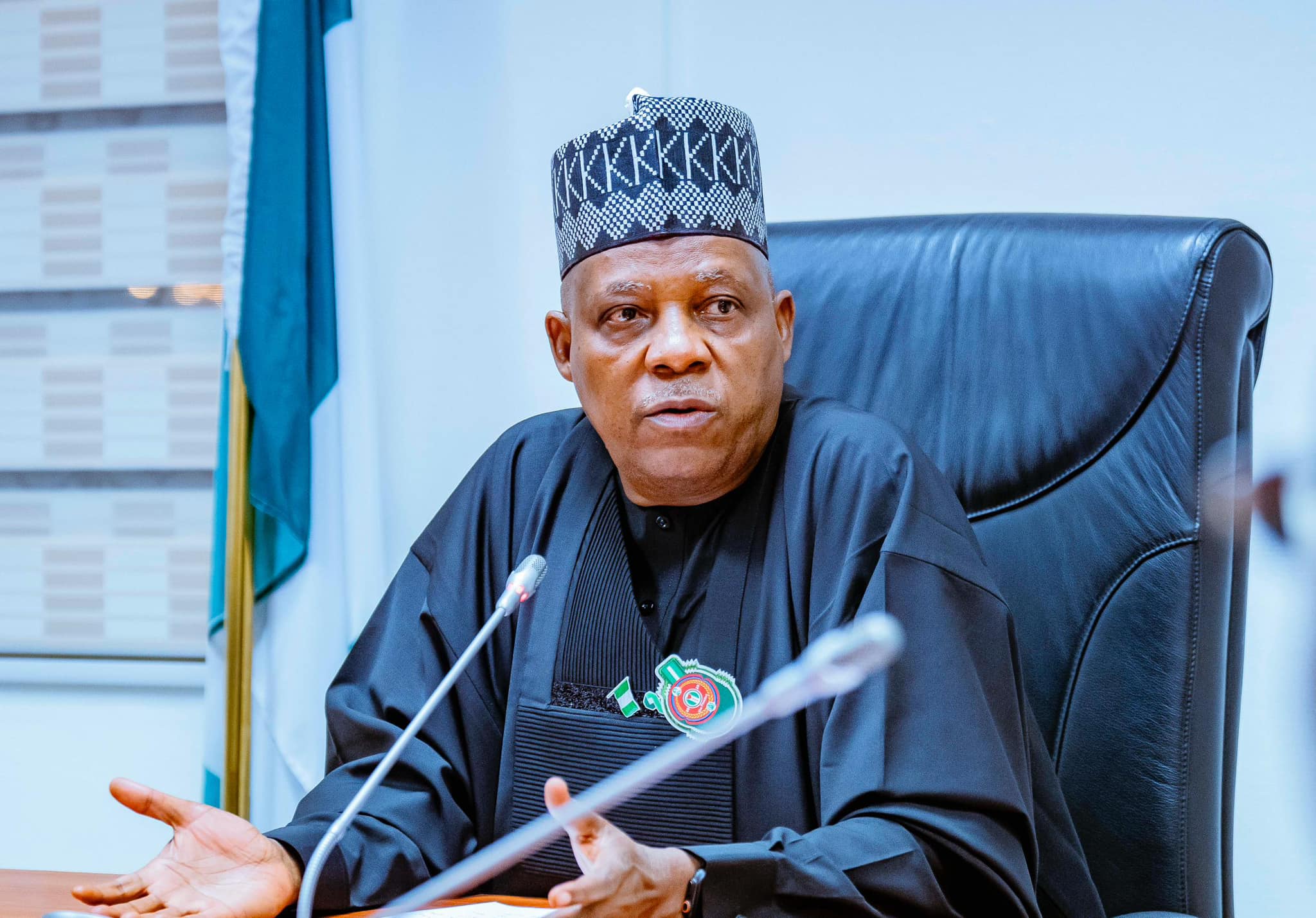
Vice President Kashim Shettima has hailed Kaduna State Governor Senator Uba Sani for establishing Nigeria’s first state-level Council on Skills, describing the initiative as a pioneering “national model” that could reshape the country’s approach to youth unemployment and human capital development.
In a formal letter to Governor Sani, Shettima—who chairs the National Council on Skills (NCS)—praised the inauguration of the Kaduna State Council on Skills as a “strategic institutional response” to Nigeria’s persistent challenges of unemployment and under-developed human capital.
The commendation came during the NCS’s latest session at the Presidential Villa, where participants described Kaduna’s move as a “major policy milestone” in efforts to coordinate skills development across the federation.
Shettima stressed that the Kaduna initiative “aligns perfectly with the Renewed Hope Agenda of President Bola Ahmed Tinubu” and sets a clear benchmark for other states and sub-national governments. “This milestone is a testament to your administration’s vision of integrated economic growth,” the Vice President wrote, framing the council as evidence of Kaduna’s “integrated vision for economic transformation.”
At the heart of the praise is what officials are now calling the “Kaduna Model”—a structured, state-driven framework for vocational and technical training that emphasises a “bottom-up” approach. Shettima positioned it as a vital template for grassroots skills acquisition, arguing that such localised efforts are essential to bridge the unemployment gap and empower young Nigerians with marketable competencies.
“Kaduna has demonstrated a proactive commitment to addressing the unemployment gap and fostering human capital development in line with our national objectives,” Shettima noted.
He urged closer collaboration between the national secretariat and Kaduna’s new council to harmonise standards, avoid duplication, and scale successful interventions nationwide. In doing so, the Vice President cast Kaduna as a pacesetter in workforce development and youth employment.
Nigeria has long grappled with a skills mismatch: millions of young people enter the labour market each year with limited technical or vocational qualifications, while industries complain of a shortage of competent workers. Successive administrations have prioritised skills development, but implementation has often remained fragmented between federal and state levels.
The establishment of a dedicated sub-national council in Kaduna—chaired by Governor Sani himself—marks the first time a state has created a formal, institutional body mirroring the national council’s structure.
This move is intended to bring coherence to training programmes, partner more effectively with the private sector, align curricula with local and national labour market needs, and ensure certification meets recognised standards.
Analysts see the “Kaduna Model” as potentially replicable because it decentralises responsibility while maintaining alignment with federal goals. By institutionalising skills development at the state level, Kaduna aims to move beyond ad-hoc training schemes toward a sustainable ecosystem that includes vocational institutions, industry linkages, and continuous monitoring of outcomes.
Governor Uba Sani’s administration has already shown commitment to human capital through various skills and entrepreneurship programmes. The new council is expected to consolidate these efforts, provide strategic oversight, and facilitate partnerships that can produce thousands of job-ready graduates annually in sectors ranging from agriculture and manufacturing to information technology and renewable energy.
Shettima’s letter is more than ceremonial praise; it carries an implicit challenge to other governors. With Nigeria’s youth population bulge and rising unemployment figures continuing to strain social stability, the Vice President is signalling that states must take ownership of skills development rather than wait solely on federal interventions.
The NCS, under Shettima’s chairmanship, has been pushing for stronger federal-state-private sector collaboration. Recent meetings have focused on elevating “Made-in-Nigeria” standards and preparing for international skills competitions.
Kaduna’s initiative fits neatly into this broader push, offering a practical example of how sub-national governments can contribute to national transformation.
As one senior NCS member reportedly remarked during the session, Kaduna’s council represents “a shift from talking about skills to building institutions that deliver them.”
Whether other states will follow the Kaduna template remains to be seen. But for now, Vice President Shettima has placed the northern state firmly in the spotlight as a laboratory for inclusive growth—one where skills, not just certificates, become the currency of economic participation.
The coming months will test whether the “Kaduna Model” can translate high-level endorsement into tangible reductions in youth unemployment and measurable gains in workforce productivity. If successful, it could indeed become the blueprint Shettima envisions for a skills revolution that reaches every corner of the country.
WHAT YOU SHOULD KNOW
Vice President Kashim Shettima has declared Kaduna State’s newly launched Council on Skills a “national model” and pacesetter for Nigeria’s skills development drive.
Kaduna under Governor Uba Sani has pioneered the country’s first sub-national skills council, offering a practical “bottom-up” template that aligns with President Tinubu’s Renewed Hope Agenda.
This initiative stands as a strategic response to youth unemployment and human capital challenges, urging other states to replicate the Kaduna Model for coordinated, impactful workforce development across Nigeria.