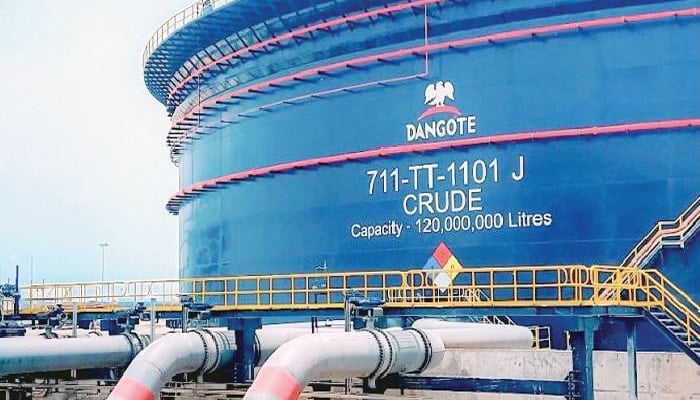
The Dangote Petroleum Refinery has increased the gantry prices of petrol and diesel again, raising fresh concerns about rising fuel costs across Nigeria.
A senior official at the refinery confirmed the development on Tuesday night in a statement to The PUNCH. The official said the price change was influenced by international crude oil benchmarks and current market conditions.
Under the new price structure, petrol has increased by N75 per litre to N1,275, which represents about a 5.02 per cent rise. Diesel also increased by N200 per litre to N1,950.
The new prices show a clear rise from last month’s rates, when petrol was sold at N1,200 per litre and diesel at N1,750 per litre.
With the latest adjustment, the price of diesel is now close to the N2,000 per litre mark. This has raised concerns that pump prices may increase further in the coming days.
Industry observers say fuel marketers may pass the additional cost to consumers, which could lead to higher transportation and production costs across the country.
Explaining the adjustment, the refinery official said the development is connected to fluctuations in global crude oil markets.
“The adjustment is in line with global market trends. You are aware of the ongoing tensions in the Middle East and how they have impacted crude oil prices,” the official said.
“These are external factors that directly influence refined product pricing.”
The official also said the new price reflects conditions in the international market.
“Petrol has been reviewed upward by N75 to N1,275 per litre, which is about a five per cent increase, while diesel has increased more significantly by N200 to N1,950 per litre. These changes reflect the realities of the international market.”
Market tracking platform Petroleumprice.ng also confirmed the development.
According to the platform’s data, the new petrol gantry price represents a 5.02 per cent increase compared with the previous price.
The adjustment came despite expectations that the start of operations at the Dangote Refinery, Africa’s largest refinery, would help stabilise fuel prices within the country.
However, analysts say Nigeria’s fuel pricing is still strongly affected by international crude oil benchmarks. This means that local refining alone may not fully protect consumers from global price changes.
In recent weeks, global oil markets have experienced strong fluctuations due to rising tensions in the Middle East, a region that produces a large portion of the world’s crude oil supply.
Any threat to oil supply routes or production in the region often leads to price increases in global oil markets, which later affect refined petroleum products.
Nigeria operates a deregulated downstream petroleum sector, where fuel prices are mainly determined by market forces.
Because of this system, domestic fuel prices are influenced by international crude oil prices, exchange rates, logistics costs, and refinery operations.