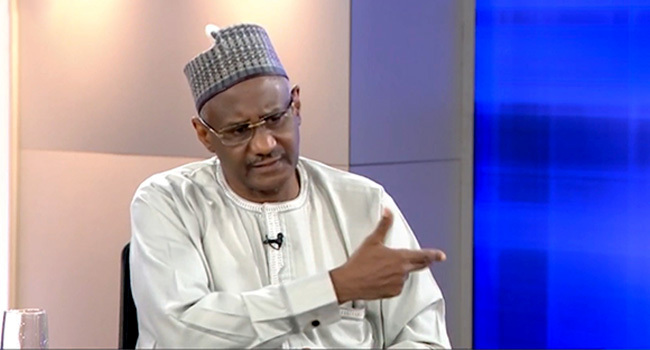
Former Executive Secretary of the National Health Insurance Scheme (NHIS), Yusuf Usman, has accused Nigeria’s anti-corruption agencies of applying justice selectively.
Usman made the claims during an interview on Naija Unfiltered, a programme by Symfoni, where he alleged bias in the arrest patterns of agencies such as the Economic and Financial Crimes Commission (EFCC) and the Independent Corrupt Practices Commission (ICPC) under the administration of President Bola Ahmed Tinubu.

According to Usman, there appears to be a pattern in how arrests are carried out, particularly along ethnic lines. “We have not seen a single Yoruba man grabbed by EFCC. (Aminu) Tambuwal, myself, Abubakar Malami, and Nasir El-Rufai are all Fulanis and have all been arrested, but Yorubas are saints. People are watching,” he stated.
He also referenced other public figures from diverse backgrounds, noting that his comments were not about the specifics of their cases. “Egbira man from Kogi State, Yahaya Bello. We have seen (Chris) Ngige and (Godwin) Emefiele. We’re not talking about whatever they did,” Usman said.
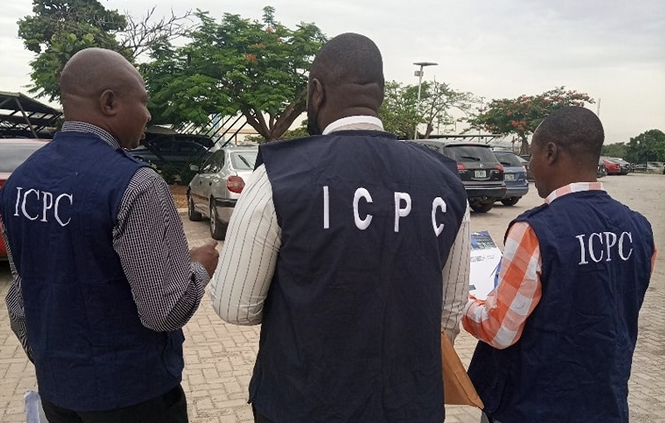
The former NHIS boss suggested that geography could be influencing enforcement patterns, implying that certain regions appear less affected. “Geographically, that’s not… You’re not far from clean. No, they’re saints. They’re safe,” he remarked, adding that such perceptions are widely discussed across the country. “That’s how all Yorubas are saints,” he noted.
Usman also pointed to the leadership of key security and anti-corruption agencies, suggesting that public perception is shaped by the ethnic backgrounds of those at the helm. “You know what people are saying? The EFCC is headed by a Yoruba man, right?” he said, making a similar observation about the Department of State Services (DSS). “The DSS is headed by a Yoruba man, correct?” he asked.
He further referenced the leadership of the ICPC in the context of regional balance, stating, “The ICPC is headed by somebody from the Northwest, right?” as part of his broader argument on perceived bias in enforcement across Nigeria.
What you should know
Yusuf Usman’s remarks highlight ongoing concerns about perceived ethnic and political bias in Nigeria’s anti-corruption efforts.
While agencies like the EFCC and ICPC are tasked with impartial enforcement, public trust can be affected by allegations of selective justice. These claims may intensify debates about transparency, fairness, and institutional independence under President Tinubu’s administration.
However, such allegations remain opinions unless supported by verified data or investigations, and authorities have consistently maintained that their operations are guided by law, not ethnicity or political affiliation.