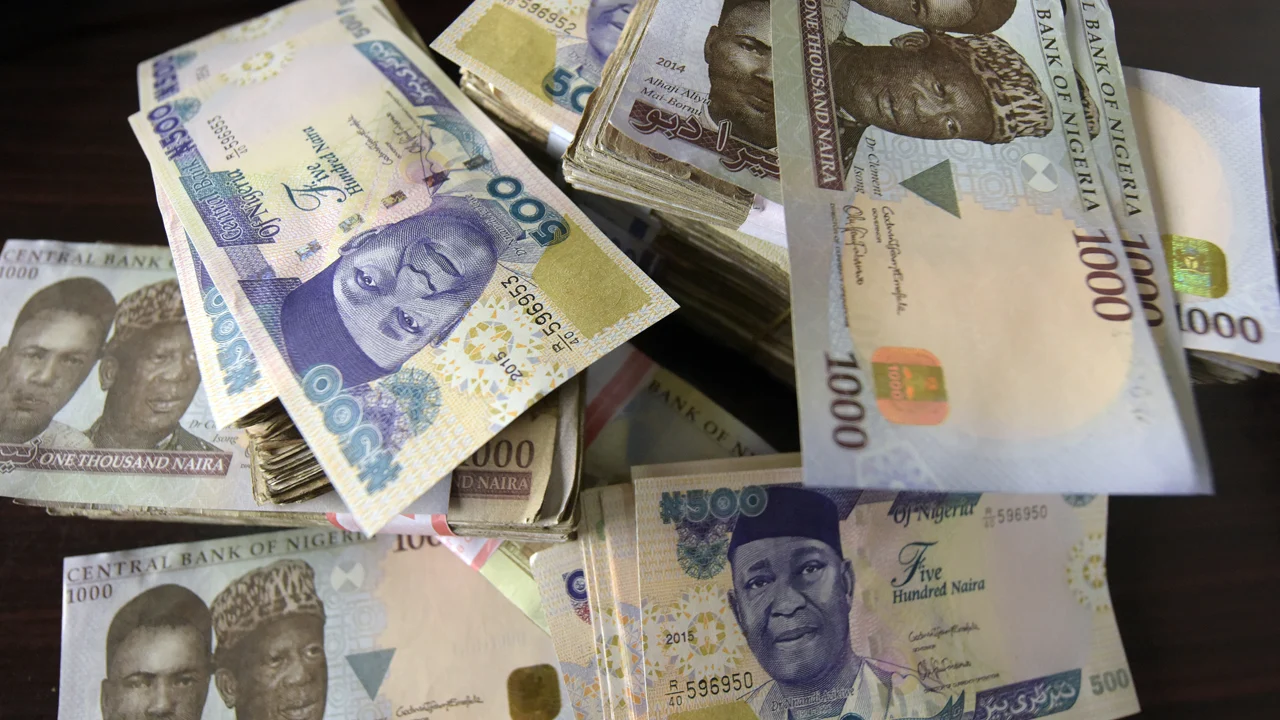
As of Wednesday, March 18, 2026, the naira extended its winning streak against the euro, capitalizing on a unique cocktail of high-yield domestic assets and a crumbling European currency.
The naira’s ascent has been sharp. Just nine days ago, the exchange rate sat at a peak of ₦1,624/€. Today, that figure has cooled to ₦1,556/€1—a 3.6% appreciation that has caught many market watchers by surprise.
Despite the Central Bank of Nigeria (CBN) recently cutting interest rates by 50 basis points to “26.5%,” the naira has not suffered the traditional “sell-off” that usually follows a rate dip. Instead, the move has been interpreted as a signal of institutional confidence.
Liquidity Support: The CBN is aggressively utilizing High-Yield OMO (Open Market Operations) bills to attract Foreign Portfolio Investment (FPI), providing the necessary liquidity to prop up the naira.
Reserve Buffers: Confidence is further bolstered by Nigeria’s external reserves, which are on a trajectory to hit $51 billion by the end of 2026.
Inflation & Arbitrage: With inflation finally cooling toward a 12.4% target and the unification of exchange rate windows, the “real” value of the naira is stabilizing as speculative arbitrage fades.
While the naira strengthens at home, the euro is fighting a losing battle on two fronts: a surging US dollar and a devastating conflict in the Middle East.
The escalation of hostilities in Iran has sent shockwaves through global energy markets. Following US-Israeli strikes in late February, Tehran’s retaliation has paralyzed the Strait of Hormuz, a chokepoint responsible for 20% of the world’s oil and LNG consumption.
The US dollar has become the ultimate “haven.” The US, now producing a massive 22 million barrels of oil per day, is far more insulated from energy shocks than Europe.
Fed Stance: On Wednesday, the Federal Open Market Committee (FOMC) held interest rates steady at 3.5%–3.75%.
The Dot Plot: While officials hinted at minor quarter-point cuts later in 2026, the Fed’s acknowledgement of “uncertain” implications from the Middle East has kept the Dollar Index (DXY) on a bullish path.
For the naira to maintain its dominance over the euro, market analysts say “bulls” must defend the N1,605/€1 psychological support level.
Key Level Market Significance:
N1,550/€1 Major Support (Naira Strength Target)
N1,605/€1 Pivot Point (Critical Defense Line)
N1,625/€1 Resistance (Potential return to Euro dominance)
If the EUR/NGN pair breaks back above the March high of N1,625, the recent gains could evaporate. However, with the euro currently trading below 1.15 against the dollar, the external pressure on the European currency remains immense.
“The naira is currently benefiting from a ‘perfect storm’ of high domestic yields and a very weak European outlook,” noted one senior currency strategist. “As long as the CBN keeps the liquidity taps open through OMO bills, the short-term bearish phase for the euro looks set to continue.”
WHAT YOU SHOULD KNOW
The naira’s recent 3.6% surge against the euro is a rare alignment of proactive domestic policy and global energy chaos.
While the Central Bank of Nigeria is successfully attracting investors through high-yield OMO bills and growing reserves, the euro is buckling under the weight of a Middle East oil shock and a dominant US dollar.
As long as the Strait of Hormuz remains a flashpoint and Nigeria maintains its 26.5% interest rate environment, the naira holds the upper hand.
The sustainability of this rally depends entirely on the CBN’s ability to defend the N1,605/€1 support level amidst global stagflation risks.