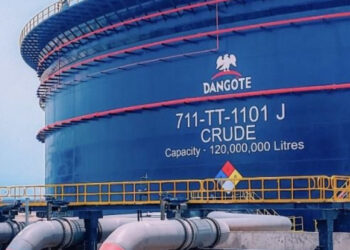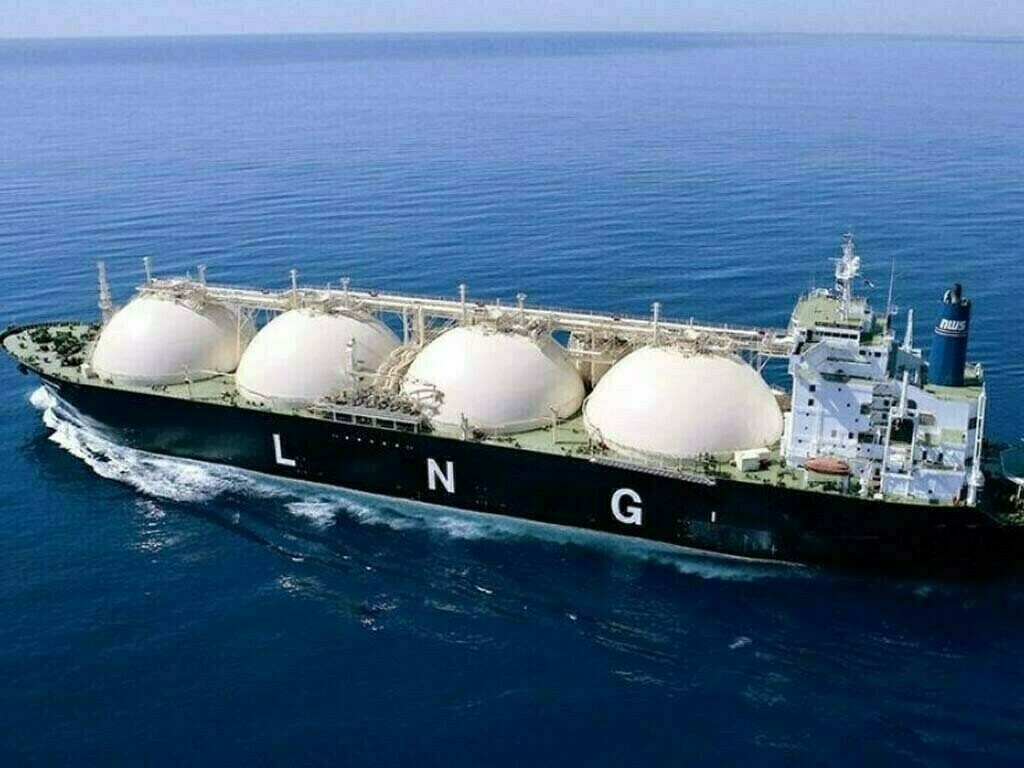
A fresh cargo of Nigerian liquefied natural gas (LNG) has been diverted from its planned European destination to hungry buyers in Asia.
The move, confirmed by ship-tracking data, is the second such U-turn recorded between Monday and Thursday this week, highlighting the intense competition unleashed by the sudden paralysis of Qatar’s massive LNG exports.
The trigger is unmistakable: a widening conflict that began with U.S.-Israeli attacks on Iran on February 28. The fighting has halted all commercial traffic through the Strait of Hormuz, the narrow chokepoint through which roughly one-fifth of global oil and a significant share of LNG normally flows.
Qatar, the planet’s second-biggest LNG exporter after the United States, has been forced to stop shipments, leaving Asian and European buyers fighting over every available molecule of spare capacity.
Analytics firm Kpler’s real-time vessel data tells the story with clinical precision. The tanker “Pan Americas” loaded at Nigeria’s Bonny LNG terminal and initially set a course for Croatia in southern Europe. Within days, it altered direction, swinging south and heading for Asia via the long, expensive route around Africa’s Cape of Good Hope.
The same pattern played out with the “BW Brussels,” which lifted a cargo from the same Bonny Island Terminal on February 27. Its Automatic Identification System first signalled a westward journey toward European terminals; hours later, it, too, turned south.
The economics driving these diversions are stark. Natural gas prices have rocketed 50 percent above year-ago levels in both Europe and Asia. On Monday alone, European benchmarks surged as much as 30 percent as traders priced in the risk of prolonged disruption. The Dutch TTF contract, Europe’s leading reference price, spiked to 69.50 euros per megawatt-hour before trimming some gains.
Across the world, the Japan-Korea Marker (JKM), the benchmark for spot LNG in Asia, leapt 68.52 percent to $25.393 per million British thermal units for April delivery last Tuesday—its highest level in three years, according to S&P Global Platts.
By comparison, spot prices for deliveries into northwest Europe rose a still-impressive 57 percent to $15.479 per mmBtu. The gap speaks volumes: even after the rally, Asia remains the more lucrative destination for flexible cargoes that can be redirected on the open market.
Qatar’s predicament is particularly painful for its traditional customers. More than 80 percent of Qatari LNG normally sails to Asia, Kpler data show. With those volumes offline, buyers from Japan to South Korea to China have turned aggressively to the Atlantic basin, bidding up whatever Nigerian, U.S., or Algerian molecules are still available. The result is an old-fashioned price war between the Atlantic and Pacific basins—a contest the Pacific is currently winning.
For Nigeria, the shift is both a windfall and a reminder of its place in a hyper-connected global market. LNG cargoes are no longer tied to long-term contracts with fixed destinations; they are floating commodities that chase the highest bidder.
Nigerian officials have long understood this flexibility, and the numbers are now proving its value. The country’s gas export revenue hit $2.7 billion in the first quarter of 2025—a 27 percent jump from the previous quarter and an 86 percent increase year-on-year—fueled largely by higher LNG output and stronger prices.
The Federal Government has set an ambitious target of $10 billion in annual gas export revenue. Two tailwinds are already in motion: sustained demand from the United States and the imminent completion of Nigeria LNG’s Train 7 project, now 80 percent built. When Train 7 comes online, Nigeria’s total liquefaction capacity will rise significantly, positioning the country to capture even more of the premium Asian spot market when the next supply crunch hits.
Yet the story is bigger than any single cargo or quarterly revenue spike. The diversion of Nigerian LNG from Europe to Asia is a live demonstration of how quickly modern energy markets can reconfigure themselves when a critical chokepoint—whether the Strait of Hormuz, the Red Sea, or the Panama Canal—is suddenly closed. Buyers who once relied on predictable Qatari deliveries are now learning the hard way that spare cargoes have no nationality; they go where the money is.
As the Middle East conflict drags on and the Cape route becomes the new normal for diverted shipments, traders, governments, and consumers from Lagos to Tokyo will be watching the next tanker movements with heightened urgency. In the LNG business, geography still matters—but price, above all, now decides the destination.
WHAT YOU SHOULD KNOW
The key factor driving today’s LNG market chaos is this: when the Strait of Hormuz is blocked by war, flexible cargoes like Nigeria’s LNG no longer head to Europe—they chase Asia’s much higher prices.
Asia is currently paying a steep premium ($25+ per mmBtu vs. ~$15 in Europe), so diverted Nigerian shipments are now routing via the Cape of Good Hope to capture that windfall. Geopolitics in the Middle East has turned price signals into the decisive force determining where the world’s spare gas actually ends up.