Gold prices steadied on Wednesday, torn between rising inflation fears driven by surging oil prices and strong safe-haven demand as U.S.-Israeli strikes against Iran entered a second week with no end in sight.
Spot gold edged down a modest 0.1% to $5,186.02 per ounce by 0902 GMT, while U.S. gold futures for April delivery retreated a sharper 0.9% to $5,194.10, a relatively contained pullback for a market navigating some of the most treacherous geopolitical waters in recent memory.
The precious metal finds itself in a peculiar bind. On one hand, the grinding military conflict in the Middle East, which has effectively shuttered the Strait of Hormuz, a maritime chokepoint through which roughly one-fifth of the world’s oil and liquefied natural gas flows, is driving investors toward gold’s traditional role as a store of value in times of crisis.
On the other hand, the same conflict is pushing oil prices sharply higher, reigniting inflation fears that could keep the Federal Reserve’s hands tied on interest rate cuts, dimming gold’s longer-term allure.
“After yesterday’s fall, oil is rebounding today, confirming that tensions are not yet over,” said Carlo Alberto De Casa, senior analyst at Swissquote. “In the last few days, gold prices have not moved significantly, holding well above $5,000.” De Casa noted that a strengthening U.S. dollar and rising benchmark 10-year Treasury yields were adding further downward pressure on bullion.
The mechanics are well understood by seasoned market watchers: a stronger dollar makes gold more expensive for overseas buyers, cooling demand at the margins, while climbing Treasury yields offer investors a yield-bearing alternative to gold, which generates no income of its own.
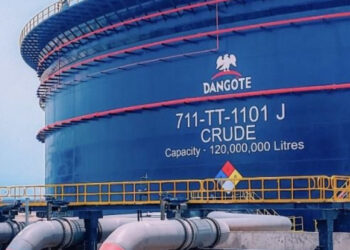
The decision by U.S. and Israeli forces to exchange air strikes with Iran has sent shockwaves far beyond the battlefield. The near-total closure of the Strait of Hormuz, through which energy shipments from the Gulf must pass en route to markets in Europe, Asia, and beyond, has injected a significant and unpredictable premium into oil prices.
Markets reacted skeptically to reports from the International Energy Agency outlining plans for a record release of strategic oil reserves. Traders largely doubted whether such a measure could meaningfully offset the supply disruptions stemming from a conflict with no obvious diplomatic off-ramp. Oil prices rebounded firmly, cementing fears that the inflationary shock from the Middle East could prove more persistent than policymakers would like.
Against this volatile backdrop, investors are bracing for a series of critical U.S. economic data releases that could reshape market expectations in the coming days.
The U.S. Consumer Price Index for February is due later Wednesday, followed by the Personal Consumption Expenditures index, the Federal Reserve’s preferred inflation gauge, on Friday. Economists widely expect consumer prices to have picked up in February, partly driven by higher gasoline costs.
With the Middle East conflict showing no signs of abating, a further acceleration in March inflation now appears increasingly likely, adding yet another layer of complexity to the Fed’s already delicate balancing act.
For now, markets are firmly pricing in an unchanged interest rate decision at the conclusion of the Fed’s two-day policy meeting on March 18. While gold has historically served as a reliable inflation hedge, higher interest rates erode its relative appeal by elevating the opportunity cost of holding a non-yielding asset — a dynamic that has weighed on sentiment even as geopolitical anxiety runs high.
“It seems likely to me that investors are now increasing their exposure to the precious metal as a safe-haven asset,” De Casa added, suggesting that whatever headwinds gold faces from the macro environment, the floor remains solid.
Gold was not alone in feeling the pressure on Wednesday. Across the precious metals complex, sentiment was broadly cautious. Spot silver tumbled 1.4% to $87.15 per ounce, platinum shed 1.2% to $2,174.05, and palladium eased 0.9% to $1,640.75—moves that reflect a broader recalibration as traders weigh the duration and intensity of a conflict that has already redrawn the map of global commodity markets.
With the war in its second week and diplomacy conspicuously absent from the headlines, traders will be watching Wednesday’s CPI print with unusual intensity. A hotter-than-expected reading could accelerate the dollar’s climb and push Treasury yields higher still, testing gold’s resolve above the psychologically critical $5,000 threshold that has held firm even through the market’s most turbulent sessions.
For the moment, gold is doing what it often does in times of profound uncertainty: holding its ground, buffeted from all sides, and waiting for the world to make up its mind.
WHAT YOU SHOULD KNOW
Gold is holding steady above $5,000 amid a perfect storm of competing pressures. The ongoing U.S.-Israeli war on Iran has effectively closed the Strait of Hormuz, driving oil prices higher and stoking inflation fears that are keeping Federal Reserve rate cuts off the table — a headwind for bullion.
Gold is caught between inflation anxiety and geopolitical fear, and until the Middle East conflict shows signs of resolution or U.S. inflation data surprises to the downside, expect the metal to remain range-bound, tense, and closely watched.