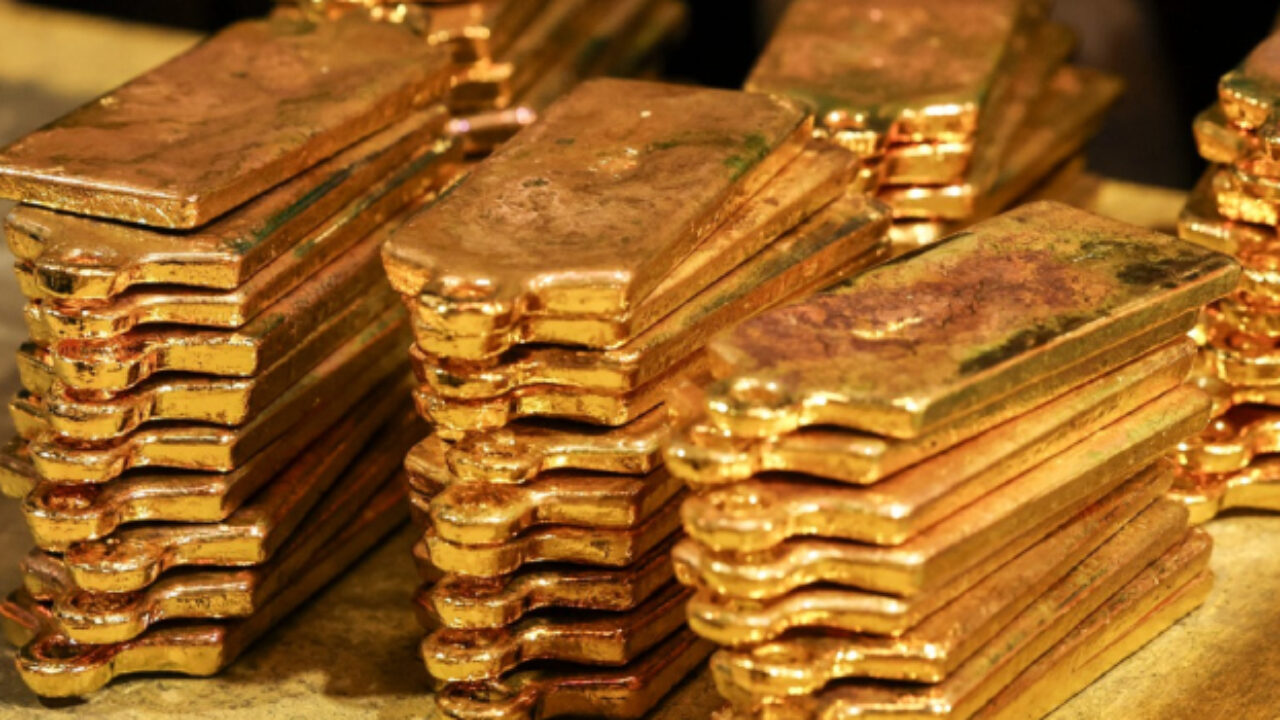
Gold prices rebounded more than 1% from a one-week low on Wednesday, as investors positioned themselves cautiously ahead of the Federal Reserve’s January meeting minutes, a key document expected to shed light on the future direction of U.S. monetary policy.
Spot gold climbed 0.8% to $4,915.90 per ounce by mid-morning trading in London, having surged more than 1% earlier in the session before paring some of those gains. Meanwhile, U.S. gold futures for April delivery rose 0.6% to $4,936.30, signalling a broad recovery in sentiment across the precious metals complex after a bruising Tuesday session.
The pullback that sent bullion tumbling to $4,841.74 per ounce on Tuesday appears to have inadvertently set the stage for a swift recovery. Bernard Dahdah, an analyst at French investment bank Natixis, noted that prices dipping below the psychologically significant $4,900 level “has created some opportunistic buying in the market. “Seasoned traders recognize this pattern well—a sharp sell-off often shakes out weaker hands and lures in buyers who had been sitting on the sidelines, waiting for precisely such a dip.
Tuesday’s decline was driven by a confluence of factors. A strengthening U.S. dollar placed downward pressure on dollar-denominated commodities like gold, making them more expensive for overseas buyers.
Compounding that pressure, easing geopolitical tensions between Washington and Tehran dimmed the appeal of safe-haven assets, while the continued closure of many Asian markets for the Lunar New Year holiday thinned trading volumes and amplified price moves.
All eyes on Wednesday are firmly fixed on the release of the Federal Reserve’s January meeting minutes, due later in the day. The document is expected to offer deeper insight into how policymakers are weighing the dual mandate of controlling inflation while supporting economic growth.
Any hawkish signals suggesting the Fed is in no hurry to cut rates could reignite selling pressure on gold. Conversely, dovish undertones could provide the yellow metal with fresh fuel to extend its recovery.
The stakes are significant. Markets are currently pricing in the first interest rate cut in June, according to CME Group’s widely followed FedWatch Tool. For gold, the calculus is straightforward: as a non-yielding asset, bullion performs best in low-interest-rate environments, where the opportunity cost of holding it diminishes relative to yield-bearing alternatives such as bonds or savings instruments.
Fed officials offered contrasting signals on Tuesday that encapsulate the internal debate. Chicago Fed President Austan Goolsbee struck a relatively optimistic tone, signaling “several more” rate cuts this year should inflation resume its descent toward the central bank’s 2% target.
However, Fed Governor Michael Barr adopted a more measured posture, suggesting another rate cut could come “somewhere well down the road,” language that pointedly avoids any firm commitment. Together, the two statements reflect a Fed that remains data-dependent and far from unified in its outlook.
Beyond the Fed minutes, investors are also bracing for Friday’s release of the U.S. The Personal Consumption Expenditures report for December, which is the Fed’s preferred measure of inflation. A hotter-than-expected reading could push back the timeline for rate cuts, dealing a potential blow to gold’s near-term prospects.
A softer number, on the other hand, would likely strengthen the case for earlier easing and could provide a meaningful tailwind for precious metals heading into the weekend.
One of gold’s most reliable drivers in recent years—geopolitical uncertainty—may be shifting. Reports emerged Tuesday that Iran and the United States had reached an understanding on “guiding principles” for nuclear negotiations, though Iranian Foreign Minister Abbas Araghchi was careful to temper expectations, stressing that an actual deal is far from imminent. Even so, the mere perception of diplomatic progress is enough to chip away at the safe-haven premium that had been baked into gold prices in recent months.
Dahdah of Natixis offered a measured forecast for the year ahead. “Unless there are geopolitical reasons, we don’t expect to see the same rally that we saw last year,” he said, projecting that prices will average around $4,850 per ounce in 2025.
That would represent a more subdued performance compared to last year’s dramatic run-up, suggesting that while the fundamental case for gold remains intact, the extraordinary tailwinds that turbocharged its rally may be losing some of their force.
Wednesday’s rebound was not confined to gold. The broader precious metals complex staged a notable recovery across the board. Spot silver surged 3.3% to $75.98 per ounce—a sharp reversal after the metal had shed more than 5% in the prior session, one of its steepest single-day declines in recent memory.
Platinum gained 1.8% to $2,043.38 per ounce, while palladium added 2.1% to $1,718.03, both benefiting from the improved risk appetite and bargain-hunting that characterized the session.
WHAT YOU SHOULD KNOW
Gold prices rebounded on Wednesday after dipping below the key $4,900 level, driven largely by opportunistic buying ahead of the Federal Reserve’s January meeting minutes. The central takeaway is this: gold’s direction in 2025 hinges almost entirely on the Fed’s interest rate path.
With markets anticipating a first rate cut in June, any data—whether from Wednesday’s Fed minutes or Friday’s PCE inflation report—that challenges that timeline could quickly erase the day’s gains. Geopolitical tensions, once a powerful driver of gold’s rally, are showing signs of fading.
Barring a fresh flare-up, analysts expect prices to average a more modest $4,850 this year. Simply put, watch the Fed—it holds the key to gold’s next major move.