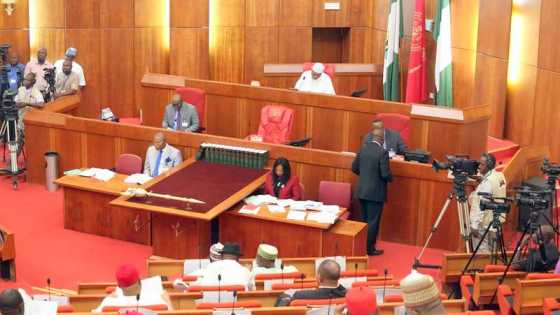
The Senate on Tuesday approved the Electoral Act, 2022 (Repeal and Re-Enactment) Bill 2026, following a tense plenary session marked by sharp disagreements and procedural disputes among lawmakers.
The passage of the bill came after a turbulent exchange in the chamber, particularly over Clause 60, which addresses the transmission of election results.

Proceedings became rowdy shortly after plenary resumed when Senator Enyinnaya Abaribe (ADC/Abia South) demanded a division on the controversial clause.
Senate President Godswill Akpabio initially indicated that he believed the request for division had earlier been withdrawn. However, several opposition senators quickly challenged that assertion, leading to heightened tension on the floor.
Invoking Order 52(6) of the Senate Standing Orders, Deputy Senate President Barau Jibrin argued that it would be procedurally improper to revisit a provision on which the Senate President had already made a ruling. His intervention triggered another round of heated exchanges, during which Senator Sunday Karimi and Senator Abaribe had a brief confrontation.
Seeking to clarify the situation, Senate Leader Opeyemi Bamidele reminded his colleagues that he had sponsored the motion for rescission, stressing that previous decisions taken on the bill were no longer binding. According to him, the motion effectively reopened consideration of the affected provisions, making Abaribe’s request procedurally valid.
Akpabio, however, suggested that the insistence on a division might be an effort by Abaribe to publicly demonstrate his position to Nigerians. He ultimately upheld the point of order, after which Abaribe rose in objection and was advised to formally move his motion.
Citing Order 72(1), Abaribe formally called for a division on Clause 60(3). He specifically targeted the section providing that where electronic transmission of results fails, Form EC8A should not be the only basis for collation, and sought the deletion of the proviso permitting manual transmission in the event of network failure.
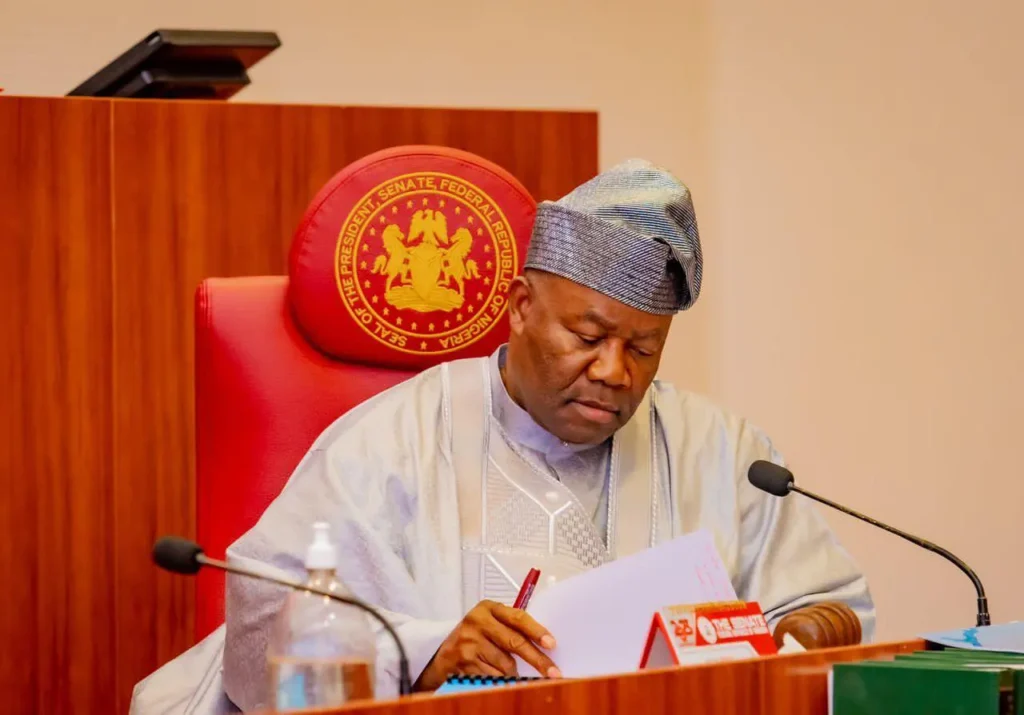
During the voting process, Akpabio instructed senators who supported retaining the proviso to stand. He subsequently asked those opposed to it to rise. Fifteen opposition senators stood against the clause. When the votes were tallied, the Senate President announced that 55 lawmakers supported the proviso, while 15 opposed it, effectively retaining the manual transmission safeguard in the bill.
Clause-by-clause consideration of the proposed law had earlier encountered delays as the Senate began detailed scrutiny of the legislation following a motion to rescind its earlier amendment. The rescission motion, which was formally seconded on Tuesday, allowed the chamber to dissolve into the Committee of the Whole for comprehensive reconsideration and reenactment of the bill.
As deliberations progressed, Akpabio read out the clauses sequentially for review. The atmosphere shifted when proceedings reached Clause 60 and Abaribe raised a point of order, drawing immediate focus from fellow lawmakers.
Whispers spread across the chamber as senators huddled in small groups and some approached the presiding officer’s desk for consultations. Amid the growing tension, the Senate moved into a closed-door session to address the impasse before resuming plenary.
Before reversing the earlier version of the Electoral Act, senators had voiced concerns regarding the timeline for the 2027 general elections and certain technical inconsistencies within the proposed legislation.
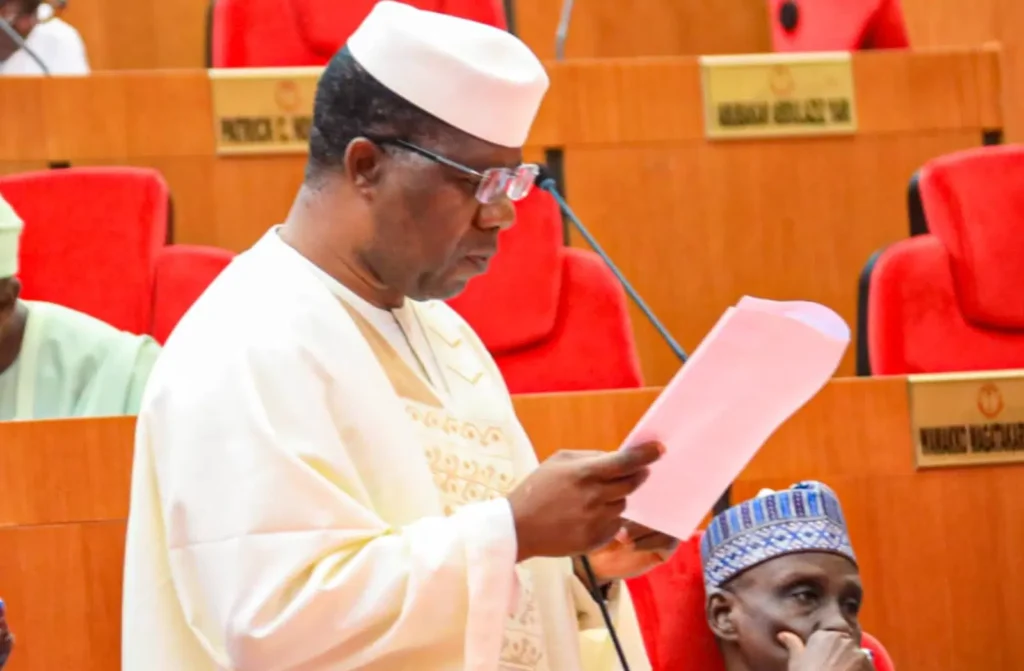
Relying again on Order 52(6), Senate Leader Opeyemi Bamidele moved that the chamber rescind its prior approval of the bill and recommit it to the Committee of the Whole for fresh deliberations. He explained that the move followed the announcement by the Independent National Electoral Commission (INEC) fixing the 2027 general elections for February 2027 after consultations with National Assembly leaders.
According to him, stakeholders expressed worries that the announced date could conflict with provisions in the amended legislation, particularly the requirement that elections be held no later than 360 days before the expiration of current officeholders’ tenure.
He further observed that a strict application of the 360-day notice requirement under Clause 28 might result in scheduling the 2027 Presidential and National Assembly elections during the Ramadan period.
Bamidele warned that conducting elections during Ramadan could have adverse implications for voter participation, logistical arrangements, stakeholder engagement, and the overall inclusiveness and credibility of the electoral process.
In addition to concerns about timing, lawmakers identified drafting and structural errors in the bill. The motion pointed to inconsistencies in the Long Title and multiple clauses, including Clauses 6, 9, 10, 22, 23, 28, 29, 32, 42, 47, 51, 60, 62, 64, 65, 73, 77, 86, 87, 89, 93, and 143. These issues reportedly affected cross-referencing, numbering, and internal coherence within the legislation.
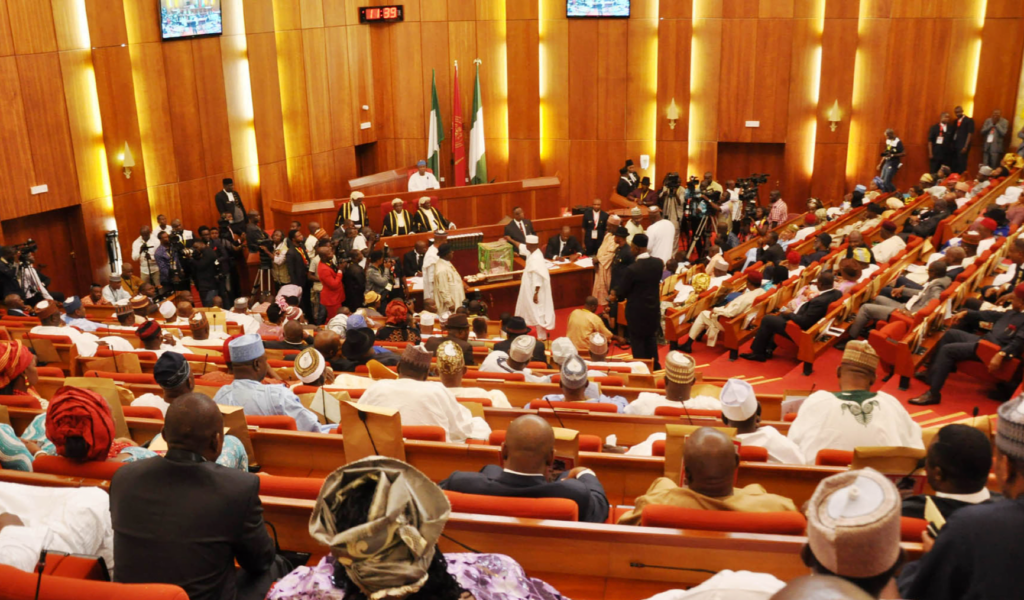
After addressing the procedural disputes and resolving the contested provisions, the Senate proceeded to pass the Electoral Act, 2022 (Repeal and Re-Enactment) Bill 2026, setting the stage for further legislative and executive actions ahead of the 2027 general elections.
What you should know
The Senate approved the re-enacted Electoral Act 2026 after a heated debate over Clause 60 concerning manual transmission of election results, retaining the proviso that allows manual collation if electronic transmission fails.
Lawmakers also rescinded the earlier version of the bill to address concerns about the 2027 election timetable, the 360-day notice requirement, potential clashes with Ramadan, and several drafting inconsistencies before passing the revised legislation.