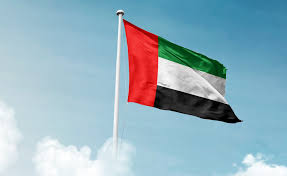
The United Arab Emirates (UAE) announced a $500 million humanitarian aid commitment to Sudan on Wednesday, marking one of the largest single pledges amid the country’s catastrophic civil war, now entering its second year with no end in sight.
The announcement came during a U.S.-hosted donor conference aimed at galvanizing international support for what has become one of the world’s most severe humanitarian crises, with more than 30 million Sudanese—roughly two-thirds of the population—now requiring urgent assistance.
Minister of State Lana Nusseibeh, who led the UAE delegation, described the conference as arriving at a “critical moment,” particularly with the Muslim holy month of Ramadan set to begin on February 17. She called for an immediate ceasefire and urged all parties to ensure humanitarian aid reaches those in desperate need without political interference.
“Humanitarian assistance must not be politicized or used as a tool of conflict,” Nusseibeh said, thanking the United States for convening international donors at this pivotal juncture.
Sudan’s civil war erupted in April 2023, pitting the national army against the paramilitary Rapid Support Forces (RSF) in a power struggle that has devastated the Northeast African nation. The conflict’s human toll remains difficult to quantify due to restricted access and ongoing violence, but estimates paint a grim picture.
U.S. and United Nations officials believe the death toll may range anywhere from tens of thousands to more than 150,000 people. These figures encompass not only those killed in combat but also victims of starvation, disease, and the indirect consequences of mass displacement.
By late 2025, more than 12 million Sudanese had been forced to flee their homes, creating one of the world’s largest displacement crises. Large swaths of the country now face famine-like conditions as insecurity and active combat zones prevent humanitarian organizations from delivering desperately needed food, medicine, and other supplies.
U.S. special envoy for Africa Massad Boulos acknowledged the limited progress in securing even a temporary humanitarian truce, despite intensive diplomatic efforts as Ramadan approaches.
“We would have hoped to achieve peace much, much earlier,” Boulos admitted. “We’ve amplified our efforts, and yet we haven’t really achieved that much in terms of the humanitarian truce.”
The United States announced it would contribute an additional $200 million in aid and expected approximately $1.5 billion in total new funding commitments from Wednesday’s conference. However, other participating nations stopped short of making firm pledges, highlighting the challenge of maintaining international attention on a crisis competing with conflicts elsewhere.
The UAE’s significant humanitarian pledge comes against a backdrop of persistent accusations from Sudan’s government that the Gulf state has been arming the RSF—allegations the Emirates categorically denies.
U.N. experts and U.S. lawmakers have previously indicated these claims carry credibility, adding a layer of complexity to the UAE’s role in the crisis. The Emirates maintains it has provided more than $4.24 billion in assistance to Sudan over the past decade, including nearly $800 million in humanitarian aid since the war began, and insists its involvement is purely humanitarian in nature.
American officials say Washington’s engagement reflects deep concerns about regional instability, the humanitarian catastrophe, and Sudan’s strategic location near the Red Sea and critical global shipping lanes. The United States has imposed sanctions on individuals connected to the RSF and continues to advocate for a civilian-led political transition.
The UAE’s interests in the region similarly extend beyond humanitarian concerns, encompassing Red Sea security, regional influence, and the protection of vital trade corridors that serve Gulf and global commerce.
Following the main donor conference, officials from the United States, UAE, Saudi Arabia, and Egypt convened under a Quad framework to discuss pathways for improving humanitarian access and identifying potential political solutions to end the fighting.
Despite these diplomatic efforts, Sudan’s warring parties have yet to agree to even a temporary ceasefire, leaving millions trapped in a humanitarian nightmare with no immediate relief in sight.
As Ramadan approaches—a period traditionally associated with peace and compassion in the Muslim world—international officials are racing against time to secure at least a humanitarian pause that could allow aid to reach Sudan’s most vulnerable populations. Whether such efforts will bear fruit remains uncertain as the war grinds into its second devastating year.
WHAT YOU SHOULD KNOW
The UAE has pledged $500 million in humanitarian aid for Sudan’s devastating civil war, which has killed up to 150,000 people and displaced over 12 million since April 2023. Despite this significant commitment at a U.S.-hosted donor conference, diplomatic efforts to secure even a temporary ceasefire before Ramadan have failed, leaving more than 30 million Sudanese in urgent need of assistance.
The crisis is complicated by accusations—deemed credible by U.N. experts—that the UAE is simultaneously arming one of the warring factions, a charge the Emirates denies. Sudan faces one of the world’s worst humanitarian disasters, with massive aid pledges but no peace in sight and disputed motives among key international players.