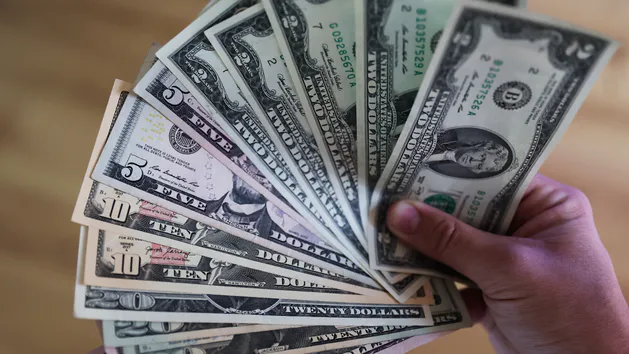
The U.S. dollar maintained its grip on recent gains on Monday as global financial markets reeled from a dramatic sell-off in precious metals that triggered cascading losses across equity markets and forced traders to liquidate winning positions to cover margin calls.
The greenback’s resilience came as investors digested the implications of President Donald Trump’s nomination of Kevin Warsh to lead the Federal Reserve, a pick that has reshaped expectations for the central bank’s monetary policy trajectory and sparked fresh debate over the pace of interest rate cuts in the months ahead.
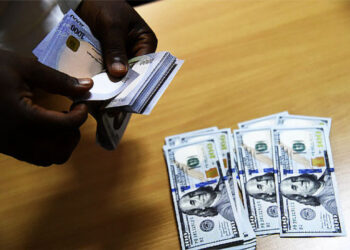
Currency markets remained relatively insulated from the broader turmoil that saw gold and silver prices plunge, though the ripple effects were unmistakable. The dollar index stood at 97.21 in Asian trading, preserving Friday’s robust 1% rally that followed Trump’s announcement of Warsh as his choice to succeed Jerome Powell as Fed chair.
Market analysts are scrambling to recalibrate their forecasts under a potential Warsh-led Federal Reserve, with the consensus suggesting a more measured approach to monetary easing than some of the other candidates who had been under consideration. While Warsh has struck a somewhat more dovish tone than current chair Powell in recent years, his past writings suggest a preference for caution over aggressive policy accommodation.
Richard Clarida, PIMCO’s global economic adviser and himself a former Fed vice chair, offered a nuanced assessment of what monetary policy might look like under Warsh’s stewardship. He predicted the incoming chair could deliver two rate cuts this year—possibly even three—as he inherits a Federal Open Market Committee still deeply divided over the appropriate pace and scale of policy easing.
“Beyond those next two or three rate cuts, we believe Warsh may be more wary, depending on the inflation outlook,” Clarida said, adding that Warsh appears unlikely to embrace the extensive forward guidance on future rate paths that has become a hallmark of modern Fed communication strategy.
Market pricing currently reflects expectations for two rate cuts this year, with the first move unlikely before June—precisely when Warsh would assume the chairmanship if confirmed by the Senate.
The Japanese yen emerged as another focal point Monday, weakening to 154.82 against the dollar as traders digested weekend comments from Prime Minister Sanae Takaichi that appeared to endorse a weaker currency—a marked departure from the Finance Ministry’s recent efforts to stem the yen’s decline.
Speaking on the campaign trail, Takaichi extolled the economic benefits of a depreciated yen, striking a tone that analysts say could signal a significant shift in Japan’s currency stance should her Liberal Democratic Party secure the commanding election victory polls are projecting.
A survey by the Asahi newspaper showed the LDP poised to far exceed the 233-seat majority threshold in the 465-seat lower house, with the ruling coalition potentially reaching 300 seats when combined with its partner, the Japan Innovation Party.
Strategists at Societe Generale cautioned that while such projections may sound “excessively” optimistic, a landslide of that magnitude would fundamentally alter Japan’s policy landscape. “This will enable Takaichi to freely pursue her expansionary policy,” they wrote, warning that markets would likely respond by pricing greater risk premiums into longer-dated Japanese government bonds and applying further downward pressure on the yen.
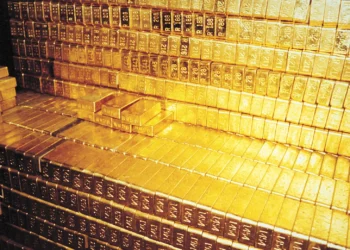
The day’s dominant narrative, however, remained the stunning collapse in precious metals prices that sent shockwaves through global markets. Gold and silver posted sharp losses that forced leveraged investors to sell profitable positions across asset classes to meet margin calls, amplifying volatility and raising concerns about broader contagion.
The euro held comfortably above the psychologically significant $1.20 level, trading at $1.1848, while sterling slipped 0.16% to $1.3664 as investors sought safety in the dollar amid the turbulence.
As markets await Warsh’s Senate confirmation hearings and Japan heads toward what could be a pivotal election, currency traders are bracing for heightened volatility in the weeks ahead—with the interplay between U.S. monetary policy expectations and Japanese political developments likely to remain at the forefront of trading strategies.
WHAT YOU SHOULD KNOW
The dollar strengthened following President Trump’s nomination of Kevin Warsh as the next Federal Reserve chair, with markets expecting a more cautious approach to interest rate cuts than previously anticipated. Meanwhile, a dramatic collapse in gold and silver prices triggered widespread market turmoil, forcing investors to liquidate positions to meet margin calls.
In Japan, Prime Minister Takaichi’s embrace of a weaker yen—coupled with polls showing her party headed for a landslide election victory—signals a major shift in the country’s currency policy that could further weaken the yen and reshape Japan’s economic direction.