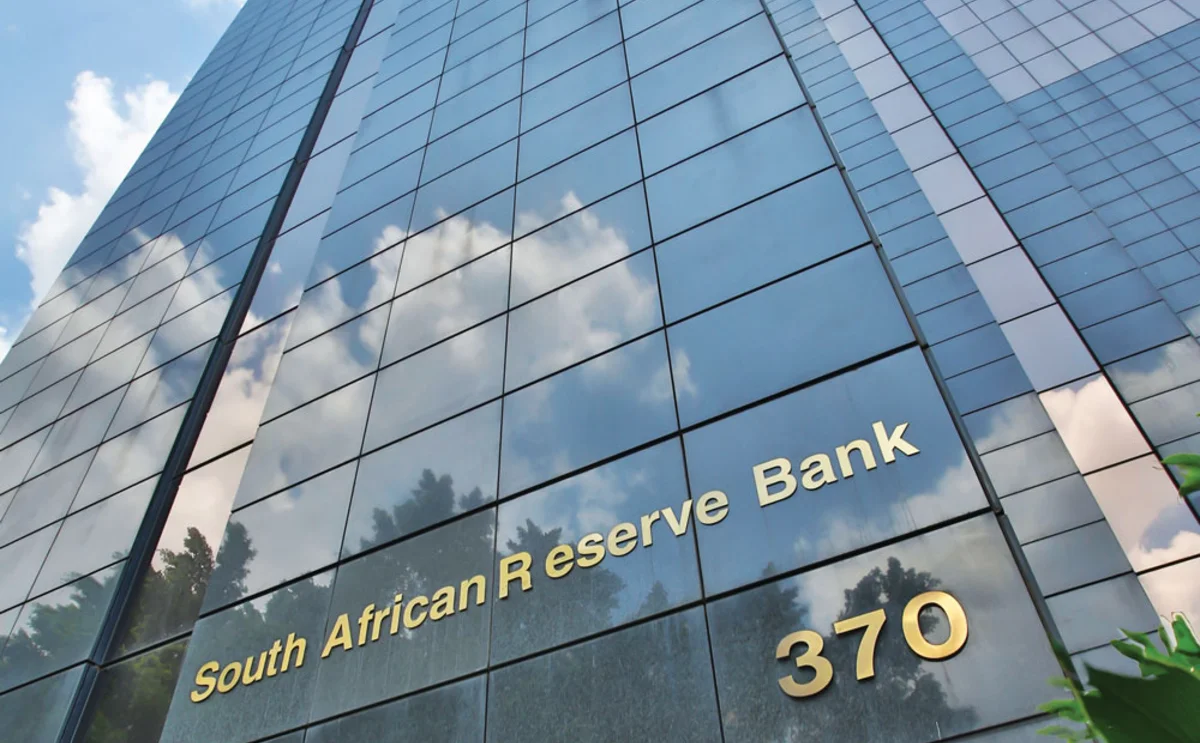
The South African Reserve Bank maintained its benchmark interest rate at 6.75% on Thursday, prioritizing further declines in inflation expectations over immediate monetary easing despite growing pressure for relief in Africa’s most industrialized economy.
The decision, which aligned with the majority view of economists surveyed by Reuters, reflects the central bank’s cautious stance as it navigates persistent inflationary pressures while the country grapples with ongoing economic challenges.
Governor Lesetja Kganyago, addressing journalists at a press conference following the announcement, revealed that the Monetary Policy Committee’s decision was not unanimous. Four of the six committee members voted to maintain the current repo rate, while two members advocated for a modest 25-basis-point reduction that would have brought the rate down to 6.5%.
The central bank’s reasoning centered on lingering concerns about inflation expectations, which policymakers want to see decline more substantially before loosening monetary policy. Kganyago specifically highlighted electricity tariffs as a key source of potential price pressures—a particularly sensitive issue in South Africa, where chronic power shortages and steep utility costs have plagued businesses and households for years.
The decision comes at a delicate time for South Africa’s economy. While inflation has moderated from earlier peaks, the central bank appears determined to ensure price stability is firmly entrenched before shifting to a more accommodative monetary stance. The split vote within the committee suggests internal debate about the appropriate timing for rate cuts, with some members evidently believing economic conditions warrant immediate relief.
By keeping rates unchanged, the Reserve Bank is maintaining its restrictive monetary policy approach, which aims to anchor inflation expectations and keep price growth within the bank’s target range. However, the dissenting votes signal that rate cuts may be on the horizon if inflation continues its downward trajectory and economic conditions evolve favorably.
The decision will be closely watched by consumers, businesses, and financial markets as they assess the implications for borrowing costs, economic growth prospects, and the broader trajectory of South African monetary policy in the months ahead.
WHAT YOU SHOULD KNOW
South Africa’s central bank held its interest rate at 6.75%, choosing caution over immediate relief. The decision signals that policymakers want to see inflation fall further before cutting rates, with electricity tariffs remaining a major concern. However, a split vote—with two members favoring a cut—suggests rate reductions could come soon if inflation continues to ease.