The Chairman of the Joint Union Action Committee (JUAC), Riftkatu Iortyer, and its Secretary, Abdullahi Saleh, have approached the Court of Appeal in Abuja, seeking permission to challenge an interlocutory ruling of the National Industrial Court that restrained them and their agents from embarking on or participating in any industrial action.
The application, filed on Wednesday, was brought on behalf of the two union leaders by their counsel, Senior Advocate of Nigeria, Femi Falana, alongside his wife, Funmi Falana, and three other senior lawyers.

In the application, filed pursuant to Sections 6, 6(b), and 36(1) of the 1999 Constitution (as amended), as well as the relevant provisions of the Court of Appeal Rules, the applicants are asking the appellate court to grant an order staying the execution of the ruling delivered by Justice Emmanuel Subilim of the National Industrial Court on January 27, pending the determination of their appeal.
The appellants stated that they have already prepared and attached their notice of appeal, which they said raises serious, arguable, and recondite points of law with strong prospects of success before the appellate court.
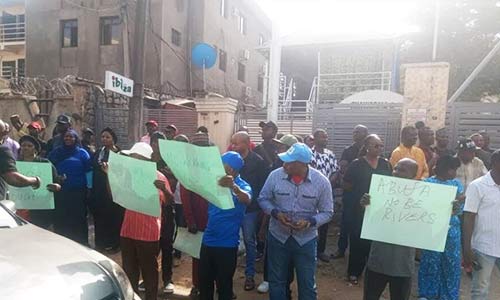
FCTA workers commenced an indefinite strike last week over what they described as the “authorities’ failure to address long-standing labour and welfare demands.” The industrial action has resulted in the shutdown of activities across major government offices in Abuja.
On Tuesday, the National Industrial Court in Abuja ordered workers on the payroll of the Federal Capital Territory Administration to suspend the ongoing strike. In his ruling, Justice Emmanuel Subilim held that although the matter before the court amounted to a trade dispute, the defendants’ right to embark on industrial action was not absolute.
He ruled that once a dispute has been referred to the National Industrial Court, any ongoing strike must cease pending the determination of the case.
Also on Tuesday, the Minister of the Federal Capital Territory, Nyesom Wike, warned that any striking FCTA employee who fails to resume work following the court order would face sanctions.
“Are there no consequences for disobeying the law? Must we allow people break the law flagrantly? I have given them a window but from tomorrow, if they don’t come to work, we will apply the big stick,” Wike said.
“From tomorrow (Wednesday), if we see anybody who wants to block the gate, they will be made a scapegoat. The law must take its place.”
What you should know
The legal dispute stems from an indefinite strike by FCTA workers over unresolved welfare and labour issues, which led to widespread disruption of government activities in Abuja.
The National Industrial Court ordered the suspension of the strike, citing provisions of the Trade Dispute Act that require industrial action to stop once a matter is before the court. In response, JUAC leaders have moved to the Court of Appeal, arguing that the ruling raises serious legal questions deserving appellate review.
Meanwhile, the FCT administration has insisted on compliance with the court order, warning of disciplinary measures against defiant workers.