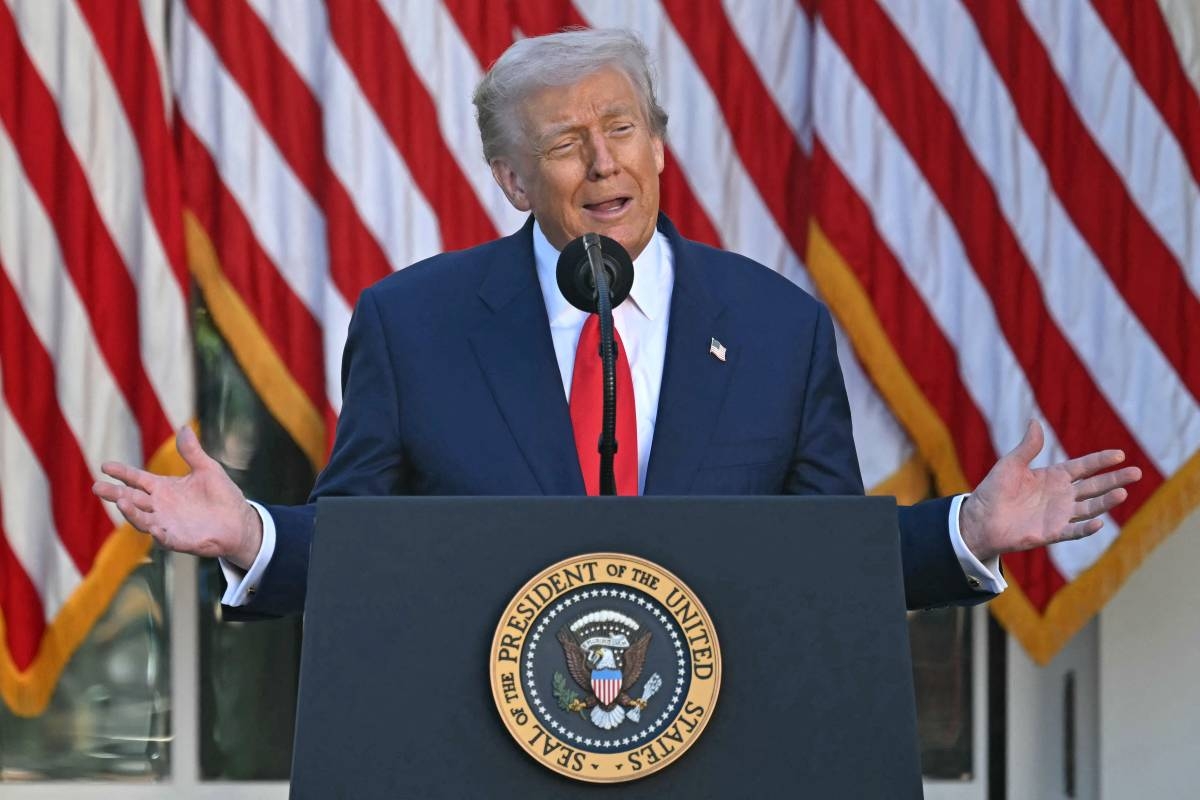
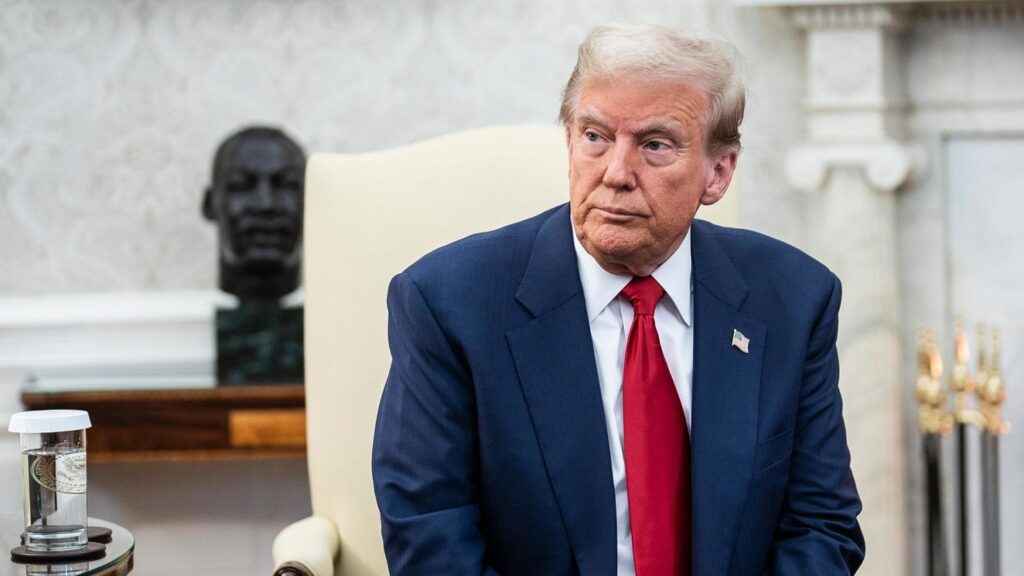
US President Donald Trump said on Wednesday that he had been informed the killing of protesters in Iran had come to an end, though he stressed that Washington would closely monitor developments before deciding on any military response.
Speaking amid rising international concern, Trump noted that while assurances had been given, the United States would wait to confirm whether the claims were genuine.
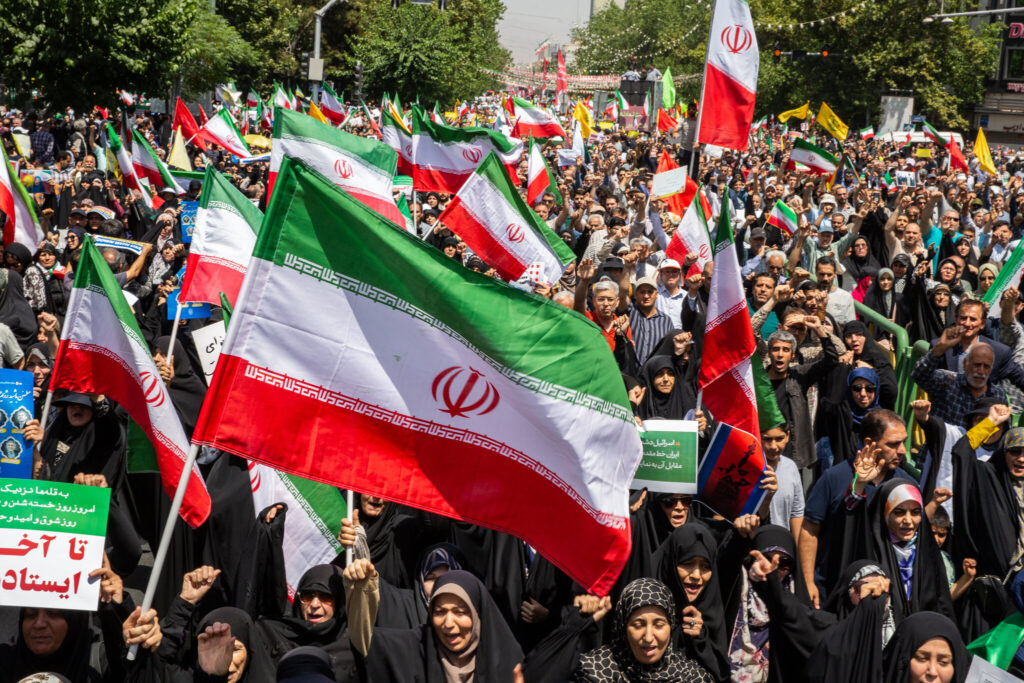
In recent days, Trump had openly discussed the possibility of stepping in to support Iranians following a violent crackdown on demonstrations that rights organizations say has resulted in at least 3,428 deaths.
However, during an unexpected statement at the White House, the president said he had received messages from what he described as “very important sources on the other side,” indicating that the violence had ceased and that executions would no longer proceed.
“They’ve said the killing has stopped and the executions won’t take place—there were supposed to be a lot of executions today, and that the executions won’t take place—and we’re going to find out,” Trump said.
The president declined to provide further clarification and emphasized that US authorities had not yet independently verified the information. When questioned by an AFP journalist in the Oval Office about whether military intervention had been ruled out, Trump responded cautiously, saying, “We’re going to watch it and see what the process is.”
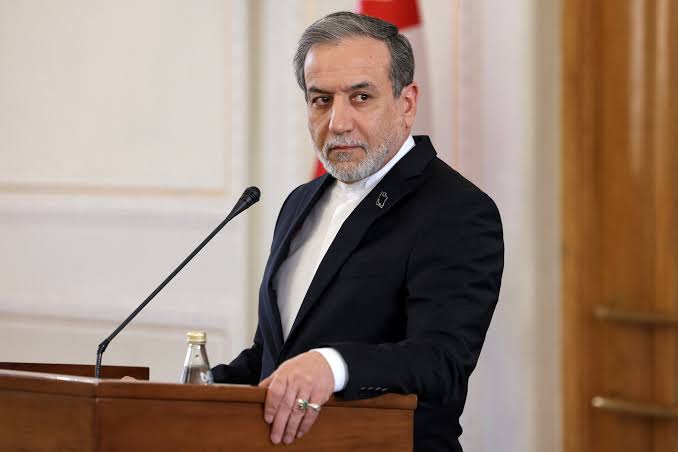
Iran’s Foreign Minister Abbas Araghchi later reinforced the claim, stating there would be “no hanging today or tomorrow,” during an interview with Fox News. In the same interview, he alleged that Israel was behind the violence, though he did not offer evidence to support the accusation.
Araghchi argued that demonstrations initially sparked by economic hardship on December 28 escalated into deadly unrest between January 7 and 10 after being infiltrated by outside “elements who had a plan to create a big number of killings in order to provoke President Trump to enter into this conflict and start a new war against Iran.”
Iran’s Justice Minister Amin Hossein Rahimi echoed this position, telling state media that after January 7, “those weren’t protests any longer,” adding that anyone detained during that period “was definitely a criminal.”
Separately, a human rights organization reported that the execution of a 26-year-old Iranian man, Erfan Soltani, who was arrested during the protests, would not take place as planned on Wednesday, citing information from his family.
Later on Wednesday, the United Nations announced that the Security Council would meet on Thursday for “a briefing on the situation in Iran,” following a request from the United States.
Trump’s remarks had an immediate impact on global markets, with oil prices falling sharply on Thursday as fears of a potential supply disruption eased. Iran accounts for roughly three percent of the world’s oil output.
Araghchi said Iranian authorities were “in full control” of the situation and described the atmosphere as “calm” after what he referred to as three days of “terrorist operation.” Despite the calmer tone, Tehran warned it would respond forcefully to any US attack, as Washington reportedly reduced staff at a base in Qatar that Iran had struck last year.
Iran targeted the Al Udeid base in June in response to US strikes on its nuclear facilities. Ali Shamkhani, a senior adviser to Supreme Leader Ayatollah Ali Khamenei, cautioned Trump that the attack demonstrated “Iran’s will and capability to respond to any attack.”
Concerns about a possible US military move continued to unsettle the region. Britain said its embassy in Tehran had been “temporarily closed,” while the US embassy in Saudi Arabia advised personnel to remain cautious and stay away from military sites. India also urged its citizens to leave Iran.
Germany’s Lufthansa announced on Wednesday that it would avoid flying over Iranian and Iraqi airspace “until further notice,” citing US threats against Tehran.
Trump has repeatedly warned of possible military intervention since protests erupted in late December, marking the most significant challenge to Iran’s leadership since the Islamic Republic was established in 1979. Rights groups claim authorities have carried out their most severe crackdown in years, aided by a five-day nationwide internet shutdown.
Iran’s judiciary chief has pledged swift trials for detainees, heightening fears that capital punishment could be used to suppress dissent. In Tehran, officials held funerals for more than 100 security personnel and others described as “martyrs” killed during the unrest, which authorities labeled “acts of terror.”
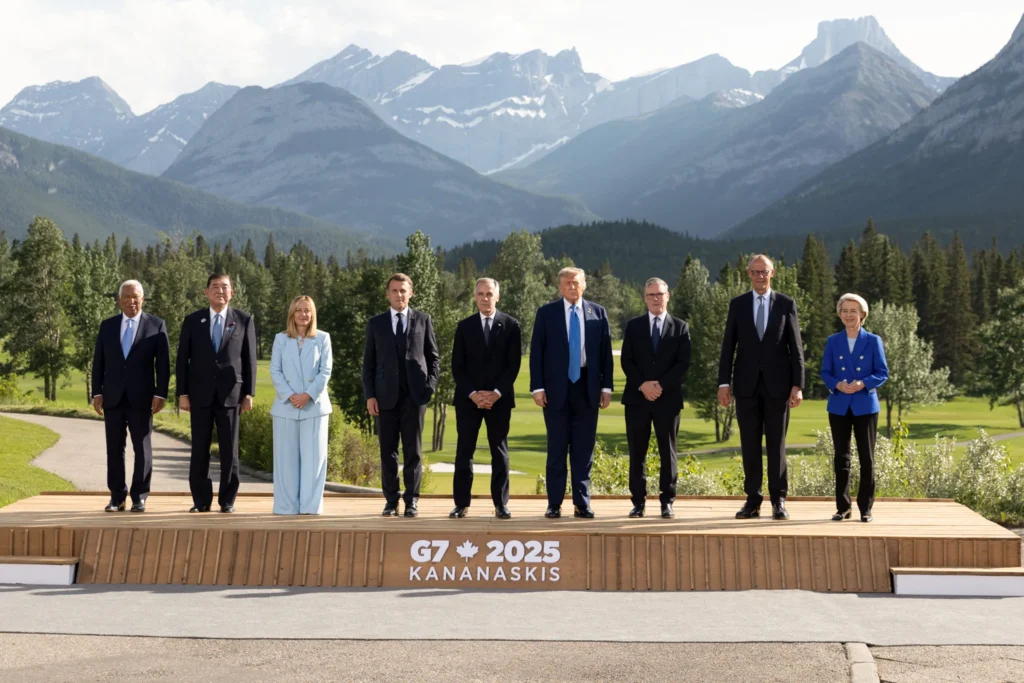
G7 nations said on Wednesday they were “deeply alarmed at the high level of reported deaths and injuries” and warned that further sanctions could follow if the repression continued. Internet watchdog NetBlocks reported that Iran’s blackout lasted 144 hours. Despite the restrictions, AFP-verified videos showed bodies wrapped in black bags at the Kahrizak morgue south of Tehran as grieving families searched for relatives.
The US-based Institute for the Study of War said Iranian authorities were employing “an unprecedented level of brutality to suppress protests,” noting a sharp decline in protest activity. An unnamed senior Iranian official claimed there had been no new “riots” since Monday, saying, “Every society can expect protests, but we will not tolerate violence.”
Prosecutors have announced that some detainees could face capital charges of “waging war against God.” State media reported hundreds of arrests and the detention of a foreign national on espionage charges, without providing details.
Iran Human Rights, a Norway-based group, said security forces had killed at least 3,428 protesters and detained more than 10,000 people.
What you should know
The crisis in Iran has drawn intense global attention as protests triggered by economic hardship escalated into one of the deadliest crackdowns in decades.
President Trump’s statement suggests a potential pause in executions and killings, but the lack of independent verification keeps uncertainty high. Iran’s leadership insists it has restored order and blames foreign interference, while rights groups accuse authorities of widespread abuses under cover of internet blackouts.
Diplomatic tensions, fears of US military action, and warnings from G7 nations highlight the international stakes, as developments in Iran continue to influence regional stability and global energy markets.