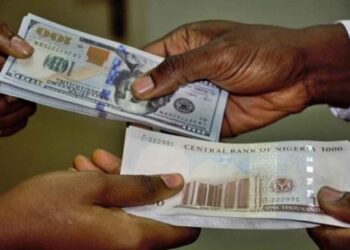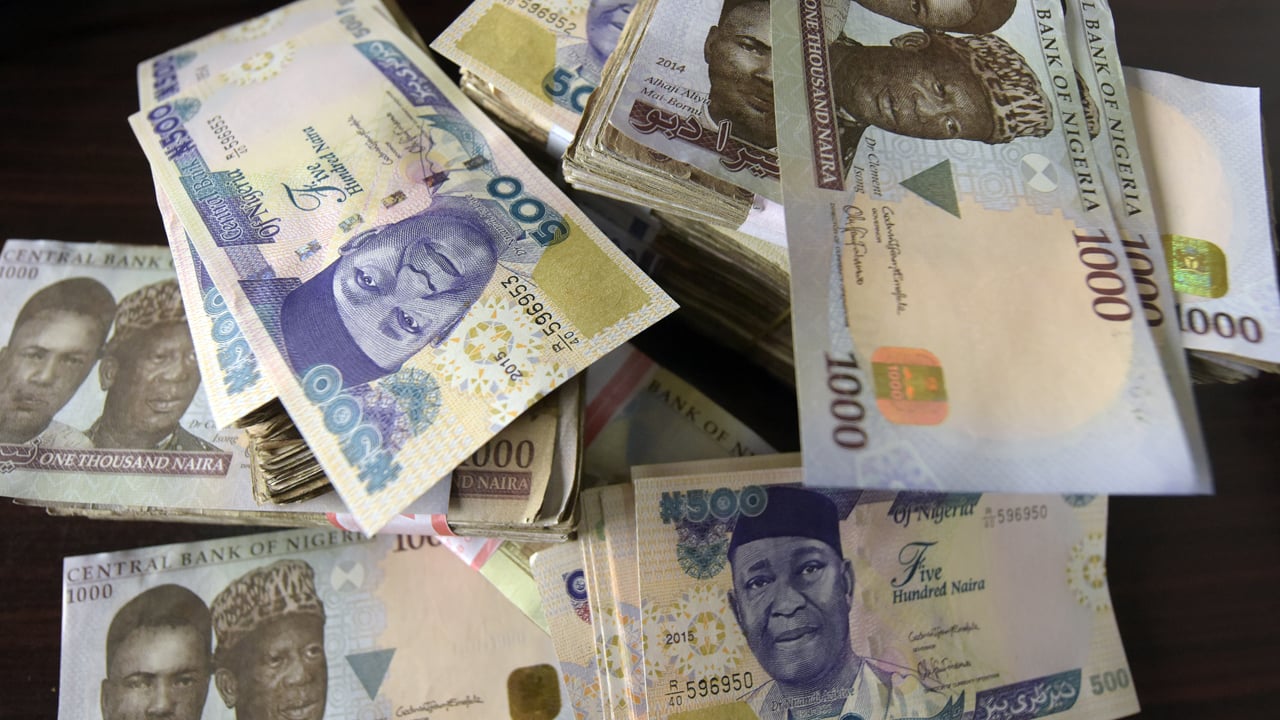
The naira weakened slightly against the US dollar in the second week of January, ending Wednesday’s trading at N1,421 per dollar on the official foreign exchange market, Central Bank of Nigeria data shows.
The movement represents a slight weakening from Tuesday’s N1,416 rate, though currency analysts emphasize that the depreciation remains contained within relatively narrow trading bands—a marked contrast to the sharp volatility that characterized Nigeria’s forex market in previous years.
The naira’s trajectory through the week showed fluctuation, trading at N1,428 per dollar on Monday before strengthening marginally on Tuesday, only to give up those gains by Wednesday’s close. This made the midweek session the first notable depreciation in the second week of 2026, following an opening rate of N1,431 per dollar on January 2, the year’s first trading day.
Market observers attribute the early-year weakness to typical post-holiday foreign exchange demand pressures and ongoing adjustments in currency supply dynamics. However, the relatively moderate scale of these movements has reinforced growing confidence in Nigeria’s reformed foreign exchange architecture.
The unofficial parallel market, which often serves as a barometer for unmet forex demand, showed a wider gap with official rates. The naira traded between N1,490 and N1,495 per dollar on Wednesday in the informal market, compared to N1,470 the previous day—maintaining a spread of approximately N70 to N74 above the official rate.
This premium reflects continued strong demand for foreign currency, particularly for travel allowances, imports, and what economists term “invisible transactions”—payments for services and transfers that fall outside formal trade channels. Despite this divergence, experts note that the differential has narrowed considerably compared to historical peaks, suggesting improved market integration.
Underpinning cautious optimism about exchange rate stability is Nigeria’s foreign reserve position, which edged up to $45.62 billion on Tuesday from $45.60 billion the previous day. The Central Bank projects reserves will climb to approximately $51.04 billion by year-end 2026, up from an estimated $45.01 billion in 2025.
The anticipated reserve growth stems from multiple sources: reduced foreign exchange pressures, higher oil revenue as crude prices stabilize, planned sovereign bond issuances in international markets, and increasing remittance flows from Nigerians in the diaspora.
Dr. Muda Yusuf, Chief Executive Officer of the Centre for the Promotion of Private Enterprise, characterized the outlook as “quite bright,” pointing to reserves as the fundamental anchor for currency stability. “Our foreign reserves are very strong, and reserves play a critical role in determining the strength and stability of any currency,” Yusuf told reporters.
Beyond reserve buffers, structural developments in Nigeria’s energy sector are emerging as a critical long-term support for the naira. The Central Bank has highlighted the domestic refining sector’s transformation as a key factor in reducing the country’s chronic dependence on imported petroleum products—historically one of Nigeria’s largest sources of foreign exchange drain.
The Dangote Refinery, Africa’s largest, has expanded its production capacity to 700,000 barrels per day from 650,000 barrels per day in 2025, with medium-term plans targeting 1.4 million barrels per day. As the facility ramps up operations, economists expect substantial reductions in refined fuel imports, which should preserve foreign exchange and support reserve accumulation.
This shift represents a fundamental change for Nigeria, which has paradoxically remained a major crude oil exporter while importing virtually all its refined petroleum products for decades. This situation created persistent foreign exchange pressure and contributed to currency instability.
While short-term fluctuations are expected to continue as the market absorbs various demand pressures, currency watchers say the combination of stronger reserves, ongoing foreign exchange reforms, and structural improvements in domestic refining capacity collectively strengthen the medium- to long-term outlook for the naira.
The relative stability observed thus far in 2026—despite the mild depreciation—contrasts sharply with previous periods of acute volatility, suggesting that reforms implemented by the Central Bank and broader economic adjustments are beginning to yield results.
However, challenges remain, particularly in closing the gap between official and parallel market rates and ensuring adequate foreign exchange supply to meet legitimate demand across all sectors of the economy. The coming months will test whether current reserve levels and structural reforms can sustain exchange rate stability as the year progresses.
WHAT YOU SHOULD KNOW
Nigeria’s naira weakened slightly to N1,421 per dollar in mid-January 2026, but the depreciation remains modest and controlled compared to previous years’ volatility.
The critical factor supporting currency stability is Nigeria’s strengthening foreign reserves—currently at $45.62 billion and projected to reach $51 billion by year-end—coupled with a game-changing structural shift: the Dangote Refinery’s expanded capacity is significantly reducing the country’s dependence on costly fuel imports, which have historically drained foreign exchange reserves.
While challenges persist, particularly the N70+ gap between official and parallel market rates, economists view 2026’s outlook as “quite bright,” with reserve strength and domestic refining capacity providing a solid foundation for naira stability in the medium to long term.