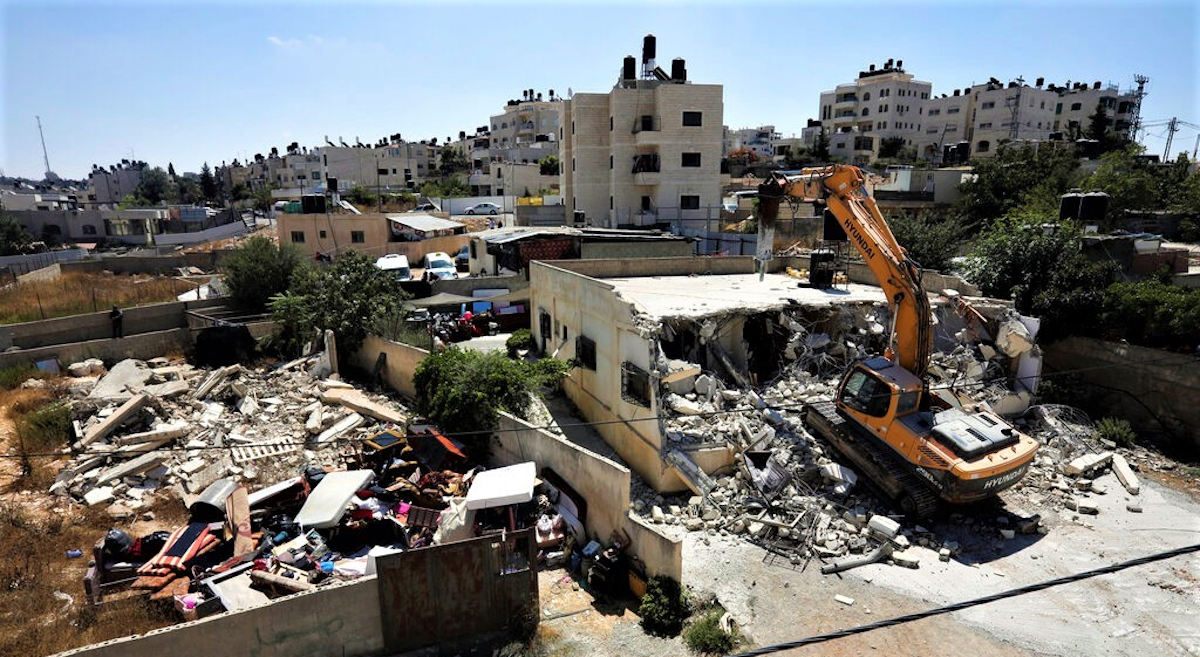
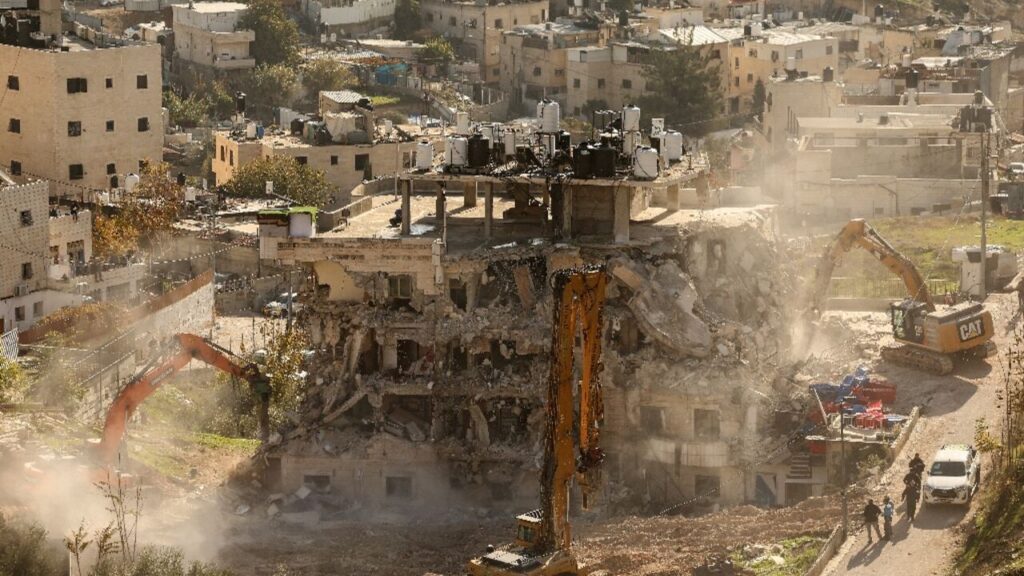
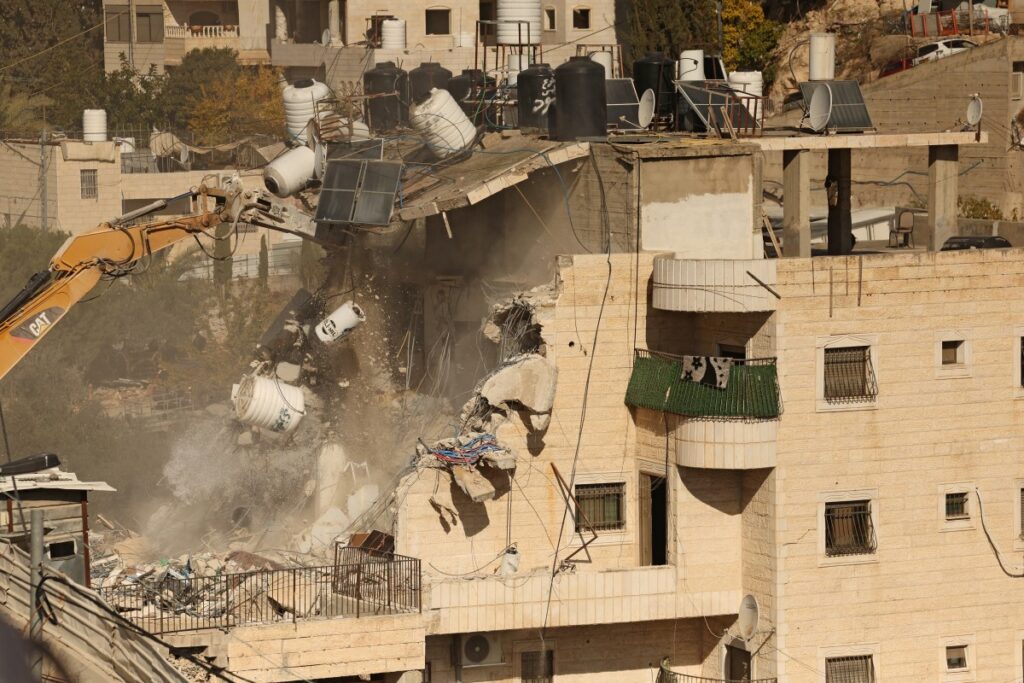
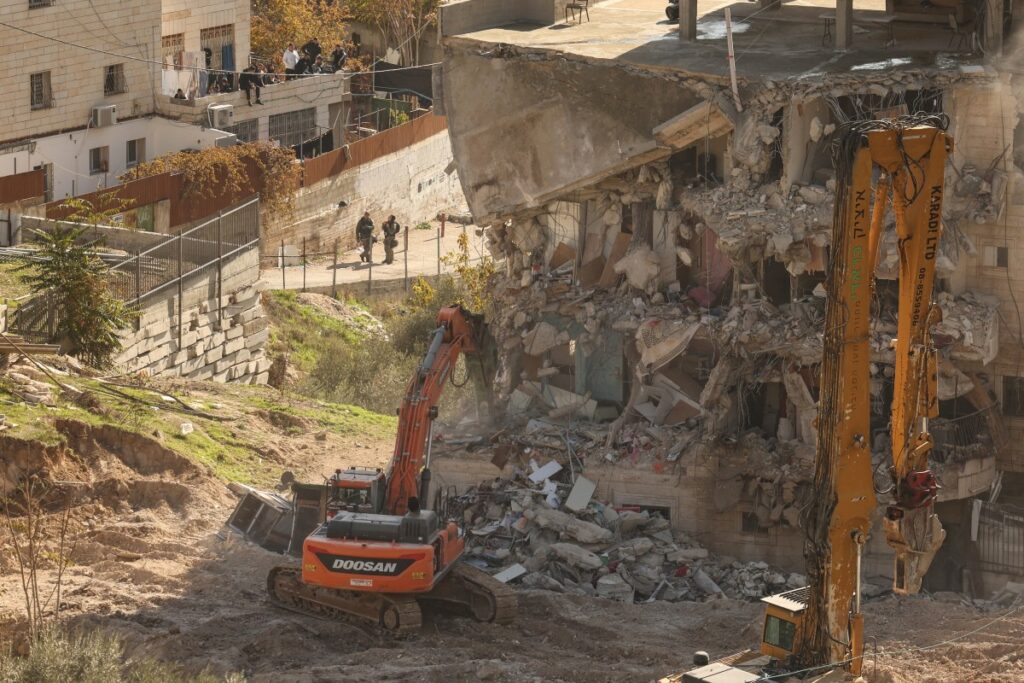
Israeli authorities carried out the demolition of a four-storey residential building in east Jerusalem early on Monday, leaving dozens of Palestinian residents displaced after security forces forced their way into the property during the night.
The structure was the latest to be destroyed amid an intensified campaign by Israeli officials against what they describe as unauthorised construction in the annexed eastern part of the city—a move Palestinian officials say reflects a broader pattern of forced displacement.
“The demolition is a tragedy for all residents,” said Eid Shawar, one of the occupants of the building, while speaking to AFP.
Situated in the Silwan neighbourhood near Jerusalem’s Old City, the building contained about 12 apartments and was home to roughly 100 people, including women, children, and elderly residents.
“They broke down the door while we were asleep and told us we could only change our clothes and take essential papers and documents,” said Shawar, a father of five.
With no immediate shelter available, the 38-year-old said his family of seven would have to spend the night inside his car.
“They are destroying my bedroom,” one distraught woman cried as she watched bulldozers tear into the structure.
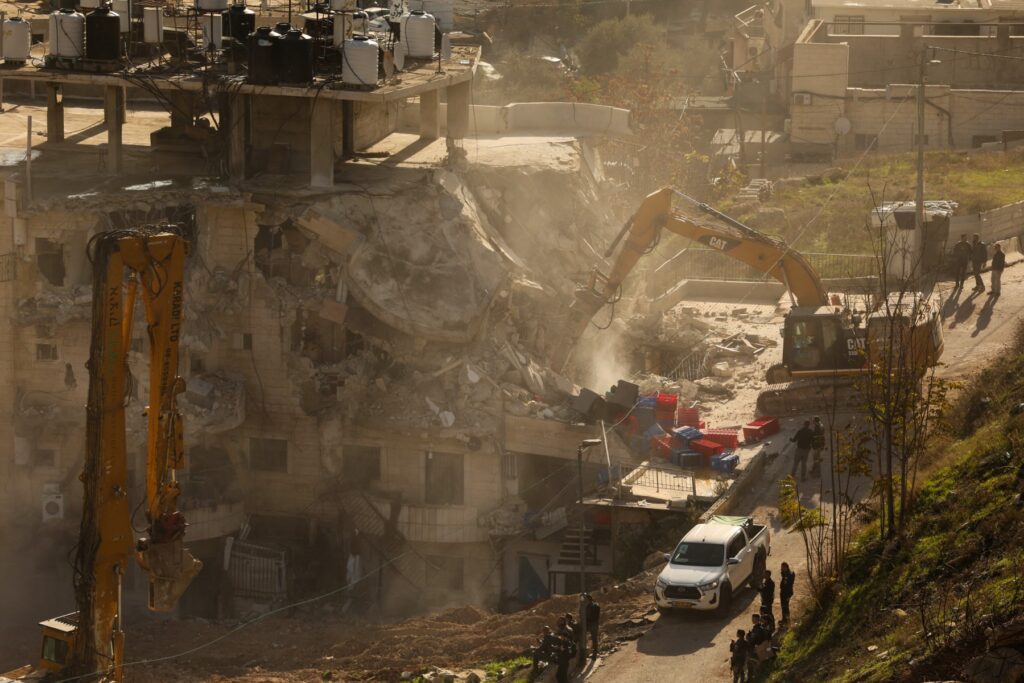
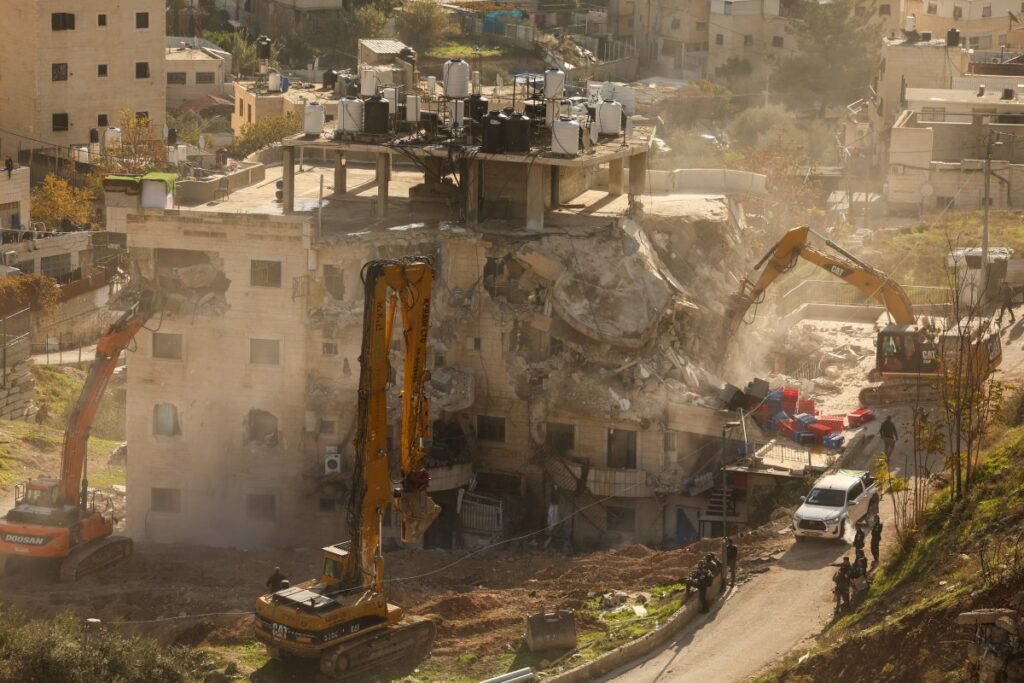
An AFP journalist reported that three bulldozers moved in during the early hours, while residents stood by helplessly, their personal belongings scattered across nearby streets.
Israeli police sealed off surrounding roads as security forces spread across the area and stationed themselves on rooftops of neighbouring houses.
By midday, much of the building had already been reduced to rubble.
Activists said the structure was built on privately owned Palestinian land but was targeted for demolition due to the absence of a building permit.
‘Systematic policy’
Israeli non-governmental organisations Ir Amin and Bimkon described the action as the largest demolition carried out in 2025, stating that “around 100 east Jerusalem families have lost their homes”.
Human rights groups have long argued that Palestinians face nearly insurmountable barriers to securing building permits under Israel’s planning system—a situation that has fueled longstanding tension in east Jerusalem and the occupied West Bank.
According to the Jerusalem governorate, which is affiliated with the Palestinian Authority in Ramallah, the demolition “is part of a systematic policy aimed at forcibly displacing Palestinian residents and emptying the city of its original inhabitants”.
“Any demolition that expels residents from their homes constitutes a clear occupation plan to replace the land’s owners with settlers.”
The demolition followed Israel’s approval on Sunday of 19 new settlements in the occupied West Bank, a move widely regarded as illegal under international law.
The Jerusalem municipality, which governs both west and east Jerusalem, has maintained that demolitions are conducted to address illegal construction and to facilitate infrastructure development or the creation of green spaces.
In a statement to AFP, the municipality said the Silwan demolition was based on a 2014 court order, explaining that “the land on which the structure stood is zoned for leisure and sports uses and construction, and not for residential purposes”.
“For a long period, the residents were granted extensions for the execution of the order and were offered various options in order to find a solution, but they declined to do so.”
Constant tensions
Activists countered that Israeli authorities frequently classify areas in east Jerusalem as parks or open spaces to advance settlement expansion.
Silwan lies just outside the Old City and is home to nearly 50,000 Palestinians, alongside several hundred Israeli settlers.
Ir Amin and Bimkon said the demolition “was carried out without prior notice, despite the fact that a meeting was scheduled” on Monday to discuss possible legalisation of the building.
“This is part of an ongoing policy,” they said.
Family members of the displaced residents expressed anguish as the building was torn down.
“You had children and even sick people like my brother, who is a cancer patient, living in the building,” said Ashraf Sqafi, watching the scene unfold.
“All this is very painful.”
Jerusalem remains one of the most sensitive flashpoints in the Israeli-Palestinian conflict.
East Jerusalem, including the Old City, has been under Israeli occupation since the 1967 Arab-Israeli war and was later annexed—a move not recognised by the United Nations.
Tensions in the area have intensified further since the October 7, 2023 Hamas attack that sparked the ongoing war in Gaza.
While Israel considers east Jerusalem an inseparable part of its capital, Palestinians seek the city as the capital of their future state, a position supported by international law.
What you should know
The demolition of Palestinian homes in east Jerusalem is rooted in long-standing disputes over land, permits, and sovereignty.
Palestinians often build without permits because Israel’s planning system makes approvals extremely difficult to obtain. Israeli authorities argue demolitions enforce the law, while Palestinians and rights groups see them as a tool for displacement and settlement expansion.
East Jerusalem’s status remains unresolved under international law, with the UN rejecting Israel’s annexation and recognising Palestinian claims to the area.