Astronomers have confirmed that an exceptionally intense flash observed earlier this year came from the explosive death of a massive star that existed when the universe was only a small fraction of its current age.
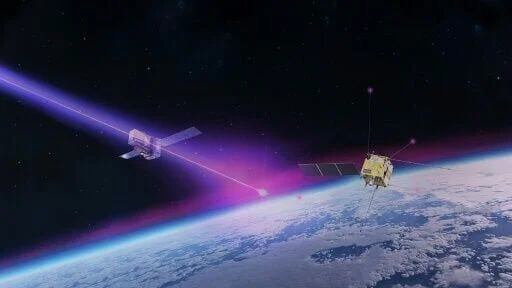
The remarkable event was detected on March 14 by SVOM, a French-Chinese space telescope launched last year to study gamma-ray bursts, which are regarded as the brightest and most forceful explosions known in space.
Young researchers working with France’s Atomic Energy Commission (CEA) received an alert on their phones that a major burst had occurred, prompting them to immediately call for other observatories to redirect their instruments toward the source. According to two studies published in Astronomy & Astrophysics, the flash was produced by a star roughly a hundred times larger than the Sun that erupted just 700 million years after the Big Bang.
“This is extremely rare—it’s the fifth most distant gamma-ray burst ever detected,” said Bertrand Cordier, CEA’s scientific lead for SVOM and a contributor to both studies. He explained that “the photons that reached our instruments travelled for 13 billion years” before arriving on Earth. He emphasized that this detection, which lasted several tens of seconds, stands out as “the most precise in terms of the light we collected and the measurements we made.”
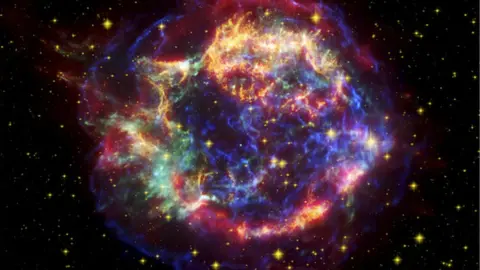
Gamma-ray bursts rank as the most energetic events in existence. Scientists believe they occur during colossal cosmic events such as supernova explosions of massive stars or the merger of neutron stars. These bursts can emit in a few seconds the same amount of energy the Sun will release throughout its entire 10-billion-year lifespan. The explosions launch matter at “speeds close to the speed of light”, creating environments so extreme that they cannot be recreated on Earth.
Because they travel so far across the universe, these brilliant flashes serve as “probes” that illuminate the materials they pass through. This allows astronomers to observe conditions from the early stages of the universe, which is now 13.8 billion years old.
The burst recorded in March, designated GRB250314A, originated from the explosion of one of the earliest generations of stars formed after the Big Bang. These early stars created the first heavy elements—including iron, carbon, and oxygen—which became essential building blocks in the development of galaxies, planets, and life.
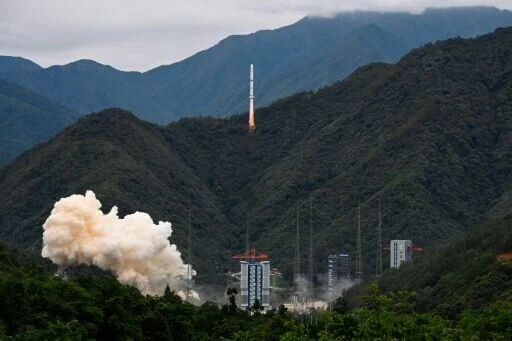
Cordier said he hopes SVOM will detect one or two similar bursts every year. He stressed that the real challenge is coordinating the entire chain of observations, since the telescope that first spots the burst must alert other powerful ground-based instruments.
After the March detection, it took 17 hours before Chile’s Very Large Telescope was able to observe the fading light. “During that time, the intensity had decreased,” Cordier noted, adding that quicker responses would improve the quality of the data collected.
What You Should Know
This discovery highlights the power of gamma-ray bursts to reveal the universe’s earliest history. GRB250314A, detected by the SVOM telescope, came from a massive star that exploded just 700 million years after the Big Bang.
Its light traveled for 13 billion years before reaching Earth, offering scientists a rare and detailed look at the first generation of stars that produced the heavy elements crucial to the universe’s evolution.
Researchers hope that with faster coordination between telescopes, future observations of similar distant events will yield even deeper insights into the ancient cosmos.