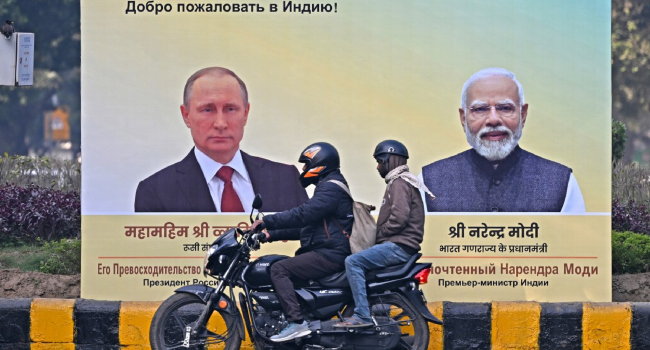
President Vladimir Putin will begin a two-day trip to India on Thursday, aiming to reinforce long-standing defence cooperation at a time when New Delhi is facing increasing pressure from Washington to halt its crude oil imports from Moscow.
This marks Putin’s first visit to India since the conflict in Ukraine began. He will be accompanied by a high-level delegation that includes Defence Minister Andrei Belousov, with local reports suggesting that discussions may feature a potential agreement involving fighter aircraft.
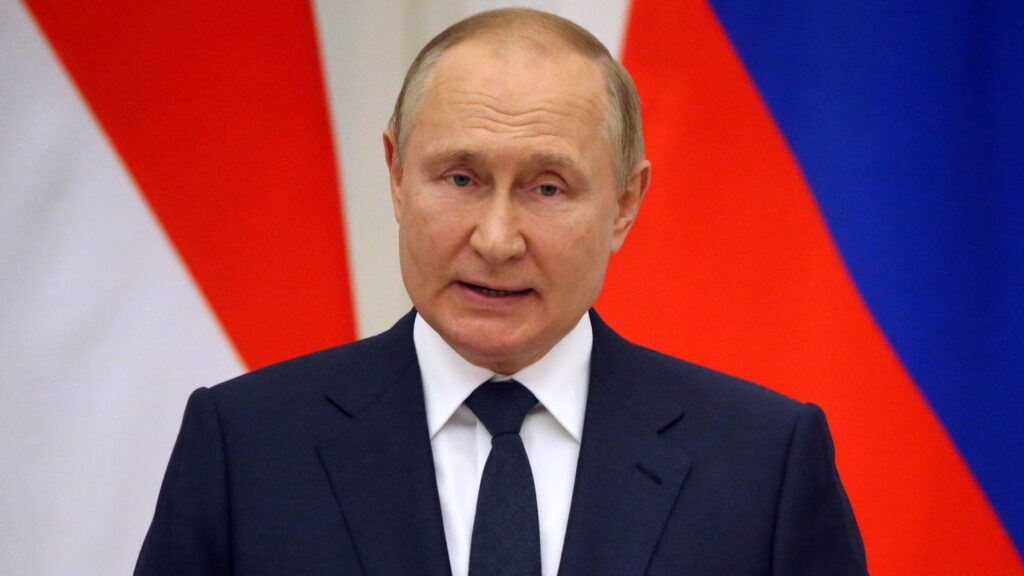
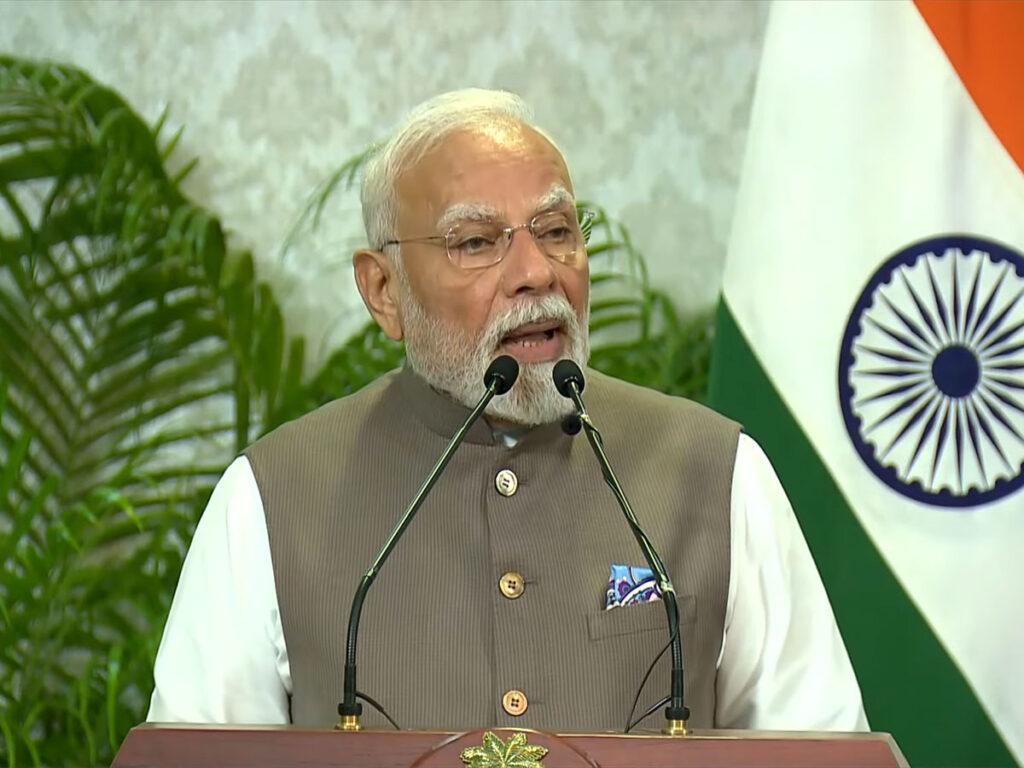
Putin is expected to hold a private dinner with Prime Minister Narendra Modi on Thursday before the two leaders engage in a formal summit and meet with business executives the following day.
Beyond military ties, trade relations are also anticipated to feature prominently. India is navigating a delicate diplomatic balance, depending on Russian supplies for strategic needs while attempting to prevent tensions with US President Donald Trump as tariff talks continue.
Kremlin spokesman Dmitry Peskov noted that delivering Russia’s advanced S-400 air defence systems held an “important place on the agenda”.
India, which has already received three S-400 units, is awaiting two more. Their delivery, originally set under a 2018 agreement, has been delayed due to the Ukraine war and sweeping Western sanctions.
Indian media have also speculated that Moscow could propose joint manufacturing of Russia’s Su-57 fighter jets.
Although India remains one of the world’s major defence importers and Russia has traditionally been a leading supplier, New Delhi has intensified its domestic weapons production efforts. Russia’s share of India’s arms imports has dropped from 76 percent in 2009-13 to 36 percent in 2019-23, based on data from the Stockholm International Peace Research Institute.
Energy Imports
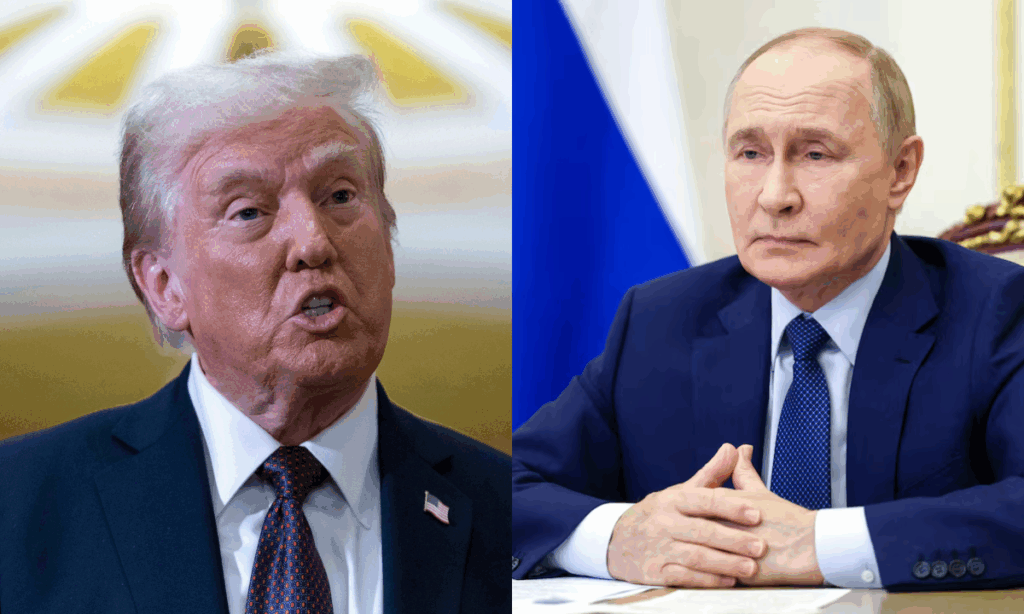
Putin’s arrival follows Trump’s decision in August to impose a 50 percent tariff on most Indian goods. The measure was widely interpreted as retaliation for India’s continued purchase of Russian oil, which Washington argues contributes to financing the conflict in Ukraine.
India, now the world’s most populous country, has emerged as one of the biggest buyers of discounted Russian oil, saving billions of dollars while enabling Moscow to redirect its exports after losing access to European markets.
However, India has recently scaled back its crude imports due to sanctions on Russian oil giants Rosneft and Lukoil.
Officials in New Delhi worry that any fresh energy or defence agreements with Russia could provoke negative reactions from Trump and affect ongoing trade discussions with the US.
Peskov dismissed Washington’s tariffs as insignificant to Moscow.
“What concerns us is how we are going to maintain and increase the volume of our bilateral business with India without allowing anyone to interfere,” he told Indian journalists during a briefing organized by Sputnik India.
Nandan Unnikrishnan of the Observer Research Foundation explained to AFP that while India might reduce oil purchases because of US influence, both nations remain tied by strategic priorities. He added that even with lower energy imports, Russia would remain indispensable due to India’s reliance on spare parts for its older military equipment.
‘Critical Moment’
A senior Indian foreign ministry official, who requested anonymity, highlighted the need to address the widening trade gap “one way or the other”.
Bilateral trade reached $68.7 billion in 2024-25, nearly six times higher than before the pandemic, yet Indian exports amounted to only $4.88 billion.
India has been urging Russia to expand access to its market for Indian sectors such as pharmaceuticals, automobiles, and services.
Unnikrishnan said the meeting, Putin’s first trip to India since December 2021, would allow both leaders to review the “global situation, as well as what is happening in Ukraine”.
Harsh V Pant, an international relations professor at King’s College London, described the visit as an effort by both countries to “reset” their partnership at a sensitive geopolitical period for each.
“For India, the optics is a statement of intent for strategic autonomy, and Putin, who rarely travels, is sending a message about the importance of the relationship by travelling here,” Pant told AFP.
According to the senior foreign ministry official, ties between Moscow and New Delhi remain the “most stable relationship in modern times”.
The official acknowledged the global implications of the visit but emphasized that it should “be seen in its bilateral context”.
“This is just another annual summit between two countries with a steady relationship.”
What you should know
President Vladimir Putin’s visit to India signals a continued strategic partnership between Moscow and New Delhi despite intense Western pressure over Russia’s war in Ukraine.
India aims to maintain critical defence supplies, address a significant trade imbalance, and balance its energy interests with geopolitical realities shaped by US tariffs. Discussions are expected to cover the S-400 defence systems, potential co-production of Su-57 fighter jets, and the broader global climate influencing both countries.
While India may scale back oil imports, the relationship remains rooted in long-term strategic needs that both sides wish to preserve.