Summary
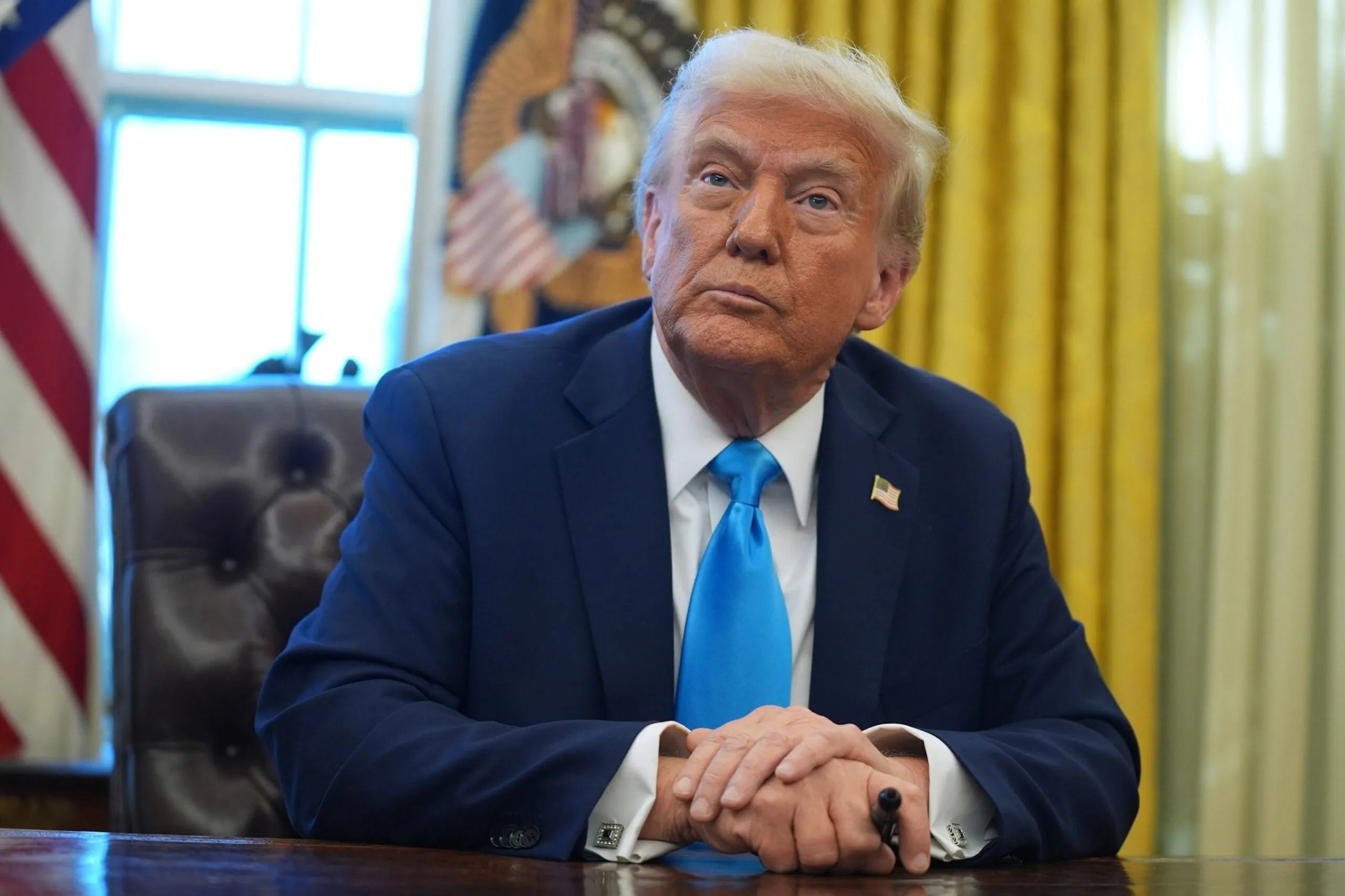
A US judge on Wednesday brought an end to the long-standing case accusing Donald Trump and several of his allies of attempting to overturn the 2020 presidential election, effectively closing the chapter on the last criminal prosecution that had lingered over his return to the White House.
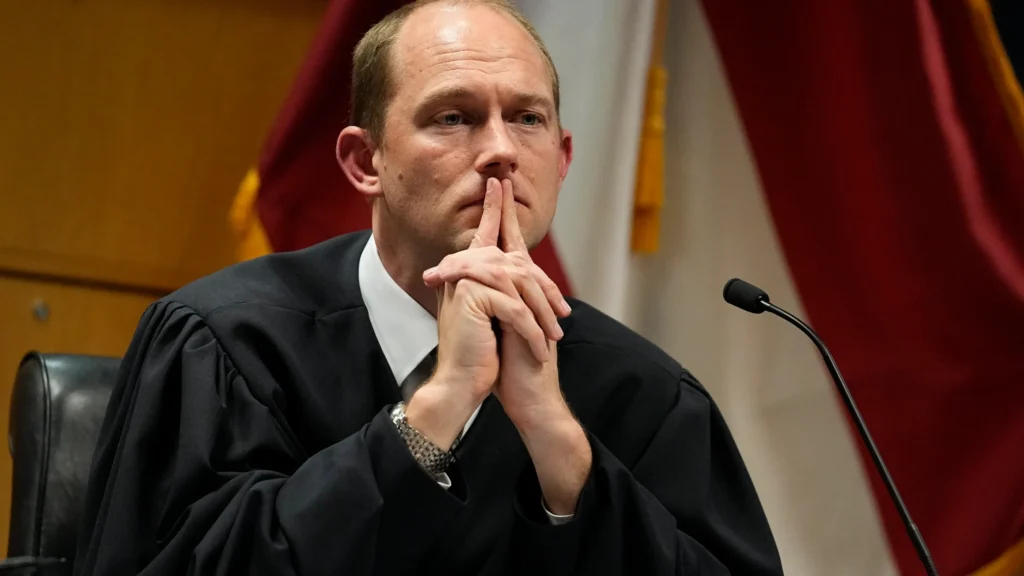
The decision came shortly after a strong appeal from prosecutor Pete Skandalakis, who urged Judge Scott McAfee to dismiss the Georgia case entirely, arguing that the matter fell under federal jurisdiction rather than the authority of the state courts. With the ruling, the final major legal battle tied to Trump’s post-election actions has now been shut down.
Celebrating the development, Trump wrote “LAW and JUSTICE have prevailed in the Great State of Georgia” in a triumphant post on Truth Social.
He went on to label the case an “Illegal, Unconstitutional, and unAmerican Hoax” despite several codefendants having been convicted, insisting it should have “never been brought” as he repeated his false assertions that the 2020 election was stolen from him.
The Republican president had previously been confronted with multiple federal charges after his first term, including accusations that he conspired to overturn the election results and kept supposedly classified government materials that prosecutors said should not have been taken from the White House.
Both of those federal cases were later withdrawn by Special Counsel Jack Smith following Trump’s election victory, citing the Justice Department’s long-standing policy prohibiting the indictment or prosecution of a sitting US president.
Skandalakis echoed that sentiment in his legal brief, saying, “Indeed, if Special Counsel Jack Smith, with all the resources of the federal government at his disposal… concluded that prosecution would be fruitless, then I too find that, despite the available evidence, pursuing the prosecution of all those involved in State of Georgia v. Donald Trump, et al. on essentially federal grounds would be equally unproductive.”
He also highlighted the practical barriers to prosecuting a sitting president at the state level in Georgia, arguing that proceeding without Trump would make a trial for the remaining 14 defendants nearly impossible.
Judge McAfee promptly approved the motion, officially dismissing the case.
‘On life support’
Trump and 18 other individuals had been indicted in Georgia in 2023 on racketeering and related charges tied to their alleged attempts to overturn the 2020 election outcome in the state.
Prosecutors had accused the group of attempting to pressure state officials to “find” votes to overturn Trump’s narrow loss to Joe Biden, intimidating election workers, and assembling an alternative slate of pro-Trump electors.
Four members of the group later accepted reduced charges.
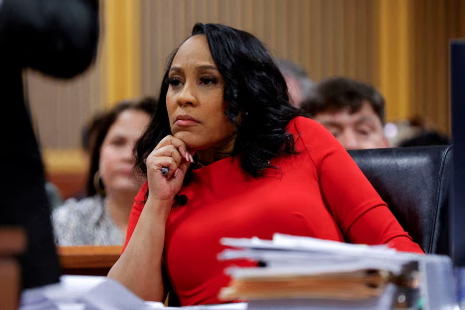
The case had begun to unravel in December, when Georgia’s appeals court ruled that Fulton County district attorney Fani Willis could no longer oversee the prosecution because of a personal relationship with Nathan Wade, the special prosecutor she appointed. The court said the relationship created an “appearance of impropriety.”
Although Trump granted federal pardons to several prominent allies accused of efforts to overturn the election, including former New York mayor Rudy Giuliani and ex-White House chief of staff Mark Meadows, those pardons did not apply to state-level crimes such as the charges in Georgia.
Skandalakis argued that allowing the Georgia matter to continue “in full for another five to ten years” would not benefit the state’s residents, adding that the lengthy timeline and unresolved debates over presidential immunity and state-versus-federal jurisdiction rendered the case effectively “on life support.”
He emphasized that his stance was not political, saying, “As a former elected official who ran as both a Democrat and a Republican… this decision is not guided by a desire to advance an agenda but is based on my beliefs and understanding of the law.”
Willis, who had originally indicted Trump and his associates in August 2023 under Georgia’s racketeering statutes, was removed following the court’s ruling on her involvement with Wade. Trump’s legal team maintained throughout the proceedings that his comments about the election were merely political opinions protected under the First Amendment.
What You Should Know
The dismissal of the Georgia election case marks the end of all criminal cases that once threatened Donald Trump’s political comeback.
The judge accepted arguments that the matter belonged under federal authority and would be impossible to prosecute while Trump is a sitting president.
With previous federal charges already dropped by Special Counsel Jack Smith, the Georgia ruling removes the last major legal challenge tied to Trump’s 2020 election actions, leaving him legally unburdened as he continues his presidency.