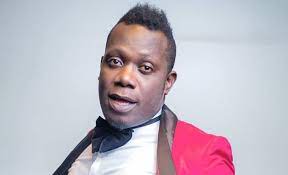
Nigerian singer Duncan Mighty has reignited conversations about regional contributions to Afrobeats, boldly asserting that artists from Port Harcourt have been instrumental in shaping the genre’s contemporary sound.
In a recent interview with Hip TV, the “Port Harcourt Boy” hitmaker made sweeping claims about the influence of his home city on the global phenomenon that is modern Afrobeats. According to Duncan Mighty, the fingerprints of Port Harcourt—from its distinctive Ikwerre slang to its unique sonic textures—are now woven into the very fabric of the genre.
“In almost every Afrobeats song today you can hear the Port Harcourt influence, especially the Ikwerre slangs,” Duncan Mighty stated emphatically. “You can’t hear any Afrobeats song today and you will not hear a spice of Port Harcourt. Almost every Afrobeats song today has the flavour of Port Harcourt sound.”
The singer, whose career peaked in the late 2000s and early 2010s with hits like “Ijeoma” and “Obianuju,” didn’t stop at highlighting the city’s sonic contributions. He went further to name-check a select group of artists he believes have been foundational to Afrobeats’ current iteration.
“I, Burna Boy, Timaya, Omah Lay and Port Harcourt sound built the foundation of today’s Afrobeats,” Duncan Mighty declared, positioning himself alongside Grammy-winning superstar Burna Boy, dancehall-influenced Timaya, and rising star Omah Lay as architects of the genre’s evolution.
Port Harcourt, the capital of Rivers State and Nigeria’s oil hub, has indeed produced a remarkable lineage of successful artists who have made their mark on Nigerian music. The city’s unique cultural blend—influenced by its coastal location, diverse ethnic groups, and economic significance—has historically given rise to distinctive musical expressions.
Duncan Mighty himself rose to prominence with a sound that fused highlife, dancehall, and indigenous Port Harcourt flavors, creating anthems that resonated across Nigeria. Timaya, another Port Harcourt native, brought a gritty, street-influenced style that incorporated pidgin English and local parlance. Meanwhile, Burna Boy, arguably Nigeria’s biggest musical export currently, has consistently referenced his Port Harcourt roots in his music and public persona, while Omah Lay represents the city’s latest generation of breakout stars.
However, Duncan Mighty’s assertions have not gone unchallenged. The claims quickly sparked mixed reactions across social media and within music circles, with critics accusing the singer of “overemphasizing” Port Harcourt’s role while downplaying contributions from other regions.
Nigeria’s music landscape is notably diverse, with Lagos serving as the industry’s commercial nerve center and home to countless influential artists. Cities like Ibadan, Abeokuta, and Benin have their own rich musical histories, while the Eastern region has produced numerous stars. Many observers argue that Afrobeats, in its current global form, is the product of multiple influences, regions, and generations of artists.
Critics of Duncan Mighty’s statements point out that pioneering figures like Fela Kuti, King Sunny Ade, and more recently, 2Baba, D’banj, and Wizkid—none of whom hail from Port Harcourt—have been equally, if not more, influential in shaping the genre’s trajectory and global appeal.
Duncan Mighty’s comments, regardless of their perceived accuracy, highlight an ongoing discourse about credit, influence, and regional pride in Nigerian music. As Afrobeats continues its global ascent, questions about who deserves recognition for its foundation and evolution become increasingly contentious.
What remains undeniable is that Port Harcourt has contributed significantly to Nigerian music’s rich tapestry. Whether its influence constitutes the “foundation” of today’s Afrobeats, as Duncan Mighty claims, or is simply one of many important threads in the genre’s complex weave, is a debate that will likely continue among fans, critics, and artists alike.
For now, Duncan Mighty has ensured that Port Harcourt’s musical legacy remains firmly in the conversation—even if not everyone agrees with his assessment of its magnitude.
WHAT YOU SHOULD KNOW
Duncan Mighty’s claims that Port Harcourt artists—himself, Burna Boy, Timaya, and Omah Lay—laid the foundation for modern Afrobeats have sparked controversy.
While Port Harcourt has undeniably produced influential artists who’ve enriched the genre with distinctive sounds and Ikwerre slang, critics argue he’s overstating the city’s role while ignoring contributions from Lagos, other regions, and pioneering legends like Fela Kuti, Wizkid, and D’banj.