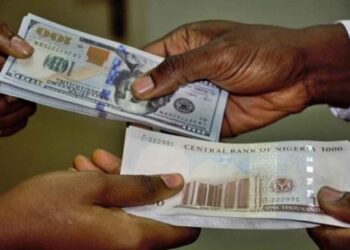
Nigeria’s Bureau De Change (BDC) operators are facing an unprecedented crisis, with many licensed currency traders on the brink of collapse as the Central Bank of Nigeria’s suspension of dollar allocation continues to severely impact their operations.
The Perfect Storm
The BDC sector, once a vital component of Nigeria’s foreign exchange ecosystem, finds itself in what industry insiders describe as “survival mode.” The crisis stems primarily from the CBN’s decision to halt forex sales to these licensed operators, leaving them without access to the official window that previously formed the backbone of their business model.
Abubakar Ardo, a BDC operator who spoke exclusively to our correspondent, painted a grim picture of the current reality. “Honestly, things have been extremely tough for us lately. Most operators are just managing to stay afloat,” he explained, noting that many businesses have either temporarily shuttered their operations or drastically reduced their workforce to manage costs.
A History of Turbulence
The current predicament has its roots in July 2021, when the CBN first stopped forex sales to BDC operators, accusing them of facilitating illegal financial flows and serving as conduits for money laundering activities. The apex bank took the dramatic step of revoking licenses for over 4,173 operators in February 2024 for failing to comply with regulatory guidelines.
While the CBN briefly resumed forex sales to BDCs in February 2024 to enhance liquidity in the retail segment, this lifeline proved short-lived. The sales were discontinued shortly after, leaving operators stranded and questioning the sustainability of the initiative.
Changing Market Dynamics
Compounding the operators’ challenges is a fundamental shift in consumer behavior. Ardo revealed that demand for physical cash exchanges has plummeted as customers increasingly opt for bank transfers, online platforms, and International Money Transfer Operators (IMTOs). “Sometimes, you can go days without a single serious transaction,” he lamented.
Currently, BDC operators subsist primarily on sporadic walk-in customers selling small amounts of foreign currency—a business model Ardo describes as “not structured or steady.” This dislocated market structure has left many operators unable to generate sufficient revenue to cover basic operational expenses.
The Financial Squeeze
The financial pressures facing BDC operators are mounting. Office rent, staff salaries, regulatory licenses, and compliance costs remain constant, but revenue streams have dried up significantly. Many operators are now solely focused on keeping their licenses active while hoping for eventual reintegration into the official market.
Aminu Gwadebe, president of the Association of Bureau De Change Operators of Nigeria (ABCON), confirmed that the majority of members are struggling with overhead expenses, with operations “currently near extinction.” He described most operators as “comatose,” with survival largely dependent on access to the official foreign exchange market—access they currently lack.
A Glimmer of Hope?
Despite the dire circumstances, both Ardo and Gwadebe indicated that operators are engaged in “positive discussions” and “ongoing positive collaboration” with the CBN regarding the return of active BDC participation in the retail forex market.
Gwadebe emphasized the historical importance of BDCs, noting they have “over time, remained the most potent tool of the CBN’s foreign exchange policy transmission mechanism.” The operators have consistently advocated for increased participation in the forex market, particularly following the June 2023 unification of all foreign exchange market segments into a single window.
The Broader Context
This crisis unfolds against the backdrop of the CBN’s efforts to stabilize the naira and eliminate exchange rate volatility. Gwadebe, while acknowledging his members’ struggles, praised regulatory authorities for achieving naira stability and eliminating exchange rate spikes, demonstrating what he termed “patriotic” alignment with policies strengthening national sovereignty.
The BDC operators have proposed full integration into the system, including access to banks’ autonomous windows and IMTO agencies, as potential solutions. However, as uncertainty continues to plague the retail forex sub-sector—with many operators still grappling with recapitalization and licensing processes—the future remains precarious for Nigeria’s licensed currency traders.
WHAT YOU SHOULD KNOW
Nigeria’s Bureau De Change operators are facing collapse due to the Central Bank’s suspension of forex sales to them since 2021. Cut off from their primary source of foreign exchange and losing customers to digital platforms, most BDCs can no longer cover basic expenses like rent and salaries.
While operators remain in “survival mode,” hoping for reintegration, their operations are nearly extinct—ironically, even as the CBN’s policies have successfully stabilized the naira.
The sector that once served as a key tool in Nigeria’s forex policy transmission is now on life support, awaiting a lifeline from the very institution that suspended it.