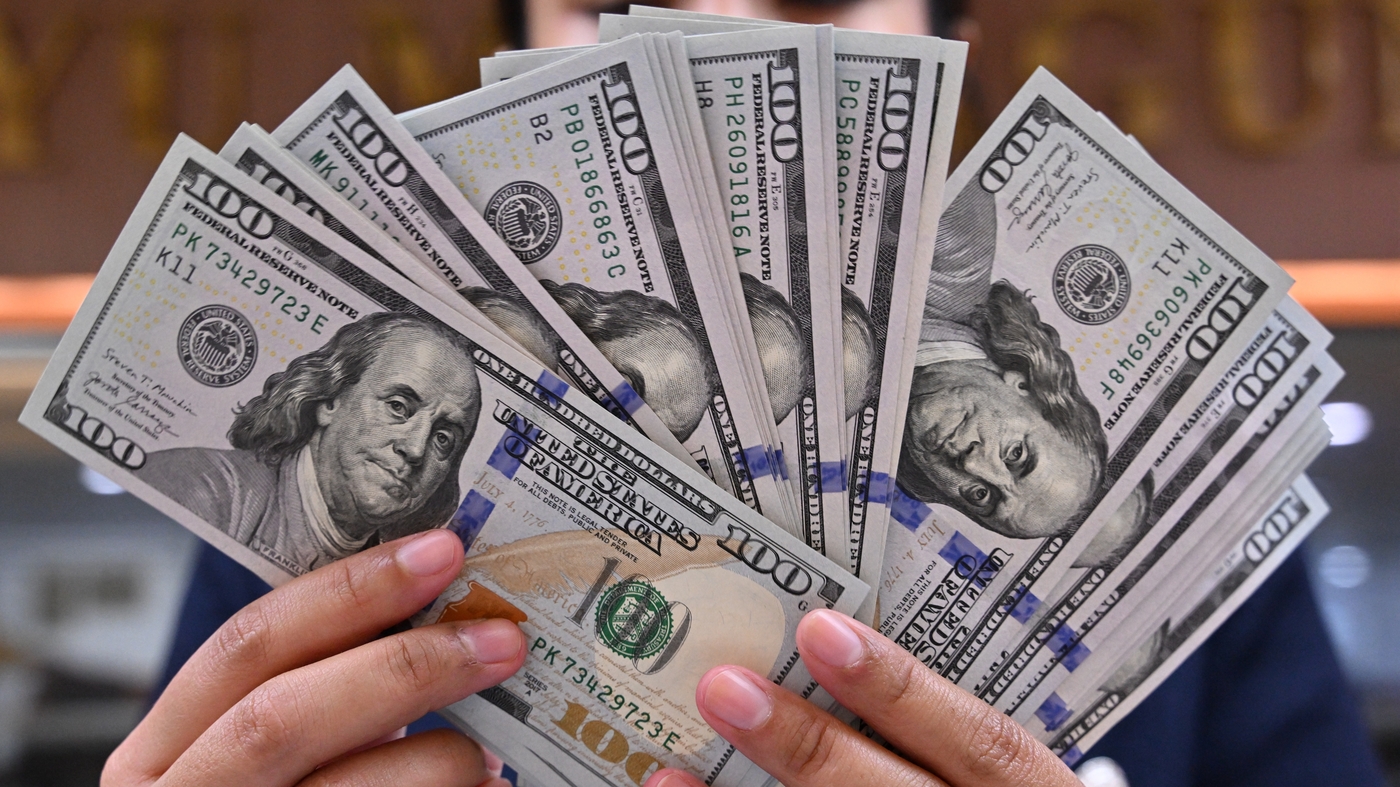
The U.S. dollar extended its retreat on Friday, with traders continuing to abandon the beleaguered currency as mounting concerns over trade disputes, Federal Reserve independence, and domestic economic fragility converge to create what analysts are calling a “perfect storm” for the greenback.
The dollar index, which tracks the currency against a basket of six major rivals, slipped 0.1% to 98.19 in Friday trading, putting it on track for a 0.7% weekly decline—its sharpest five-day drop since late July. The weakness comes as an extended U.S. government shutdown has disrupted the release of critical economic data, leaving investors flying blind on key indicators of the world’s largest economy.
Flight to Alternative Assets Accelerates
Market strategists say the dollar’s troubles reflect a fundamental shift in investor psychology, with capital flowing toward assets perceived as immune to government mismanagement or currency debasement. Gold, cryptocurrencies, and other alternative stores of value have surged as confidence in traditional fiat currencies wavers.
“It’s really hard to find a bullish scenario for the dollar index,” said Dilin Wu, research strategist at Pepperstone. “Instead of betting on any currency by a single sovereign credit, people are rushing into gold, cryptocurrency, and other assets as a risk hedge.”
That trend was evident in Friday’s cryptocurrency trading, where Bitcoin climbed 1.1% to $109,000.98 and Ether advanced 1.8% to $3,923.04, underscoring investors’ appetite for decentralized assets amid traditional currency market turmoil.
Wu pointed to what he termed the “debasement trade”—a phenomenon where concerns about trade policy, Federal Reserve independence, and the ongoing government shutdown converge to undermine faith in the dollar’s stability and purchasing power.
Fed Signals More Rate Cuts Ahead
Adding pressure to the dollar, Federal Reserve officials have signaled their readiness to continue lowering interest rates in response to emerging economic weakness. Fed Governor Christopher Waller indicated Thursday he supports another rate cut at the central bank’s meeting later this month, citing mixed signals from the labor market.
The Fed’s newest governor, Stephen Miran—who also serves as an economic adviser to President Donald Trump—has advocated for even more aggressive rate cuts than some of his colleagues favor. Miran’s temporary appointment expires at the end of January, adding another layer of uncertainty to the central bank’s decision-making process as Governor Lisa Cook‘s status remains in limbo while legal challenges to her attempted dismissal work through the courts.
The central bank’s latest Beige Book survey provided little comfort, highlighting emerging signs of economic stress, including rising layoffs and reduced consumer spending among middle- and lower-income households—troubling indicators for an economy heavily dependent on domestic consumption.
Yen Rallies on BOJ Rate Hike Speculation
Meanwhile, the Japanese yen emerged as one of Friday’s strongest performers, gaining 0.2% to 150.06 per dollar after briefly trading below the psychologically significant 150 level for the first time since October 6.
The yen’s strength followed comments from Bank of Japan Governor Kazuo Ueda, who told an audience in Washington on Thursday that the central bank remains prepared to raise its key policy rate if confidence grows that the institution’s growth and inflation forecasts will materialize. BOJ Deputy Governor Shinichi Uchida is scheduled to speak later Friday, with markets watching for any additional policy signals.
The yen has been under pressure since fiscal dove Sanae Takaichi won election to lead Japan’s ruling Liberal Democratic Party earlier this month—a development that initially spooked investors concerned about a return to ultra-loose monetary policy. However, Takaichi’s path to the prime minister’s office has been complicated by a coalition dispute. Reuters learned Friday that Japan’s lower house scheduling committee has agreed to hold a parliamentary vote to select the next prime minister on October 21, potentially removing a key source of political uncertainty.
European Currencies Edge Higher
The euro advanced 0.2% to $1.1708, while sterling rose 0.1% to $1.3448, with both currencies benefiting from dollar weakness rather than any particular strength in their own economic fundamentals.
Trade Frictions Intensify
Compounding the dollar’s woes, trade tensions between the United States and China showed no signs of abating. Beijing accused Washington of “stoking panic” over China’s rare earth export controls and flatly rejected White House calls to roll back the restrictions—the latest salvo in an escalating economic confrontation between the world’s two largest economies.
Rare earth elements are critical components in everything from smartphones to advanced weaponry, and China controls the vast majority of the global supply. Any sustained disruption to the rare earth trade could have far-reaching implications for U.S. manufacturing and technology sectors.
As markets head into the weekend, the dollar’s path forward appears murky at best. With political dysfunction in Washington, an uncertain trajectory for monetary policy, and deteriorating trade relationships abroad, analysts say the greenback may face continued headwinds in the weeks ahead—particularly if economic data, once government operations resume, confirms the weakness suggested by recent anecdotal reports.
WHAT YOU SHOULD KNOW
The U.S. dollar is experiencing its steepest decline in three months, driven by three critical factors: Federal Reserve signals of continued rate cuts amid economic weakness, an extended government shutdown blocking vital economic data, and escalating U.S.-China trade tensions over rare earth exports.