The Nigerian naira demonstrated remarkable resilience at the start of the trading week, buoyed by a confluence of favorable market conditions and strategic policy interventions that have currency analysts cautiously optimistic about the local unit’s near-term trajectory.
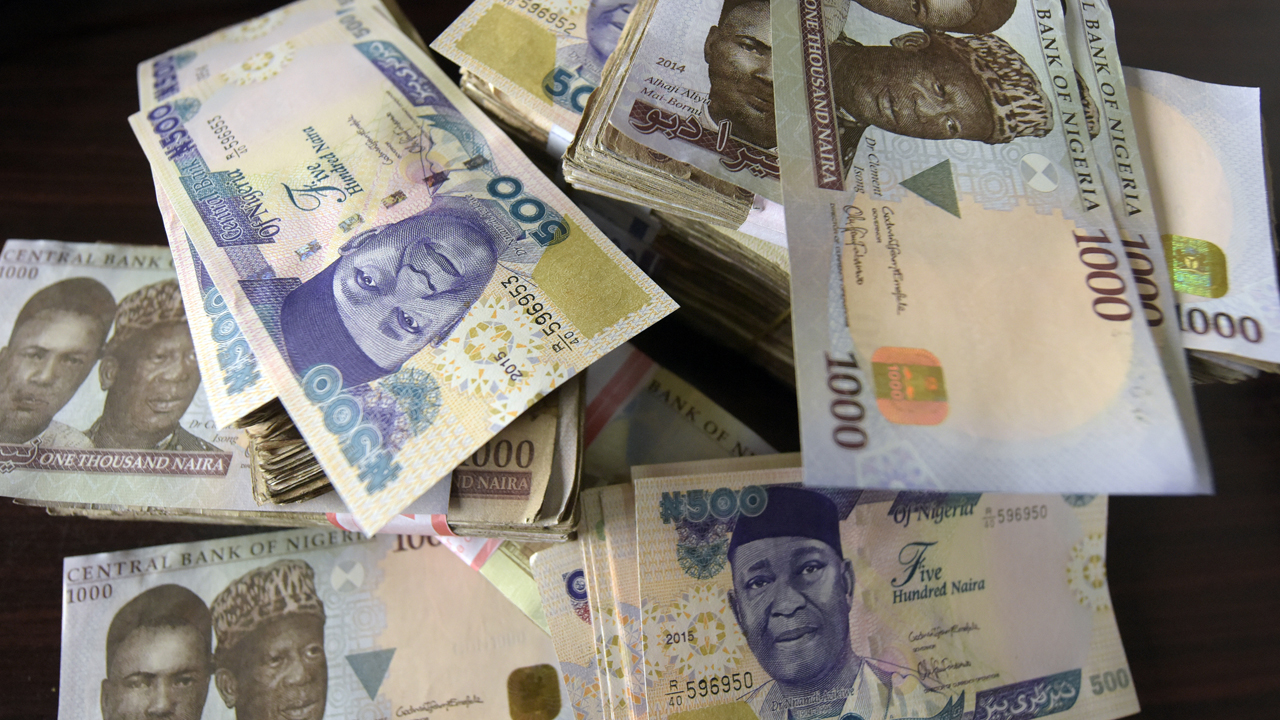
The domestic currency closed trading at N1,485.5 against the US dollar at the Nigerian foreign exchange market, marking a significant recovery from its 2025 nadir of N1,637 per dollar—a depreciation point that had sent shockwaves through Africa’s largest economy earlier this year.
Market strategists are now projecting the naira will find equilibrium within a trading band of N1,450 to N1,550 per dollar, though they’ve issued stern warnings that this stability remains contingent on global oil prices holding above the critical $70-per-barrel threshold. Any sustained drop below that level could trigger renewed downward pressure on the currency, given Nigeria’s heavy dependence on petroleum exports for foreign exchange earnings.
A particularly intriguing development supporting the naira’s recent strength has been its emergence as an attractive carry trade currency—a sophisticated financial maneuver that has drawn international investor attention to Nigerian assets.
The mechanics are straightforward but lucrative: currency traders borrow funds in low-interest-rate environments, such as the United States, where rates have lingered below 5%, and deploy that capital into high-yield markets. With Nigeria’s Central Bank maintaining interest rates north of 27% for several consecutive months, the arbitrage opportunity has proven irresistible to yield-hungry investors.
This substantial interest rate differential—exceeding 22 percentage points—has channeled significant foreign capital into Nigerian government bonds and other naira-denominated securities. However, this supportive dynamic may be nearing its expiration date. Last week, the Central Bank of Nigeria trimmed rates by half a percentage point, with monetary policy officials signaling additional cuts are likely before year-end. Such moves would narrow the yield advantage and potentially reduce the naira’s appeal as a carry trade vehicle.
Beyond fundamental factors, technical chart patterns have also aligned in the naira’s favor, according to currency analysts studying recent price movements.
The naira-dollar pair recently formed what traders call a “death cross”—typically a bearish signal—when the 50-day moving average crossed below the 200-day moving average. However, the currency has simultaneously developed an inverse cup-and-handle pattern, a formation that technical analysts frequently interpret as a precursor to additional upside momentum.
If the naira breaches the lower boundary of this cup formation at N1,476 per dollar, market technicians believe it could trigger a sustained rally toward the psychologically significant N1,400 level in the coming sessions.
The naira’s fundamentals received critical support following intervention from high-level government officials and a dramatic policy reversal by the Dangote Refinery—developments that averted what could have been a destabilizing crisis for the currency.
Earlier concerns had mounted when Africa’s largest refinery abruptly suspended naira-denominated sales of gasoline, raising immediate fears about fuel scarcity and price volatility in a nation of over 200 million people. The move had threatened to undermine confidence in the government’s broader economic reform agenda.
However, the chairman of the Naira for Crude Technical Committee stepped in to broker a resolution, and the Dangote facility swiftly announced it would resume accepting payment in local currency with immediate effect. The refinery has now actively encouraged customers to place orders in naira, offering complimentary delivery to designated locations across Nigeria as well as self-collection options.
This about-face represents a significant victory for policymakers who have been working to strengthen naira usage in domestic petroleum transactions—a cornerstone of efforts to reduce dollar demand and stabilize the exchange rate.
Despite these positive developments, the Dangote Refinery continues grappling with operational headwinds that underscore Nigeria’s broader energy sector difficulties. The facility, which began supplying gasoline to the domestic market earlier this year, has experienced recurring challenges securing adequate crude oil feedstock—a problem rooted in Nigeria’s well-documented oil production shortfalls.
The nation, once Africa’s top crude producer, has struggled with underinvestment, pipeline vandalism, and regulatory uncertainties that have crimped output significantly below OPEC quota levels.
In the informal currency market operating in Lagos’ commercial districts, dealers were quoting buy rates of N1,485 per dollar and sell rates of N1,505—a relatively tight spread suggesting improved liquidity conditions compared to the dramatic volatility witnessed in recent quarters.
As Nigeria navigates its complex economic reform program under President Bola Tinubu‘s administration, the naira’s performance remains a critical barometer of investor confidence and policy credibility. While recent price action offers reasons for measured optimism, analysts caution that sustaining this momentum will require continued prudent monetary policy, stable oil revenues, and resolution of the structural challenges plaguing the petroleum sector.
WHAT YOU SHOULD KNOW
The naira’s recent strength to N1,485.5/$ is driven by three main factors: a weaker US dollar, high interest rates (above 27%) attracting foreign investors through carry trades, and the Dangote Refinery’s resumption of naira-denominated fuel sales after government intervention.
However, this recovery is precarious. The currency’s stability depends heavily on oil prices staying above $70 per barrel and maintaining the wide interest rate gap with the US. With the Central Bank already cutting rates and signaling more cuts ahead, the carry trade advantage that’s been supporting the naira will likely diminish.