NATO has issued a stern warning to Moscow, demanding an end to repeated violations of allied airspace, particularly along its eastern flank.
The alliance described Russia’s actions as “escalatory” and dangerous, cautioning that they risk miscalculation and endanger civilian lives.
In a joint statement released after urgent consultations on Tuesday, the alliance’s 32 member states said, “Russia bears full responsibility for these actions, which are escalatory, risk miscalculation and endanger lives. They must stop.” NATO also stressed that it would employ “all necessary military and non-military tools” under international law to deter threats “from all directions.”
The warning followed last Friday’s incident, in which Russian fighter jets intruded into Estonian airspace for 12 minutes, prompting NATO to scramble jets. The violation led Tallinn to trigger Article 4 of NATO’s founding treaty, which allows members to call emergency discussions when they believe their security or territorial integrity is under threat.
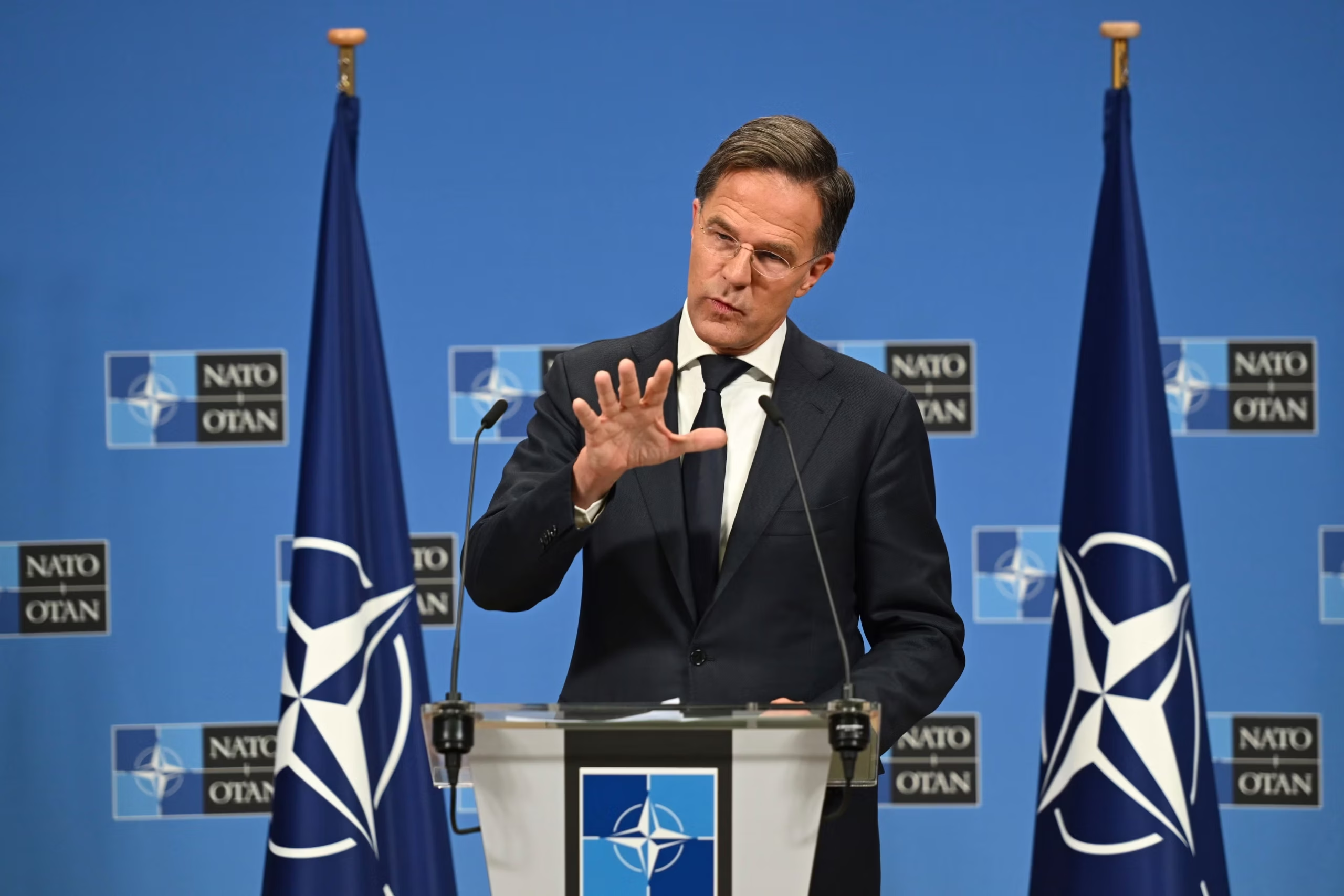
The breach came just a week after NATO forces downed Russian drones over Poland, sparking Warsaw’s demand for similar talks. NATO chief Mark Rutte explained that decisions on whether to fire upon intruding Russian aircraft would be based on “available intelligence regarding the threat posed.” He clarified that in Estonia’s case, NATO forces intercepted and escorted the jets without escalation.
“Our message to the Russians is clear: we will defend every inch of allied territory,” Rutte asserted, underscoring the alliance’s commitment to its Article 5 mutual defence clause, which has only been invoked once in NATO’s history, after the September 11, 2001, attacks in the United States.
Recent months have seen a rise in Russian incursions over eastern NATO states, including Poland, Romania, Lithuania, Latvia, and Finland. The alliance has responded by strengthening its eastern defences amid fears that the war in Ukraine could spill across NATO borders.
While Rutte noted it was “too early to say” whether drone disruptions over Copenhagen were linked to Russia, he emphasized that allies “will not be deterred by these and other irresponsible acts from their enduring commitments to support Ukraine.”
Tuesday’s consultations marked the third invocation of Article 4 since Russia’s full-scale invasion of Ukraine in 2022 and the ninth time in NATO’s 76-year history.
What you should know
NATO’s warning to Moscow comes at a time of heightened regional tension, with repeated Russian airspace violations testing the alliance’s resolve.
The firm stance signals NATO’s readiness to defend its eastern members while balancing deterrence with restraint to avoid direct escalation with Russia.