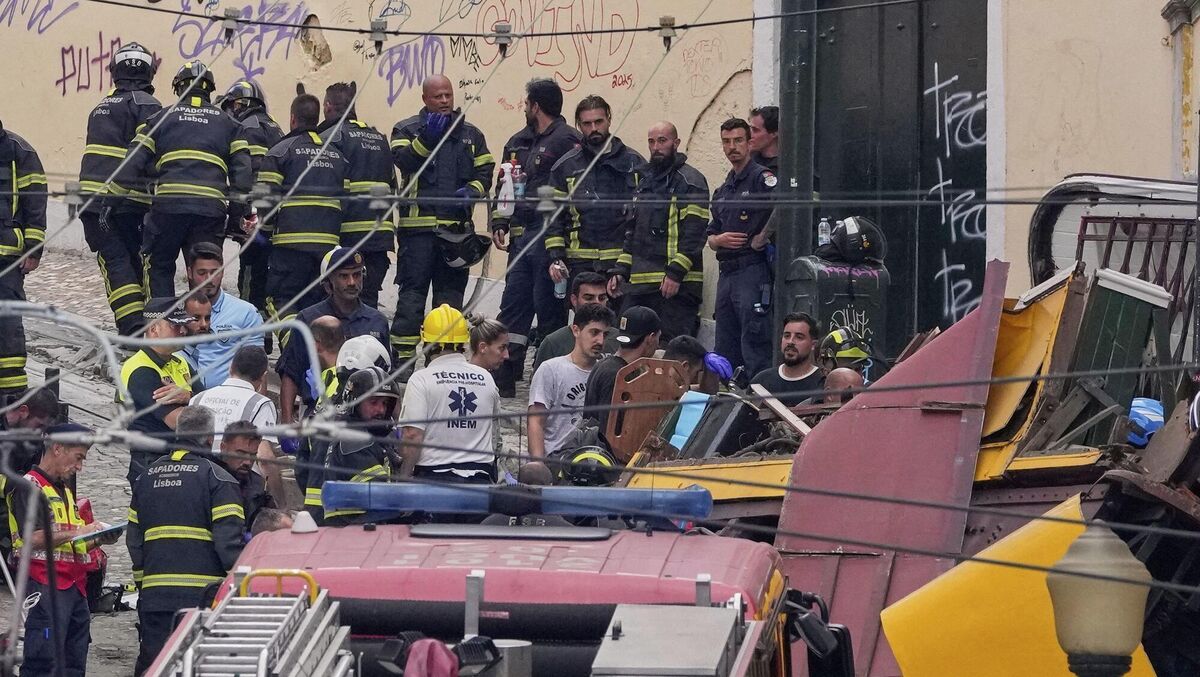
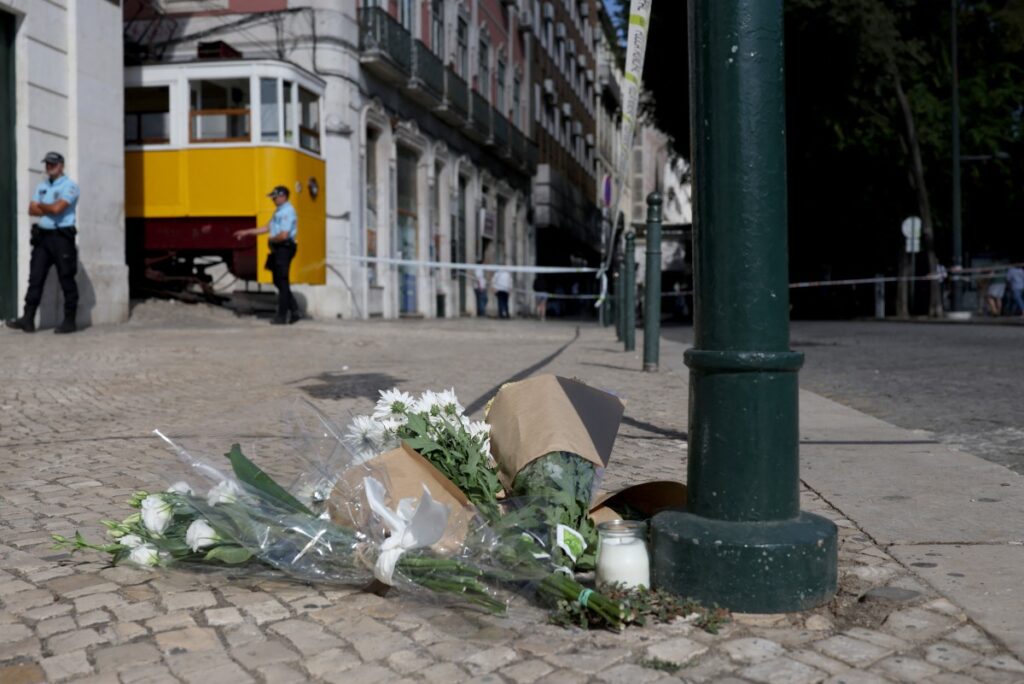
Portugal observed a national day of mourning on Thursday after a devastating derailment of Lisbon’s iconic Gloria funicular left 17 people dead and 21 others injured.
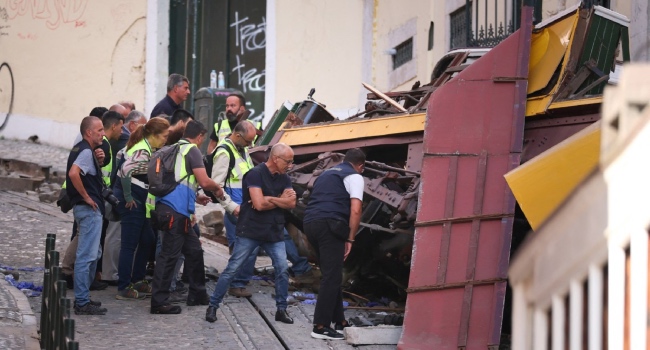
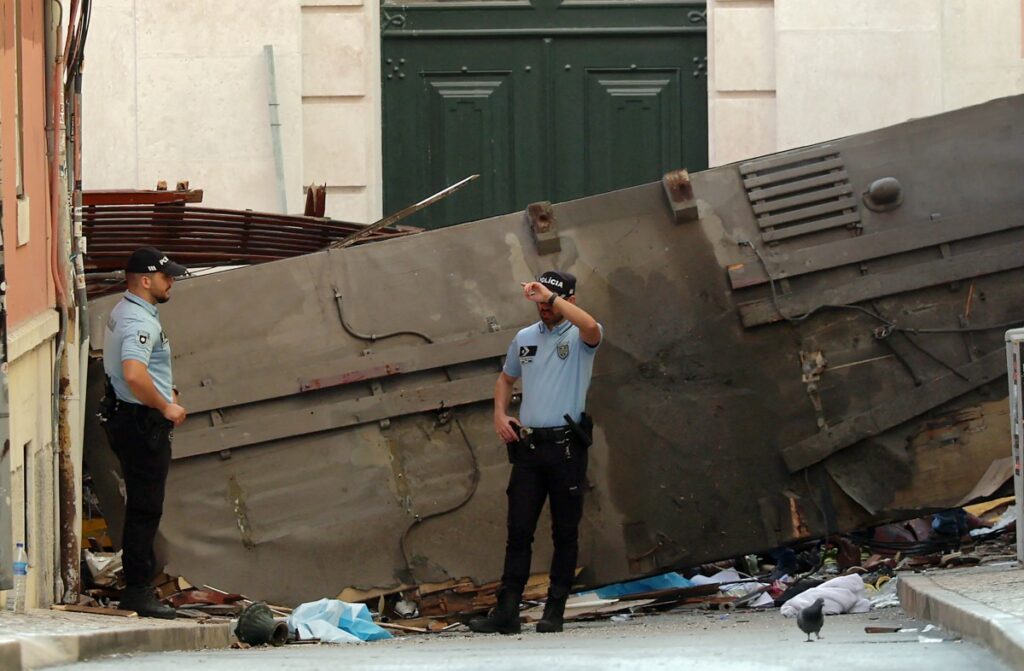
The accident occurred on Wednesday evening in one of the capital’s busiest tourist zones when the bright yellow carriage lost control on a steep section of track near Liberty Avenue and crashed into a nearby building.
Emergency services confirmed that 15 victims, eight men and seven women, died instantly, while two more later succumbed to their injuries. Authorities also revealed that at least 11 of the injured were foreigners, including nationals from Germany, Spain, France, Italy, Switzerland, Canada, South Korea, Morocco, and Cape Verde.
The German foreign ministry reported that its Lisbon embassy was working closely with local officials to identify the victims. According to Portuguese media, one German man died, his wife remains in critical condition, and their three-year-old child sustained minor injuries.
Lisbon immediately halted operations on its three remaining funiculars to conduct urgent safety inspections, said municipal civil protection spokesperson Margarida Castro.
Eyewitnesses described the crash as catastrophic. “The train hit the building with brutal force and collapsed like a cardboard box,” one woman told SIC television. Video footage showed the mangled carriage pinned against a wall as rescuers worked through the night.
Lisbon Mayor Carlos Moedas called the incident “a tragedy that our city has never seen.” Prime Minister Luis Montenegro expressed deep sorrow, while European Commission President Ursula von der Leyen extended condolences to the victims’ families.
Prosecutors have since launched an investigation. The city’s public transport operator, Carris, insisted that all safety and maintenance checks had been “scrupulously respected.” Pedro Bogas, head of Carris, explained that general maintenance is carried out every four years, the last completed in 2022, with intermediate checks every two years, the most recent conducted in 2024.
Tourists narrowly avoided disaster as some skipped the ride due to long queues. “We are a little relieved,” said Antonio Javier, a 44-year-old Spanish tourist traveling with his family.
The Gloria funicular, one of Lisbon’s most photographed attractions, has been in service since 1885 and was electrified in 1915. It remains a favorite mode of transport for residents and visitors navigating the city’s steep hills and is a staple image on Lisbon souvenirs.
What You Should Know
The Gloria funicular has long been a symbol of Lisbon, operating for nearly 140 years. Its derailment not only claimed 17 lives but also shook Portugal’s confidence in one of its most beloved cultural landmarks. While investigations continue, the tragedy has prompted renewed scrutiny of public transport safety standards in the capital.