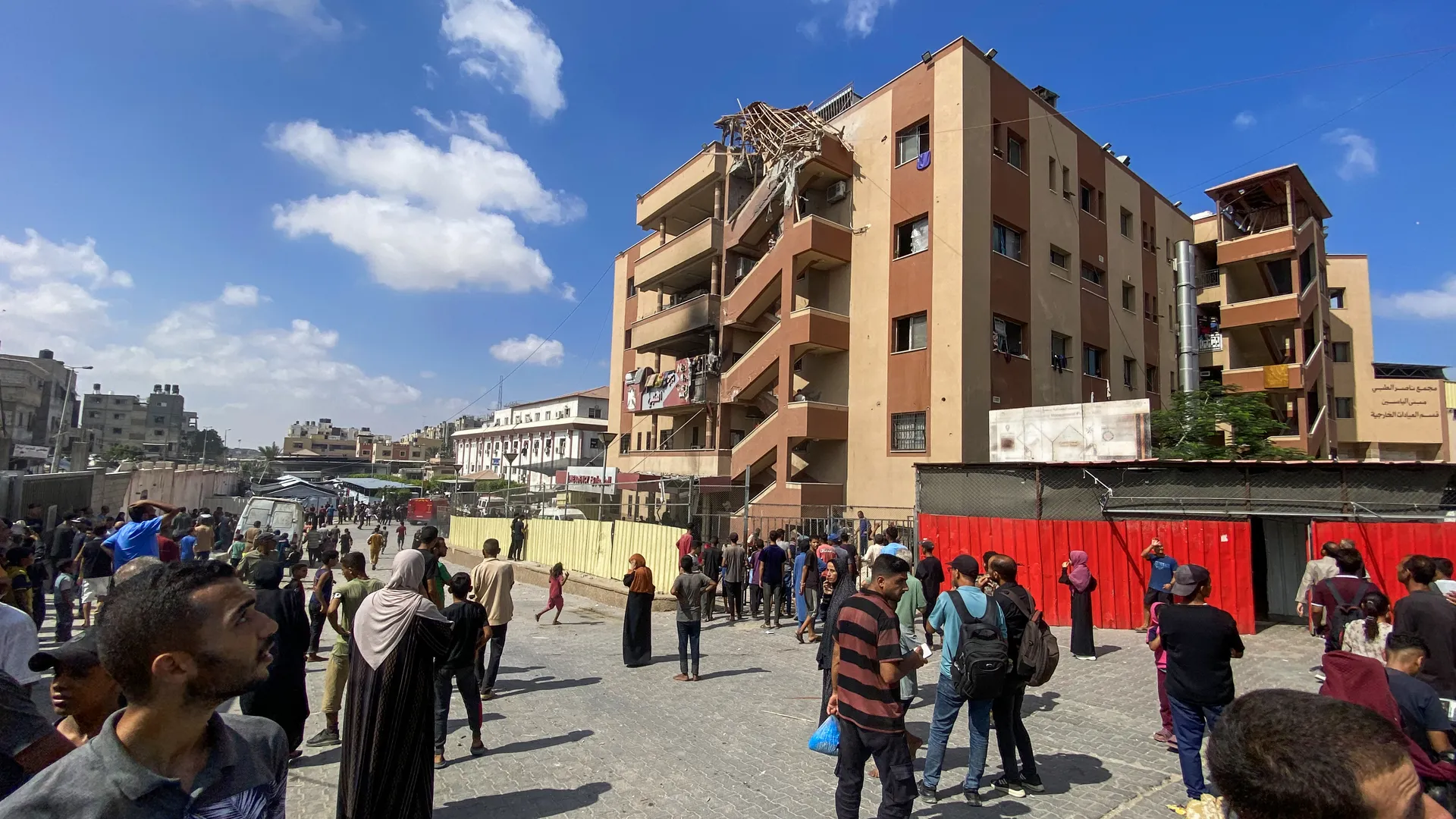
Gaza’s civil defence agency has reported that at least 15 people, including four journalists, were killed on Monday following Israeli strikes on Nasser Hospital in Khan Yunis.
According to agency spokesman Mahmud Bassal, “the death toll is 15, including four journalists and one civil defence member,” after the medical complex was struck.
The tragedy comes amid nearly two years of war between Israel and Hamas, during which media watchdogs estimate that close to 200 journalists have lost their lives.
When questioned about the incident, the Israeli military said it was “checking the reports” regarding a strike on a building within the hospital grounds.
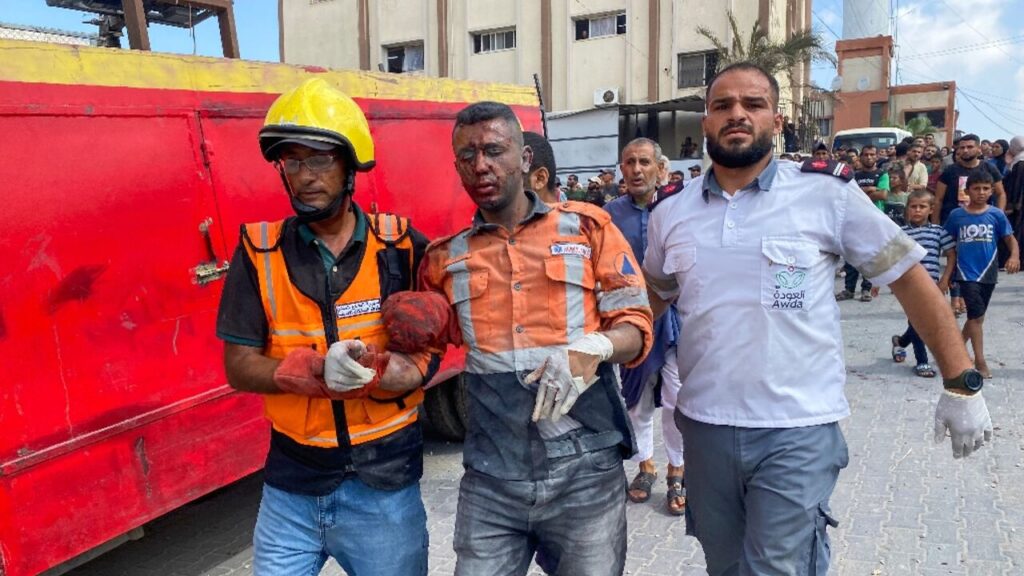
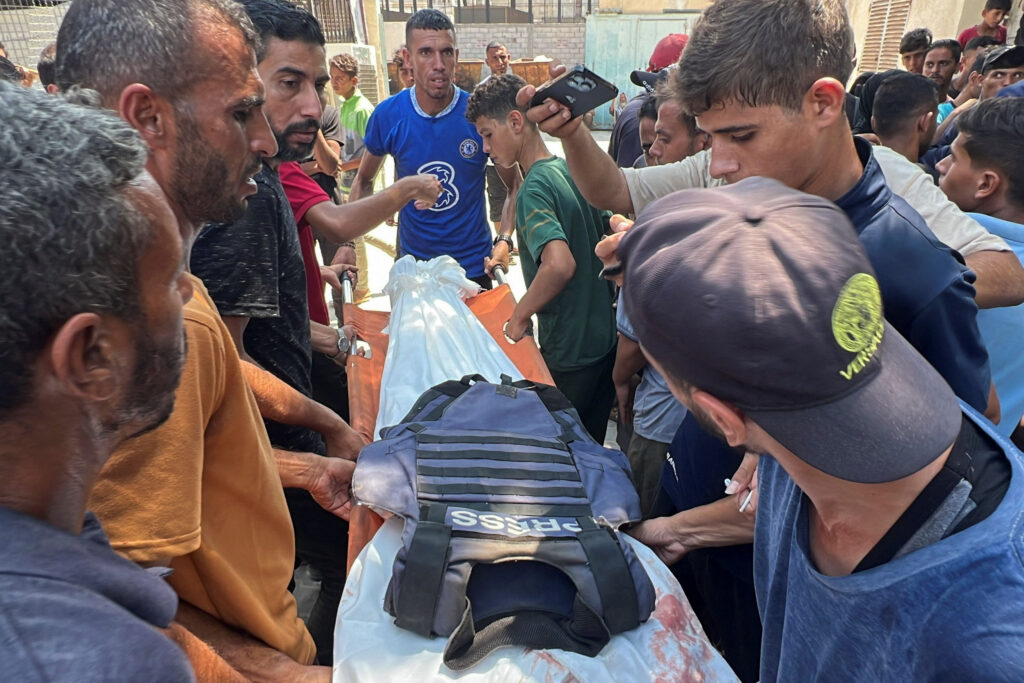
The Palestinian Journalists Syndicate confirmed the deaths, stating that reporters had “been martyred in the line of journalistic duty, as a result of the Israeli bombing that targeted them at Nasser Hospital.” The group identified the victims as photojournalists Hossam Al-Masri, Mohammad Salama, and Mariam Dagga, as well as journalist Moaz Abu Taha.
Qatar-based Al Jazeera also confirmed the death of its photojournalist and cameraman Mohammad Salama. The other journalists reportedly worked with Palestinian and international outlets, according to AFP correspondents. Associated Press noted that Dagga was a freelancer for the agency, though she was not on assignment at the time of her death. Reuters added that one of the victims and an injured survivor were contractors for their news agency.
Bassal explained that the attack involved an Israeli explosive drone targeting a hospital building, followed by an air strike that struck as the wounded were being evacuated.
Harrowing Scenes of Aftermath
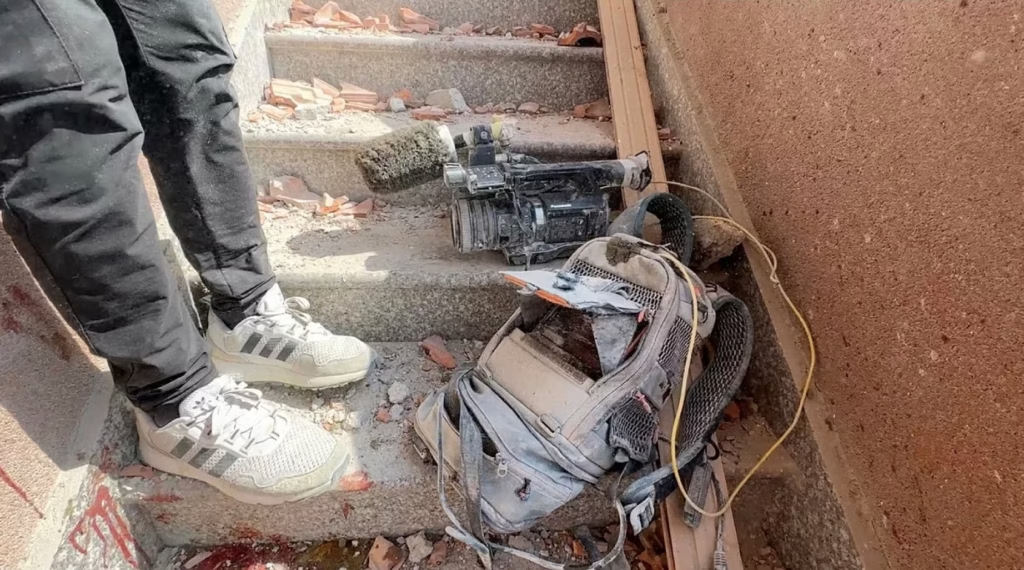
AFP footage captured the immediate aftermath, showing smoke, debris, and chaos outside the hospital. Palestinians rushed to aid the victims, carrying bloodied bodies and severed limbs into the facility. One corpse was left hanging from a top-floor window while anguished cries filled the air.
Medical staff were not spared; one woman in scrubs and a white coat was seen being carried on a stretcher, her leg heavily bandaged and her clothes soaked in blood.
Due to restrictions on media access in Gaza, AFP has been unable to independently verify the figures or circumstances provided by either the civil defence agency or the Israeli military.
Ongoing Targeting of Journalists
The killing of journalists in Gaza has raised global alarm. Earlier this month, four Al Jazeera staff members and two freelancers died in an Israeli air strike near Al-Shifa hospital in Gaza City, sparking widespread condemnation.
The Israeli military later claimed that Anas al-Sharif, a prominent Al Jazeera correspondent killed in the strike, was leading a Hamas “terrorist cell” responsible for advancing rocket attacks.
The Committee to Protect Journalists (CPJ), however, denounced such attacks. “Journalists are civilians. They must never be targeted in war. And to do so is a war crime,” CPJ chief executive Jodie Ginsberg told AFP.
War Background
The ongoing war began in October 2023 after a Hamas-led assault on Israel left 1,219 people dead, mostly civilians, according to an AFP tally based on official data. In retaliation, Israel launched an offensive that has since killed at least 62,686 Palestinians, the majority civilians, based on figures from Gaza’s health ministry, which the United Nations deems reliable.
What you should know
The Nasser Hospital strike highlights the rising toll on journalists in Gaza, where nearly 200 reporters have been killed since the war began.
While Israel insists it targets militants, rights groups warn that repeated strikes on press members and hospitals amount to potential war crimes.
This attack underscores both the dangers faced by journalists in conflict zones and the growing humanitarian crisis in Gaza.