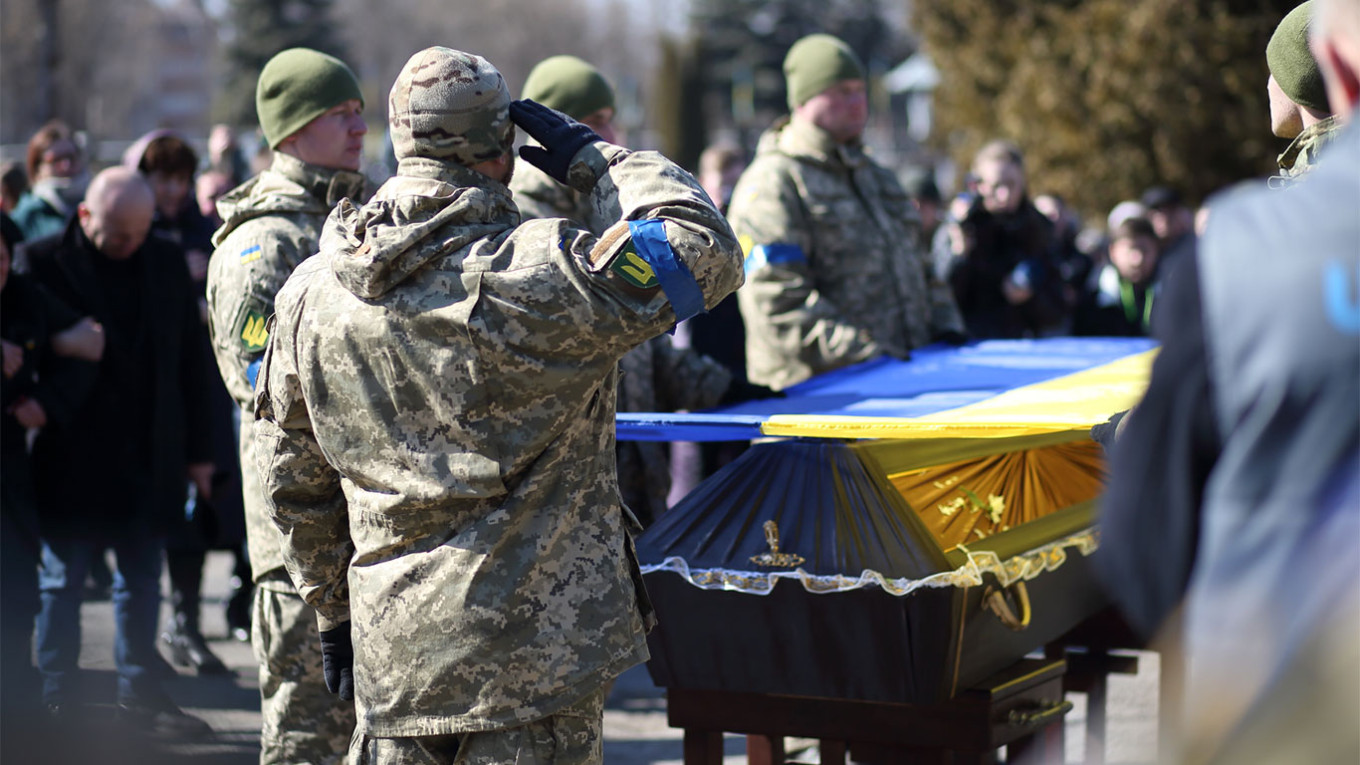
Russia on Tuesday transferred the remains of what it described as 1,000 Ukrainian troops, including five who had died while in captivity, according to a statement from a Ukrainian government body.
In return, Ukraine repatriated the remains of 19 Russian servicemen, a Russian official confirmed.
Since Russia’s invasion of Ukraine in February 2022, tens of thousands of soldiers from both countries have lost their lives. However, neither Moscow nor Kyiv consistently publishes data on their own casualties, leaving the full scale of losses largely unverified.
Despite the hostility, the repatriation of war dead and prisoner exchanges has remained one of the rare points of cooperation between the two sides. These arrangements have gained momentum in recent months through talks hosted in Istanbul.
Ukraine’s Coordination Headquarters for the Treatment of Prisoners of War said in a message on Telegram that “according to the Russian side, 1,000 bodies belonging to Ukrainian military personnel have been returned to Ukraine.”
The statement noted that “unfortunately, among those repatriated are the bodies of five Ukrainian servicemen who died in captivity.” Ukrainian officials added that the process of identifying the remains will be carried out by law enforcement authorities.
Russian negotiator Vladimir Medinsky explained that the exchange followed agreements made between delegations from both nations during negotiations in Istanbul.
Earlier, Kyiv had announced that both countries had reached a deal to “exchange” the bodies of 6,000 Ukrainian soldiers for the same number of Russians. Moscow, however, has consistently portrayed the move as a unilateral effort to return Ukrainian bodies rather than a reciprocal agreement.
What you should know
The return of fallen soldiers underscores one of the few areas where Moscow and Kyiv maintain direct cooperation, even as the conflict continues with no clear resolution in sight.
While Ukraine views the process as a mutual exchange, Russia insists on presenting it as a humanitarian gesture. The differing narratives highlight the persistent distrust that shapes relations between the two nations, even in matters of human dignity.