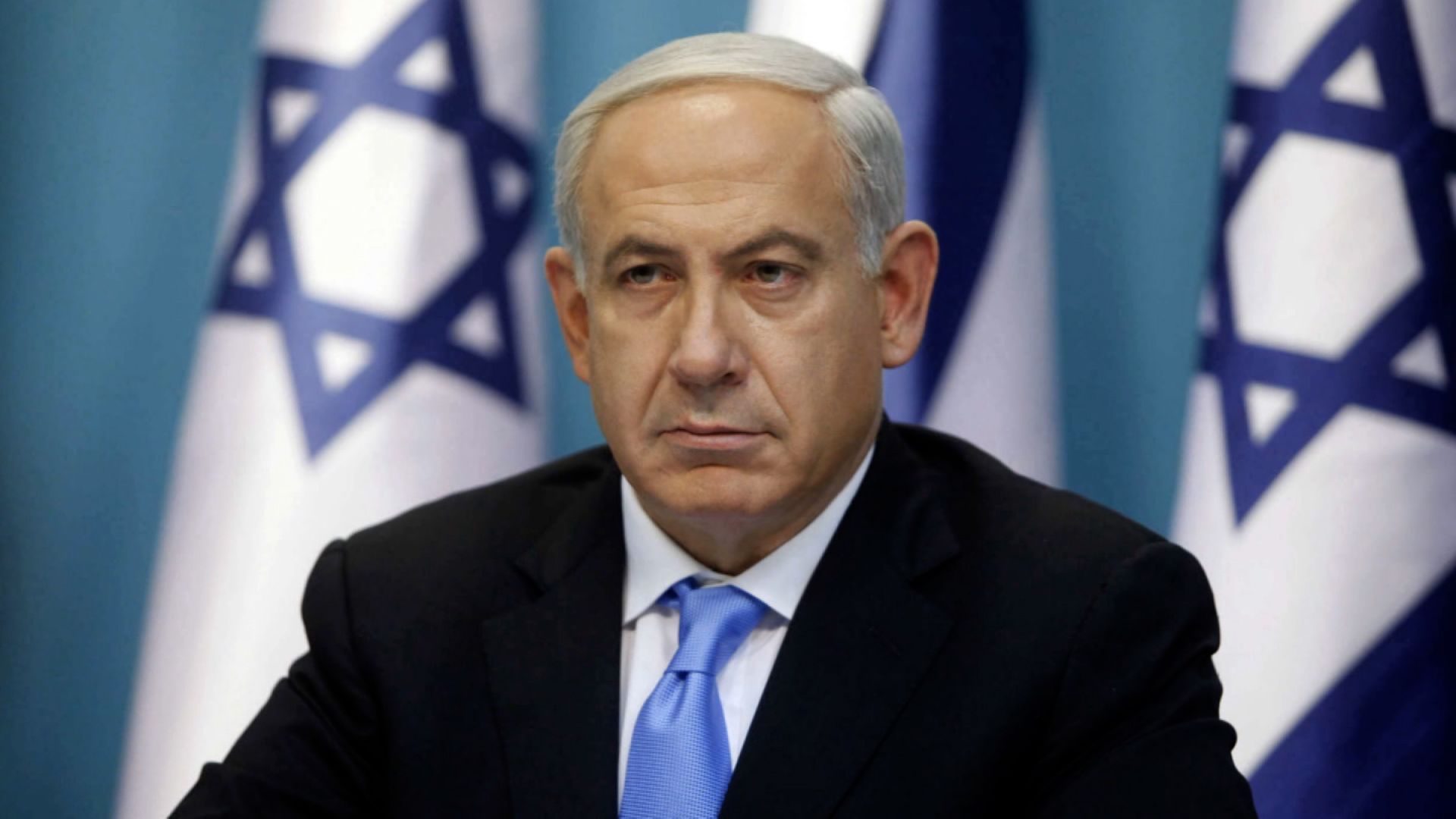
Israeli Prime Minister Benjamin Netanyahu declared on Tuesday that Israel must fully defeat Hamas in Gaza in order to secure the release of the remaining hostages, a statement made just days before a cabinet meeting expected to determine the direction of Israel’s ongoing military campaign.
Speaking during a visit to a military training base, Netanyahu emphasized that the continuation and intensification of military operations in Gaza were crucial to ensuring the safety of Israel and the liberation of captives.
According to him, only a comprehensive victory over Hamas would eliminate the threat from Gaza and secure the return of the hostages still held by the militant group. His comments come amid growing speculation in Israeli media about his consideration of an order for a complete occupation of the Gaza Strip.
Despite increasing calls from the international community to bring the war to an end, Netanyahu appears poised to expand the campaign. The United Nations has issued stark warnings about the dangers of further escalation. UN Assistant Secretary-General Miroslav Jenca warned the Security Council on Tuesday that broadening the war would carry dire humanitarian implications for millions of Palestinians and could put hostages at even greater risk.
Following his remarks at the army base, Netanyahu reportedly held a lengthy, three-hour meeting with the Israel Defense Forces’ Chief of Staff Eyal Zamir. However, the prime minister’s office did not release any details about new military strategies. It did, however, confirm that the security cabinet is expected to gather later in the week to formalize new operational directives.
Citing government sources, Israeli public broadcaster Kan reported that Netanyahu has decided to broaden the fight into territories suspected of harboring hostages and that he wants Israeli forces to take control of the entire Gaza Strip. Other outlets, such as Channel 12, have speculated that these potential measures may be part of a tactical strategy designed to gain leverage in ongoing negotiations rather than a firm operational plan.
Even before any official move, reports of the planned escalation have sparked swift reactions from Palestinian authorities. Both the Palestinian Authority and the Hamas-led administration in Gaza have denounced the notion of a full-scale occupation.
A senior Hamas official, Hossam Badran, told AFP that intensifying the military campaign would not alter Hamas’s terms in the ceasefire discussions. He reiterated that Hamas continues to demand a complete Israeli withdrawal from the territory. Badran emphasized that the group’s objective is to bring an end to both the conflict and the growing humanitarian disaster.
In parallel with these developments, Israel’s Foreign Minister Gideon Saar was in New York, attending a UN Security Council session addressing the ongoing hostage crisis. His visit followed the circulation of footage showing visibly malnourished captives, which has reignited national outrage and further fueled pressure on Israeli leadership.
As the conflict enters its 22nd month, the scale of destruction in Gaza is profound. Israeli air and ground operations have decimated vast swaths of the enclave, and the humanitarian emergency has deepened to alarming levels. UN experts recently warned that famine is unfolding in Gaza.
The war began on October 7, 2023, when Hamas militants launched a surprise assault on Israel, resulting in the deaths of 1,219 people, mostly civilians, according to official Israeli figures. In the same attack, 251 individuals were taken hostage by Hamas, of whom 49 remain in captivity. The Israeli military believes 27 of those are no longer alive.
The Gaza Health Ministry reports that the Israeli offensive has resulted in the deaths of at least 61,020 Palestinians since the war began. The staggering death toll, coupled with the collapse of civil infrastructure, has galvanized both international outcry and domestic unrest within Israel.
Netanyahu’s government is now under intense strain from multiple directions. Inside the country, families of the hostages are pleading for an immediate truce that would facilitate the return of their loved ones. Outside Israel, there is mounting global demand for a ceasefire to allow humanitarian aid into the besieged territory.
The International Committee of the Red Cross on Tuesday reiterated its willingness to deliver essential supplies—including food, medicine, and communication from families—to hostages in Gaza. The organization also said it was prepared to expand its operations to bring life-saving relief to civilians trapped by the violence. However, it stressed that such efforts are contingent on a mutual agreement between Israel and Hamas.
At the same time, Netanyahu’s hardline coalition partners are pushing for continued military engagement and the long-term reoccupation of Gaza. These political forces want to reclaim control over the territory, which Israel unilaterally withdrew from nearly twenty years ago.
The humanitarian dimension of the crisis continues to evolve. After enforcing a complete blockade on Gaza in March, Israel only recently began allowing limited food aid through, facilitated by the U.S.-supported Gaza Humanitarian Foundation (GHF), which has established distribution centers across the territory.
But this approach has drawn criticism from UN special rapporteurs, who on Tuesday called for the GHF to be shut down, accusing it of being used to serve military and political objectives under the guise of humanitarian relief.
In an attempt to ease some of the pressure on Gaza, the Israeli defense ministry’s coordination body for Palestinian territories, known as COGAT, announced plans to partially restore trade between the private sector and Gaza. A small number of vetted merchants have been authorized to bring in essential goods, including baby formula, hygiene products, fruits, and vegetables.
Despite these limited measures, violence continues to erupt in areas surrounding aid distribution points. On Tuesday, Gaza’s civil defense services reported that Israeli forces killed 56 people who had gathered near food handouts. According to the Israeli military, soldiers fired warning shots toward a crowd approaching their position in southern Gaza but claimed they had no knowledge of resulting fatalities.
In the northern part of the enclave, civil defense authorities said 20 individuals were killed close to an aid checkpoint. An AFP reporter at the scene witnessed the arrival of bodies at Hamad Hospital. The Israeli army stated that it was investigating the incident.
What You Should Know
Prime Minister Netanyahu’s insistence on completing the military campaign against Hamas comes amid reports that he may push for full control over Gaza, a move that has already provoked strong backlash from Palestinians and international observers.
While Israel continues to face global pressure to halt the war and allow humanitarian access, the government is also navigating domestic pressure from hostage families and political factions advocating further aggression.
The humanitarian crisis in Gaza deepens with every passing day, with thousands of civilians killed and vital resources growing scarce. A lasting resolution appears increasingly dependent on whether both sides can agree to terms that bring an end to the violence and facilitate humanitarian relief.