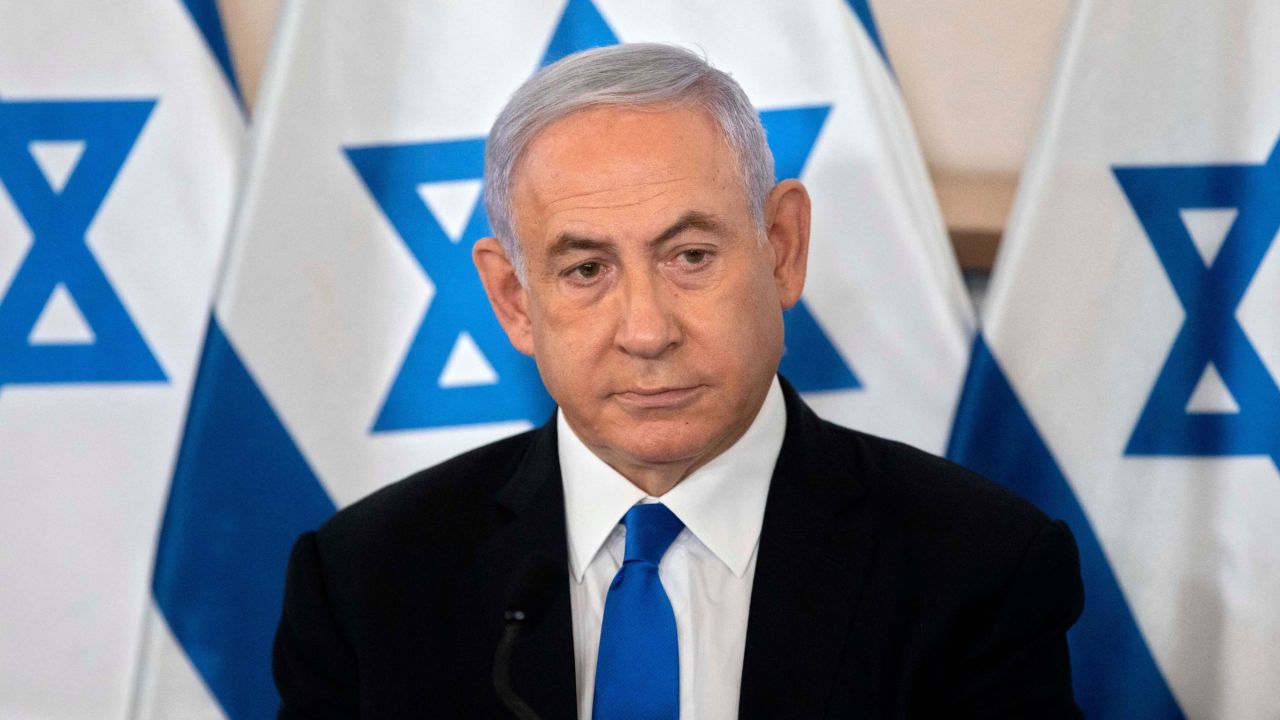
Israeli Prime Minister Benjamin Netanyahu announced plans on Monday to revise Israel’s approach to the war in Gaza, pledging to unveil an updated military directive aimed at meeting the country’s key objectives in the protracted conflict.
His statement comes on the eve of a United Nations Security Council meeting dedicated to the fate of Israeli hostages still held by Palestinian militants in the territory.
During a cabinet session, Netanyahu informed ministers that he would instruct the military later in the week on strategies to accomplish the war’s three primary objectives: defeating Hamas, securing the release of the remaining hostages, and ensuring that Gaza no longer poses a threat to Israeli security.
Citing sources within Netanyahu’s office, both Channel 12 and the Jerusalem Post reported that the new strategy includes plans to reassert Israeli control over the entirety of Gaza, especially targeting parts of Gaza City where officials believe hostages are still being held. The updated approach is expected to be discussed and potentially endorsed at Tuesday’s cabinet meeting. However, no official confirmation has been issued as of Monday evening.
The reported strategy has drawn swift condemnation from the Palestinian Authority’s foreign ministry, which labeled the alleged plan a “leak” and appealed to the international community to step in and prevent what it describes as a renewed military occupation of Palestinian land.
Netanyahu’s government faces escalating pressure at home and abroad to resolve the hostage crisis and significantly increase the flow of humanitarian assistance to the Gaza Strip, where conditions have deteriorated sharply over the past months. The United States and Panama are backing Israel in calling a special UN Security Council session on Tuesday to spotlight the plight of the hostages.
In his remarks, Netanyahu reiterated the country’s steadfast objectives in the war effort, stating that Israel remains committed to neutralizing Hamas, rescuing the hostages, and preventing future threats emanating from Gaza.
The renewed attention on hostages comes amid growing criticism of the government’s handling of the crisis. The Hostages and Missing Families Forum, an advocacy group representing the captives’ relatives, accused Netanyahu of endangering the captives’ lives through prolonged military operations.
“Netanyahu is leading Israel and the hostages to ruin,” the group declared in a statement. “For 22 months, the public has been sold the illusion that military pressure and intense fighting will bring the hostages back. The truth must be said: expanding the war endangers the lives of the hostages, who are already in immediate mortal danger.”
The Israeli military estimates that of the 251 people kidnapped by Hamas during its surprise attack on Israel in October 2023, 49 remain in captivity, including 27 confirmed dead. Last week, Palestinian militant groups released disturbing videos showing two hostages, Rom Braslavski and Evyatar David, appearing visibly weak and frail—sparking outrage and sorrow throughout Israel.
In response, Netanyahu said he had urged the International Committee of the Red Cross to deliver food and medical care to the hostages. Hamas’s military wing, however, indicated it would permit such access only in exchange for the opening of aid corridors throughout Gaza, where UN experts have warned that famine conditions are taking hold.
Meanwhile, Foreign Minister Gideon Saar emphasized the global implications of the hostage crisis, stating that “the world must put an end to the phenomenon of kidnapping civilians. It must be front and centre on the world stage.”
Despite ongoing mediation by Qatar, Egypt, and the United States, efforts to broker a ceasefire have yet to bear fruit. In a bold move on Monday, hundreds of former Israeli security officials—among them ex-leaders of intelligence agencies—published an open letter urging U.S. President Donald Trump to use his influence to pressure Netanyahu into ending the war.
The letter argued that military objectives had largely been achieved and that further conflict would only damage Israel’s long-term security and identity. “It is our professional judgment that Hamas no longer poses a strategic threat to Israel,” wrote the retired officers. They added, “The third, and most important [objective], can only be achieved through a deal: bringing all the hostages home.”
Ami Ayalon, former head of Israel’s Shin Bet domestic security agency, reinforced this view in a video accompanying the letter, warning that the war is compromising Israel’s foundational values.
On the ground in Gaza, the human toll continues to climb. The Hamas-run health ministry reports that Israel’s offensive has killed at least 60,933 people, most of them civilians. In contrast, the initial Hamas assault in October 2023 claimed the lives of 1,219 people in Israel, also primarily civilians.
The humanitarian crisis worsened on Monday as Gaza’s civil defense agency reported that Israeli strikes killed at least 19 more Palestinians, including nine individuals who were trying to collect food from an aid distribution center in central Gaza.
In Gaza City, Umm Osama Imad expressed heartbreak over the death of a relative who was killed while seeking flour for his family. “We are starving… He went to bring flour for his family,” she said. “The flour is stained with blood. We don’t want the flour anymore. Enough!”
UN human rights chief Volker Turk decried the ongoing suffering in Gaza, describing the images of widespread hunger as “heart-rending and intolerable.” He urged the Israeli government to immediately allow humanitarian aid into the enclave, warning that denying such access “may amount to a war crime.”
Turk also responded to the hostage videos, labeling them “shocking,” and insisted that the Red Cross must be granted urgent access to the captives to ensure their safety and well-being.
What you should know
Israeli Prime Minister Benjamin Netanyahu has vowed to revise the military’s Gaza war strategy as public outcry and international concern grow over the fate of the hostages still held by Hamas.
The proposed update may involve reoccupying the entire Gaza Strip to rescue the captives and neutralize threats, although this approach has been met with both internal and external criticism. Meanwhile, Gaza remains on the brink of famine, with rising civilian casualties and desperate calls for humanitarian aid.