Ukrainian President Volodymyr Zelensky has called on the international community to advocate for regime change in Russia, insisting that without such a move, President Vladimir Putin will persist in efforts to undermine neighbouring nations.
Zelensky’s remarks were delivered virtually at a landmark conference held in Finland to commemorate 50 years since the signing of the Helsinki Final Act, a Cold War-era treaty aimed at enhancing East-West relations.
Speaking via an online address, Zelensky asserted, “I believe Russia can be pushed to stop this war. It started it, and it can be made to end it.” However, he cautioned that merely ending the war in Ukraine would not eliminate the broader threat posed by the Kremlin. “But if the world doesn’t aim to change the regime in Russia, that means even after the war ends, Moscow will still try to destabilise neighbouring countries,” he said.
Zelensky also reiterated his longstanding demand for stronger measures against Russia, particularly targeting its financial resources. He urged the international community to go beyond freezing Russian assets and to begin confiscating them to support Ukraine’s defence and contribute to regional stability. “We need to fully block Russia’s war machine … put every frozen Russian asset, including the stolen wealth of corruption to work defending against Russian aggression,” he argued. “It’s time to confiscate Russian assets, not just freeze them, confiscate them and use them to serve peace, not war.”
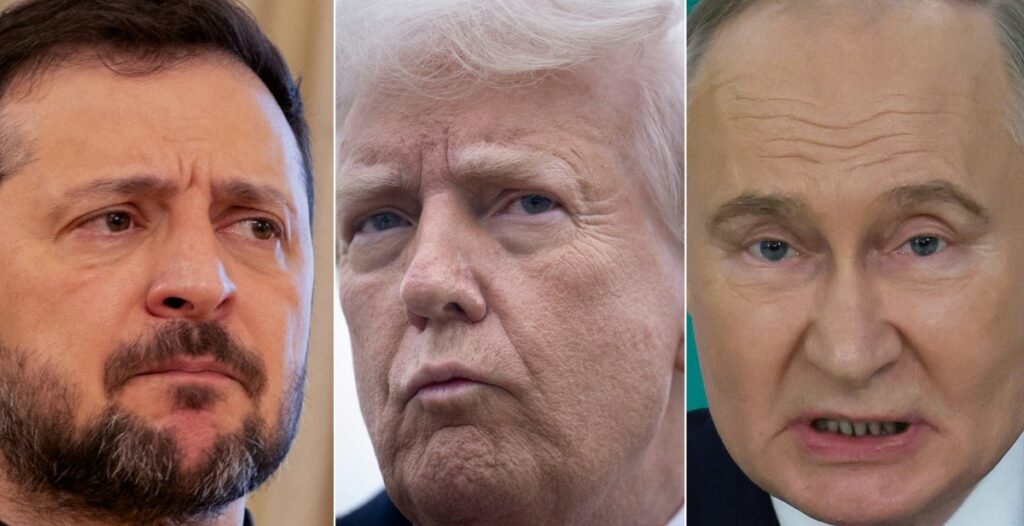
The Ukrainian president had initially been invited to deliver his message in person at the conference, but ultimately joined remotely. The event was convened to reflect on the impact and legacy of the 1975 Helsinki Final Act, signed by 35 countries—including the Soviet Union and the United States—at the height of Cold War tensions. This landmark treaty paved the way for the establishment of the Organization for Security and Co-operation in Europe (OSCE), which today includes 57 member states.
Among the foundational principles outlined in the Helsinki agreement are respect for sovereignty, renunciation of the use of force, and, crucially, the recognition of established national borders. The treaty states: “The participating States regard as inviolable all one another’s frontiers as well as the frontiers of all States in Europe and therefore they will refrain now and in the future from assaulting these frontiers.”
Zelensky emphasized that Russia’s 2022 full-scale invasion of Ukraine has constituted the most serious breach of these principles and has plunged the OSCE into its worst crisis since its creation. He criticized Russia’s shifting stance on territorial boundaries, saying, “One of Putin’s main ideas, now it’s mainstream in Russia … that its border are wherever it wants them to be.”
Ukraine has repeatedly called for Russia to be expelled from the OSCE in light of its actions. While these appeals have gone unheeded, Russia’s own parliament voted in July 2024 to suspend participation in the OSCE’s parliamentary assembly. Russian lawmakers described the body as biased and discriminatory, yet the nation still formally remains a member according to the OSCE’s website.
Russia’s presence at the Helsinki conference was muted. While the Russian Foreign Ministry confirmed it would participate, it announced that no senior-level representatives would be sent. Meanwhile, tensions between Russia and Finland have continued to simmer.
In mid-December 2023, Finland closed its extensive 1,340-kilometre (830-mile) eastern border with Russia after approximately 1,000 undocumented migrants crossed into Finnish territory. The Finnish government accused Moscow of deliberately orchestrating the incident—a claim the Kremlin has firmly rejected.
What You Should Know
Volodymyr Zelensky has renewed calls for regime change in Russia, insisting that ending the war alone will not deter future aggression from Moscow.
His comments, delivered during the 50th anniversary of the Helsinki Final Act, highlighted Russia’s ongoing violation of international norms and underscored the urgency of seizing Russian assets to support peace and deter further conflict.