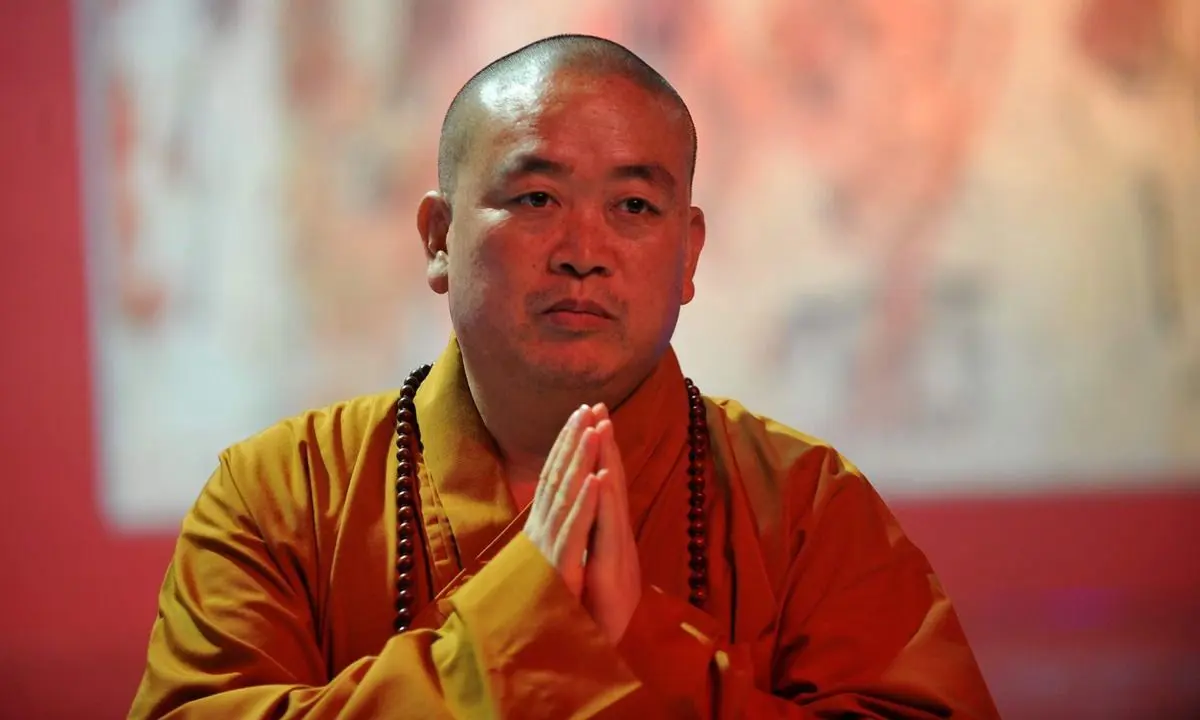
The head of China’s iconic Shaolin Temple, Shi Yongxin, is set to be disrobed for serious misconduct, Beijing’s top Buddhist authority confirmed on Monday.
The disciplinary action follows mounting allegations of embezzlement and inappropriate behavior.
On Sunday, the temple, widely regarded as the birthplace of kung fu, issued a statement on WeChat revealing that Shi was under investigation for allegedly misappropriating funds and misusing temple assets. It further claimed he had engaged in “improper relationships” with several women, in direct violation of Buddhist principles.
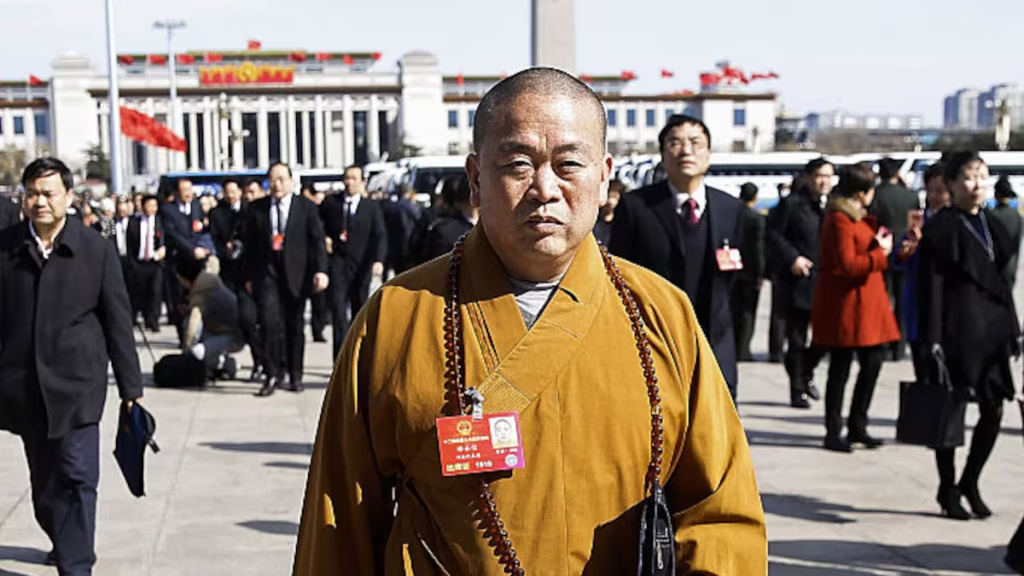
Responding swiftly, the Buddhist Association of China announced it would revoke Shi’s certificate of ordination. In its statement, the association condemned Shi’s behavior as “extremely” damaging to the Buddhist community and its public image, asserting full support for the ongoing investigation.
This isn’t the first time Shi has faced controversy. In 2015, he was accused by former monks of embezzling money, owning luxury cars, and fathering children—allegations the temple at the time labeled “vicious libel.”
Often dubbed the “CEO monk,” Shi Yongxin rose to prominence after becoming abbot in 1999. He led the Shaolin Temple into global expansion, establishing numerous companies and promoting Shaolin culture worldwide. However, his efforts attracted criticism for allegedly commercializing Buddhism.
Shi, who is 59, also served as vice-chairman of the Buddhist Association of China from 2002 and was a delegate to the National People’s Congress. As of Monday morning, a hashtag related to the scandal had garnered over 560 million views on Weibo, underscoring the public interest and outrage.
His last post on social media read: “When one’s own nature is pure, the pure land is here in the present.”
What You Should Know
Shi Yongxin’s downfall marks a major scandal in modern Chinese Buddhism. As the abbot of the 1,500-year-old Shaolin Temple, his global influence was significant.
His removal not only spotlights the Chinese government’s control over religious institutions but also raises broader concerns about the intersection of spirituality and commercialism.