A devastating aircraft crash occurred in Russia’s remote Amur region on Thursday, with authorities reporting no immediate signs of survivors among the nearly 50 people on board.
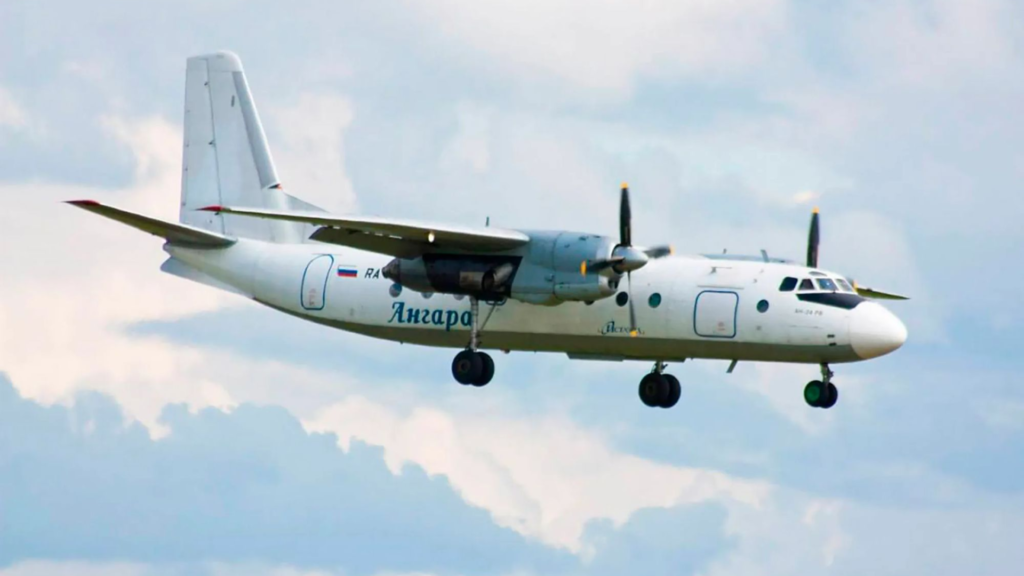
The ill-fated aircraft, a twin-propeller Antonov-24 operated by Angara Airlines, was en route from the city of Blagoveshchensk to the town of Tynda when it vanished from radar around 1:00 p.m. local time (0400 GMT).
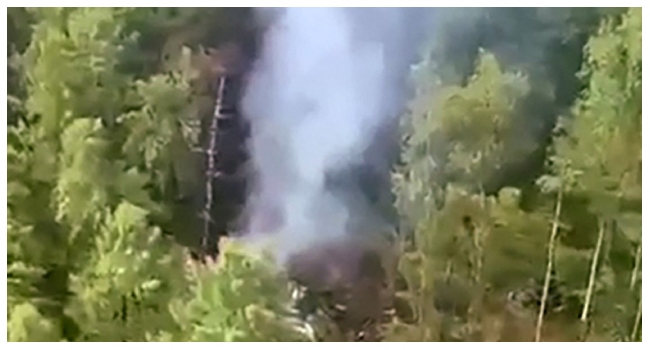
According to local reports, the aircraft’s burning fuselage was later spotted by a rescue helicopter on a forested mountain slope approximately 16 kilometers (10 miles) from Tynda. Videos shared by Russian investigators depicted thick columns of smoke rising from the plane’s remains, surrounded by dense woodland.
Emergency responders aboard the helicopter found no evidence of survivors at the crash site, as confirmed by local rescuers. The Amur region’s civil defense agency stated that efforts to access the location on the ground were underway. “At the moment, 25 people and five units of equipment have been dispatched, and four aircraft with crews are on standby,” the agency said.
One of the rescuers, speaking to the state-run TASS news agency, explained that the rugged forest terrain was significantly hindering efforts to reach the crash location. “The main search operations are being conducted from the air,” they noted.
Angara Airlines, a regional carrier based in Irkutsk, has yet to release an official statement regarding the incident.
The aircraft was said to be carrying 43 passengers and six crew members, including five children, according to Amur region governor Vassily Orlov. However, TASS, citing emergency services, reported a slightly different count of 40 passengers and six crew.
Investigators with Russia’s Far Eastern Transport Prosecutor’s Office revealed that the crash occurred as the aircraft was attempting a second approach to Tynda airport. “While approaching Tynda Airport, the aircraft went around for a second landing, after which contact was lost,” the office stated. An investigation is ongoing, though no immediate cause for the crash has been confirmed.
TASS further reported that the plane was manufactured nearly five decades ago. Despite its age, the aircraft’s airworthiness certificate had been extended until 2036, according to a source in aviation services. However, AFP was unable to independently verify this information.
The Antonov-24, a Soviet-era twin-propeller aircraft that entered service in 1959, remains in use in some of Russia’s most remote areas. While the country has made strides in replacing Soviet-era planes with more modern jets, many aging aircraft still serve far-flung regions where infrastructure and transportation options are limited. Unfortunately, accidents involving such older planes continue to be a tragic reality.
What you should know
The Antonov-24 crash near Tynda highlights ongoing safety concerns around the use of aging aircraft in remote Russian regions.
With no survivors found so far, this tragic event underscores the difficulties of emergency response in rugged terrain and the urgent need for aviation modernization.