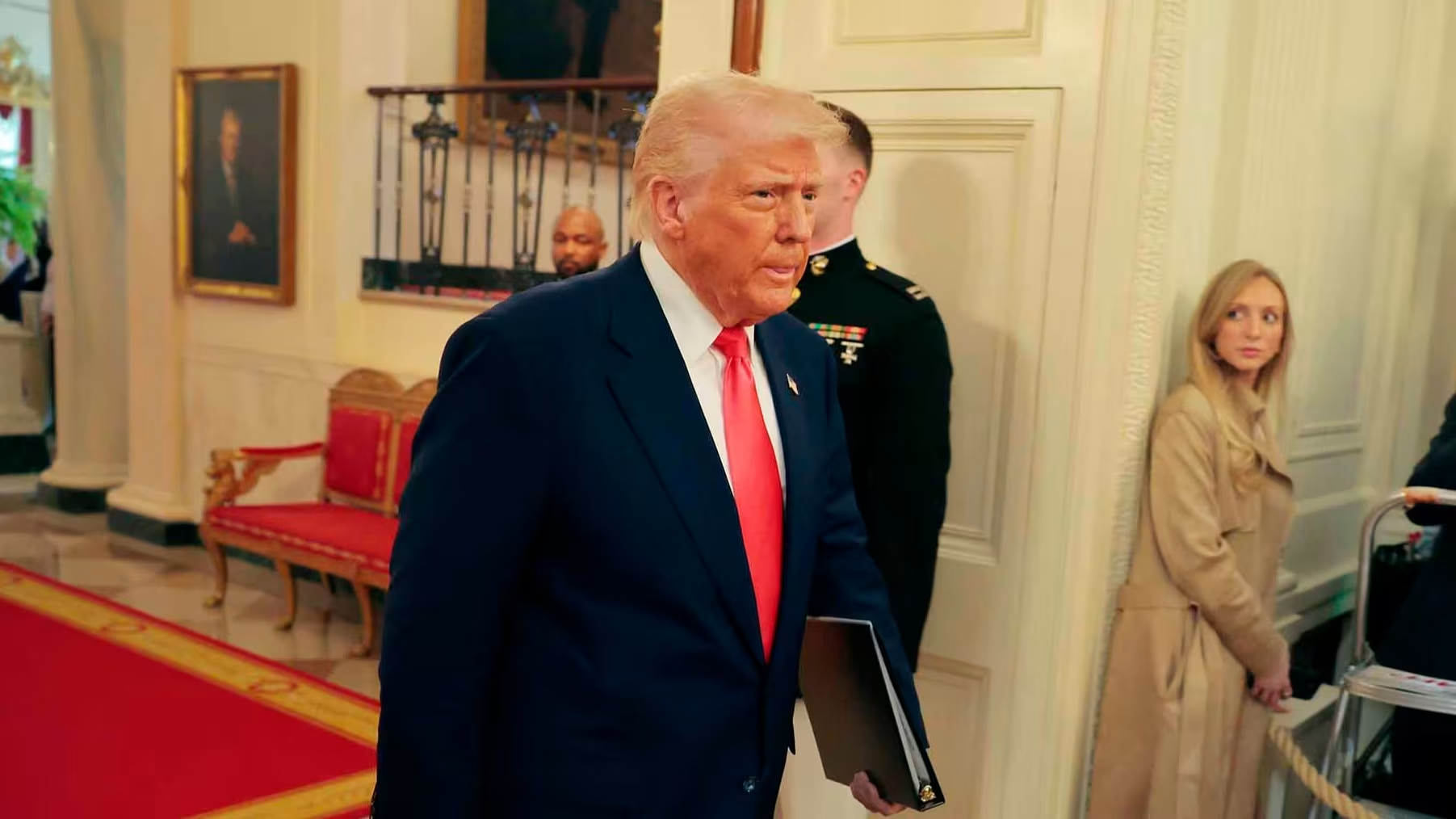
The Trump administration on Monday made public a vast trove of records tied to the 1968 assassination of civil rights icon Martin Luther King Jr., unveiling hundreds of thousands of pages despite apprehension expressed by King’s surviving family members.
According to Director of National Intelligence Tulsi Gabbard, the release marks a crucial step toward full government transparency surrounding one of the most significant and sorrowful moments in American history.
“The American people have waited nearly sixty years to see the full scope of the federal government’s investigation into Dr King’s assassination,” Gabbard noted in her official statement. “We are ensuring that no stone is left unturned in our mission to deliver complete transparency on this pivotal and tragic event in our nation’s history.”
The newly declassified collection includes over 230,000 pages of documents, which are now being published online with only minimal redactions intended to preserve personal privacy.
This release follows an executive order signed by President Donald Trump early in his administration, which directed the declassification of records relating not just to the assassination of Martin Luther King Jr., but also to those of President John F. Kennedy and his brother, Robert F. Kennedy. In compliance with that directive, the National Archives had already made public key files concerning JFK’s assassination in March and Robert Kennedy’s in April.
Martin Luther King Jr. was gunned down in April 1968 while standing on the balcony of the Lorraine Motel in Memphis, Tennessee. James Earl Ray later pleaded guilty to the killing and was sentenced to 99 years in prison. He died in 1998. Despite the conviction, doubts have persisted within the King family about Ray’s role in the assassination.
Reacting to Monday’s release, King’s two surviving children—Martin Luther King III and Bernice King—expressed a cautious stance. While acknowledging the importance of transparency and historical clarity, they voiced concerns that the newly available documents could potentially be misused to undermine their father’s legacy.
In a jointly issued statement, they emphasized that during his life, King was subjected to what they described as “an invasive, predatory, and deeply disturbing disinformation and surveillance campaign” led by then FBI Director J. Edgar Hoover. The intention, they stated, was to “discredit, dismantle and destroy Dr. King’s reputation and the broader American Civil Rights Movement.” They added that these actions were more than breaches of privacy—they were deliberate assaults on the truth.
“We ask those who engage with the release of these files to do so with empathy, restraint, and respect for our family’s continuing grief,” the statement urged.
This large-scale document disclosure also draws renewed attention to long-standing controversies surrounding other high-profile assassinations in American history. The Warren Commission, which conducted the official inquiry into President John F. Kennedy’s death in November 1963, concluded that former Marine Lee Harvey Oswald acted alone. Yet, despite that formal finding, skepticism remains widespread, fueled further by the gradual release of related records.
Similarly, President Kennedy’s younger brother, Robert F. Kennedy—who was assassinated in June 1968 while campaigning for the Democratic nomination—remains a figure of interest. Sirhan Sirhan, a Jordanian of Palestinian origin, was convicted for his killing and continues to serve a life sentence in California.
As the public begins combing through the newly available MLK files, questions will likely surface about the extent of surveillance and state involvement in civil rights-era events. The Trump administration’s decision to open the files could ignite fresh debate—but it also delivers the opportunity for deeper understanding and, perhaps, long-overdue closure.
What You Should Know
Martin Luther King Jr.’s assassination remains a deeply emotional and contested chapter in American history.
With over 230,000 government documents now declassified, the Trump administration seeks full disclosure—but King’s children worry this transparency may also be weaponized against their father’s enduring legacy.