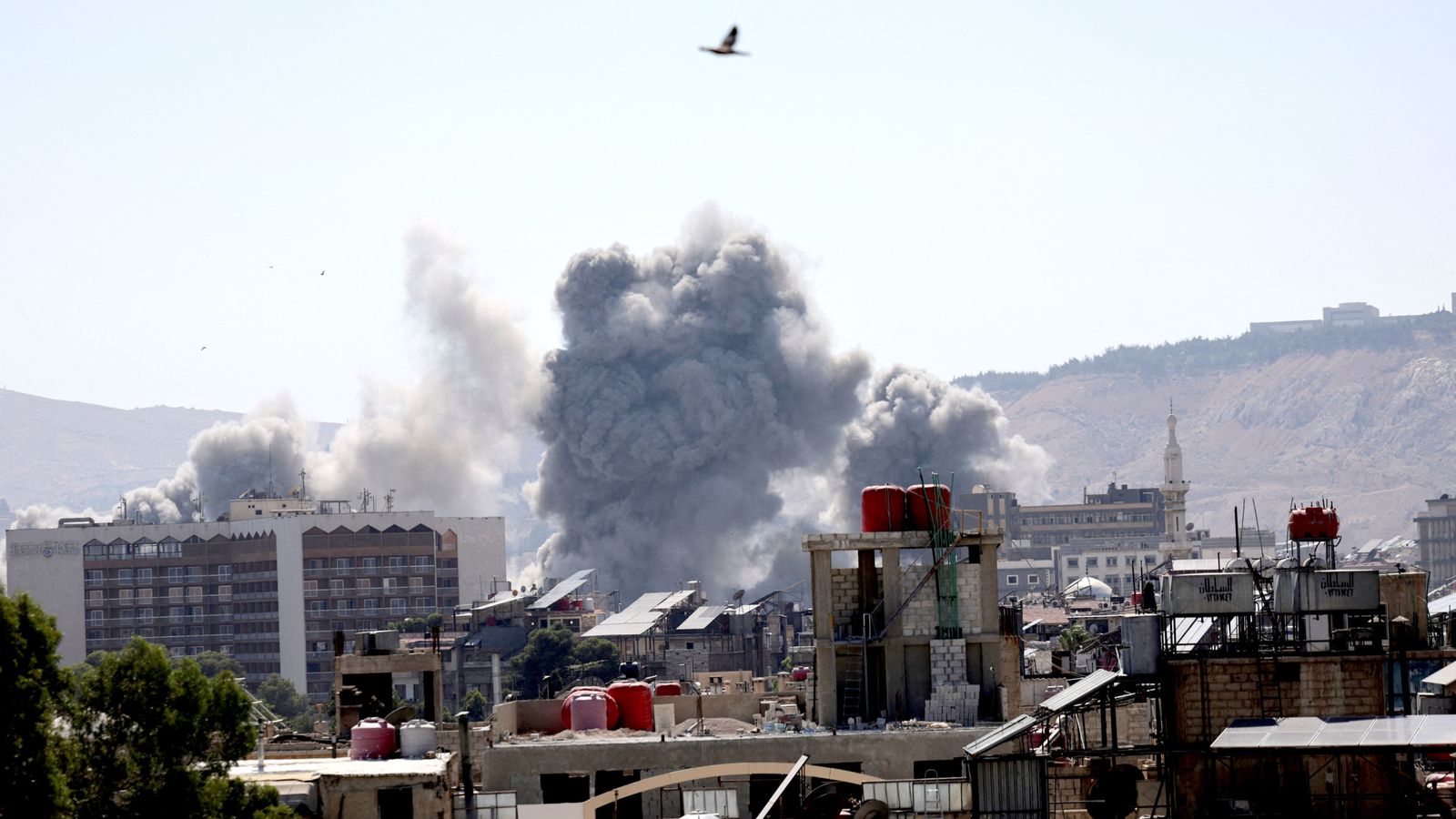
Israel launched an airstrike targeting Syria’s military headquarters in Damascus on Wednesday, following a wave of violence that has gripped the majority-Druze city of Sweida and claimed nearly 250 lives.
The Israeli action came shortly after Defence Minister Israel Katz issued a warning to the Islamist-led Syrian government, urging it to halt its operations against the Druze community, which has been caught in intensifying clashes with Bedouin tribes.
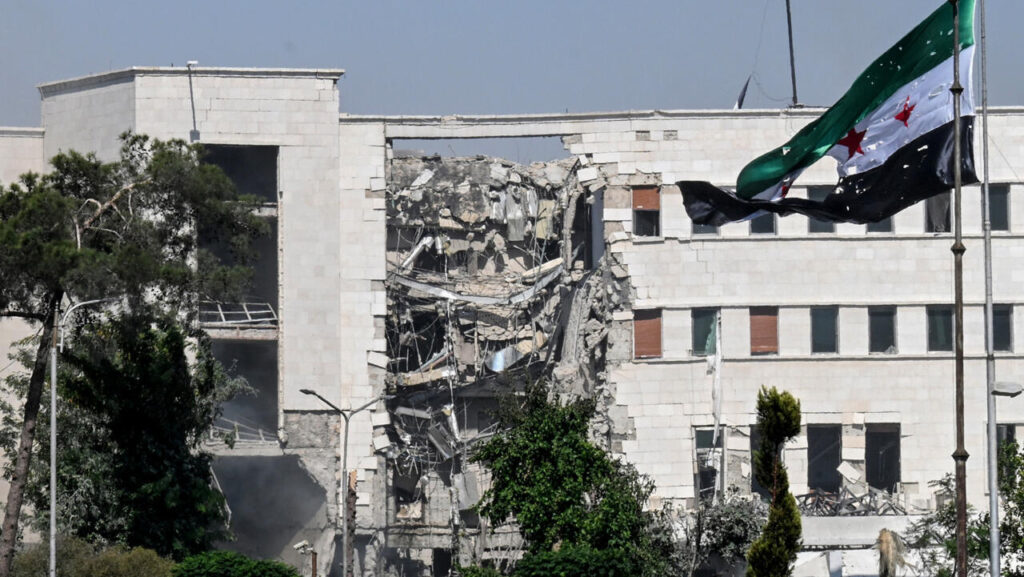
The airstrike, which the Israeli military confirmed in a brief statement, hit the entrance of the Syrian regime’s main military command center in Damascus. Although Syrian state television acknowledged the attack, it reported only two people injured in central Damascus without disclosing specific details.
The situation in Sweida, a historically quiet region in southern Syria, escalated dramatically when government forces entered the city under the pretext of enforcing a ceasefire negotiated with Druze elders. That truce had been intended to stem the bloodshed between Druze locals and Bedouin tribal groups.
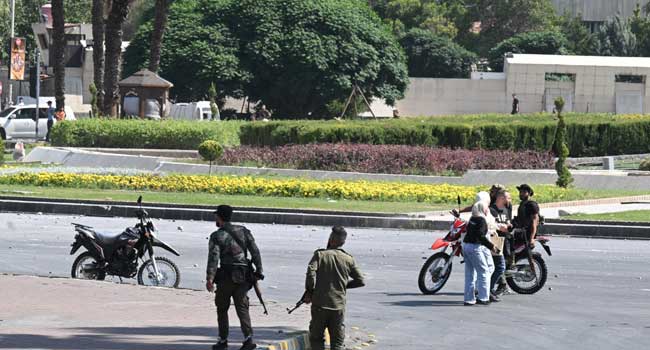
However, multiple eyewitnesses, local activists, and monitors from the Syrian Observatory for Human Rights claimed that Syrian troops not only sided with the Bedouin in the ongoing clashes but also actively took part in a violent assault on Druze fighters and civilians.
The recent unrest marks the deadliest bout of violence in Syria since April and May, when similar confrontations occurred in Sweida and near Damascus. The collapse of security in the region has been attributed to rising tensions under Syria’s new Islamist-led administration, which replaced the long-ruling Bashar al-Assad in December and has since been accused of marginalizing the country’s patchwork of religious and ethnic minorities.
Israel’s Defence Minister Katz reiterated his country’s commitment to the Druze, warning Damascus that Israeli forces would escalate their responses unless Syrian troops withdrew. “As we have made clear and warned, Israel will not abandon the Druze in Syria and will enforce the demilitarisation policy we have decided on,” Katz stated.
He also declared that the Israeli military presence along the Golan Heights armistice line would be bolstered in anticipation of further escalations.
Prime Minister Benjamin Netanyahu echoed this sentiment, reaffirming Israel’s stance that southern Syria must remain demilitarised and devoid of government-aligned forces. The Israeli Druze community’s spiritual leader, Sheikh Mowafaq Tarif, called the crisis “an existential battle for the Druze community,” underscoring the gravity of the situation.
According to the Syrian Observatory for Human Rights, the death toll has surged to 248 since the violence erupted on Sunday. This includes at least 92 Druze fatalities—28 of them civilians and 21 allegedly killed in summary executions carried out by Syrian government forces. On the other side, 138 Syrian soldiers and 18 Bedouin fighters were also confirmed dead.
Sweida has become the latest flashpoint in Syria’s long-running conflict. The current outbreak was reportedly triggered by the kidnapping of a Druze vegetable merchant, which led to a series of retaliatory abductions between Druze and Bedouin groups.
Long-standing grievances between the two communities have now exploded into full-blown urban warfare, with residents reporting mortar shelling and artillery fire resounding through the city.
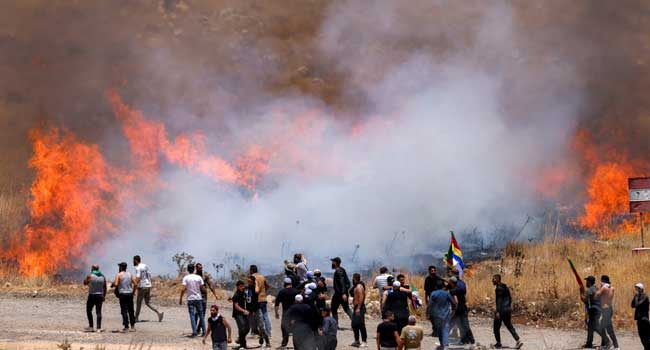
The local news outlet Suwayda 24 described the situation as one of “intense shelling with heavy artillery and mortars,” while AFP correspondents on the ground witnessed columns of smoke rising over the city and dozens of bodies strewn across streets and courtyards.
The Syrian defence ministry, meanwhile, has described its actions in Sweida as a response to “outlaw groups” attacking government positions. It insists its forces are engaging only hostile elements responsible for firing on troops. Nevertheless, rights groups and witnesses maintain that Syrian forces are actively participating in assaults against the Druze population.
Since Assad’s fall, the Islamist authorities in Damascus have faced widespread criticism for their treatment of Syria’s diverse minority communities. Israel, long critical of Syria’s alignment with Iranian interests, has presented its latest military actions as part of its broader policy to support regional minorities and push hostile forces away from its borders. Still, analysts argue that Israel’s stance may also be motivated by strategic calculations aimed at limiting the reach of the current Syrian regime near the Golan Heights.
As fighting rages on and the humanitarian toll continues to rise, the prospect for peace in Sweida remains uncertain. Sporadic gunfire echoed throughout the city even on Wednesday, suggesting that a ceasefire—if one is still in place—is no longer being observed.
What you should know
Israel bombed Syria’s military headquarters in Damascus in response to deadly clashes in Sweida, where Syrian forces allegedly aided Bedouin fighters against the Druze.
The attack comes amid rising tensions since Syria’s Islamist-led government took power and follows Israel’s pledge to protect Druze communities and enforce a demilitarised southern Syria.