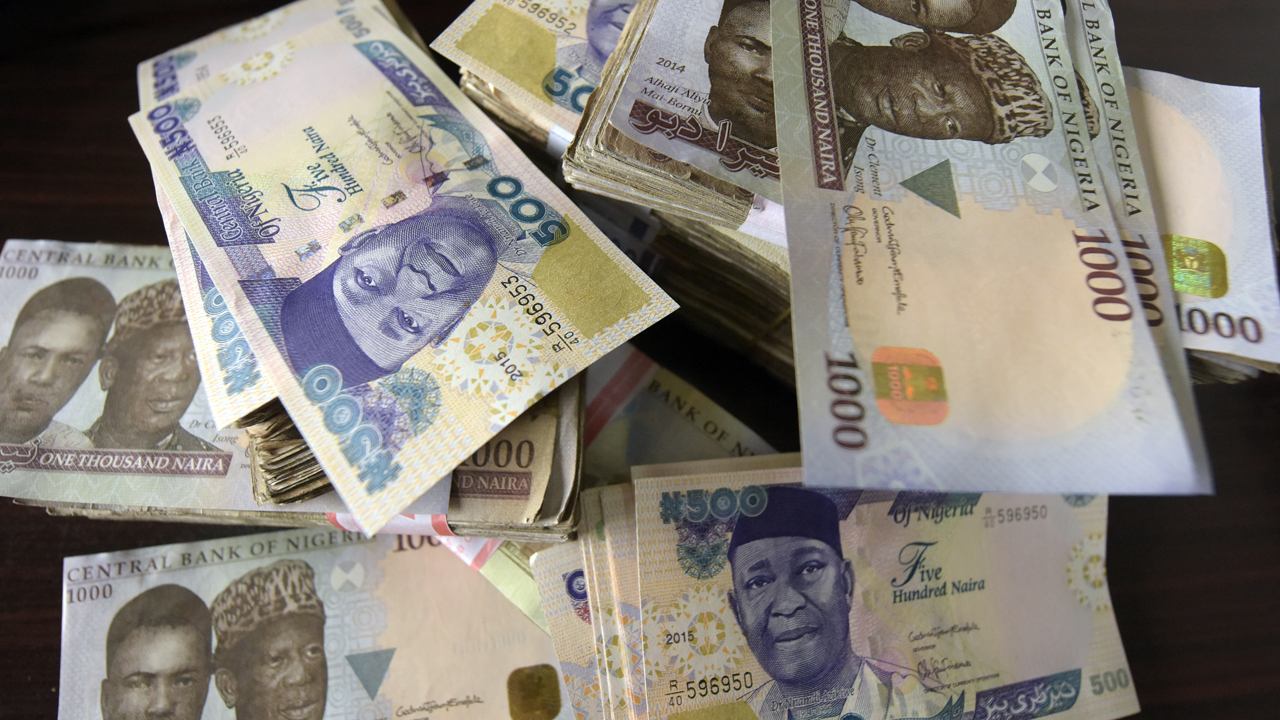
The Nigerian naira sustained depreciation gathered momentum this week, reaching N1,555 to the dollar in the parallel market on Wednesday, as financial markets brace for what could be a pivotal monetary policy decision from the Central Bank of Nigeria (CBN).
The naira continued its downward trend this week and currently trades at N1,555/$1 on the parallel market on Wednesday, according to Nairametrics’ market survey in Lagos. This represents a further slide from the N1,550 rate recorded on both Monday and Tuesday, highlighting the persistent pressure on Africa’s most populous nation’s currency.
The timing of this depreciation is particularly significant, coming just days before the 301st meeting of the Monetary Policy Committee (MPC), the country’s apex decision-making body on interest rate policy, will be held on Monday, July 21, and Tuesday, July 22, 2025, at its headquarters in Abuja.
The parallel market’s movement contrasts with relatively more stable conditions in the official foreign exchange market, where the naira closed at N1,528.65 to the dollar on Monday, showing a marginal improvement from the N1,532 recorded in the previous session. However, Tuesday’s official closing data remained unpublished on the CBN’s website as of Wednesday afternoon, a delay that has become increasingly common in recent months.
Market Volatility Signals Deeper Concerns
The intraday trading patterns on Monday revealed the underlying volatility plaguing the naira, with the currency swinging between a high of N1,532 and a low of N1,515 against the dollar. This N17 range within a single trading session underscores the fragility of market confidence and the challenges facing monetary authorities.
The committee decided at the 299th meeting of the MPC, held on 19th and 20th February 2025, to retain the MPR at 27.50 percent. With the monetary policy rate already at historically elevated levels, the CBN faces a delicate balancing act between curbing inflation and supporting economic growth.
Industry analysts are closely monitoring the upcoming MPC meeting for signals about the central bank’s future policy direction. The committee’s decisions carry significant weight for borrowing costs, investment flows, and Nigeria’s broader economic trajectory, with both domestic and international stakeholders watching for policy shifts that could impact their strategic planning.
Inflation Expectations Offer Mixed Signals
As policymakers prepare for their deliberations, economists are cautiously optimistic about Nigeria’s inflation trajectory. The National Bureau of Statistics has yet to release its June 2025 Consumer Price Index report, but analysts project a modest decline from May’s 22.97% headline inflation rate.
Expert projections cluster around a June inflation reading between 22.0% and 22.8%, driven by what analysts describe as base effects, relative foreign exchange stability, and seasonal adjustments in food supply chains. These factors have provided some breathing room for monetary policymakers, though challenges remain substantial.
Ebo Ayodeji, Managing Director of Optimus by Afrinvest, attributed the expected inflation moderation to currency stability and contained energy prices, noting that “We anticipate a further decline in headline inflation in June 2025, largely due to continued FX stability and minimal volatility in energy prices.” However, he cautioned that food inflation remains problematic due to security challenges in key agricultural regions like Benue State.
Policy Crossroads Ahead
The convergence of these economic indicators places the CBN at a critical juncture. While inflation may be showing signs of moderation, the naira’s continued weakness in parallel markets suggests underlying structural pressures that monetary policy alone may struggle to address.
Olaitan Sunday of Rostrum Investment & Securities Ltd. projects inflation to ease to 22.4%-22.8%, citing both statistical and policy-driven factors. Despite persistent challenges, including insecurity and elevated transportation costs, he believes the combination of foreign exchange gains, seasonal harvests, and reduced consumer spending will support disinflation.
The most optimistic projection comes from executive banker Onche Samuel, who expects headline inflation to drop to approximately 22.0% in June. He credits the CBN’s sustained tight monetary policy stance, evidenced by elevated yields on treasury instruments, for suppressing core inflation, particularly in the pharmaceuticals and logistics sectors.
Market Implications
The naira’s recent performance reflects broader concerns about Nigeria’s economic fundamentals, including foreign exchange liquidity, fiscal sustainability, and structural reforms. The widening gap between official and parallel market rates—currently about N26—suggests continued foreign exchange scarcity and potential policy inconsistencies.
As the MPC convenes next week, members will need to weigh the trade-offs between maintaining price stability and supporting economic growth. With the monetary policy rate already at 27.50%, further tightening could hamper business investment and consumer spending, while loosening could reignite inflationary pressures.
The committee’s decision will provide crucial insights into Nigeria’s monetary policy trajectory for the remainder of 2025, potentially setting the tone for fiscal and economic planning across Africa’s largest economy. Market participants will be particularly attentive to the central bank’s assessment of exchange rate stability and its implications for the broader macroeconomic framework.
As Nigeria navigates these economic crosscurrents, the upcoming MPC meeting represents more than routine policy adjustment—it embodies the complex challenges facing emerging market economies in an increasingly uncertain global environment.
WHAT YOU SHOULD KNOW
Nigeria’s naira has weakened to N1,555/$ in the parallel market, intensifying pressure on the Central Bank of Nigeria ahead of its crucial July 21-22 monetary policy meeting. While analysts expect inflation to moderate slightly from May’s 22.97% to around 22.0-22.8% in June, the widening gap between official and parallel exchange rates signals persistent foreign exchange scarcity and underlying economic vulnerabilities.