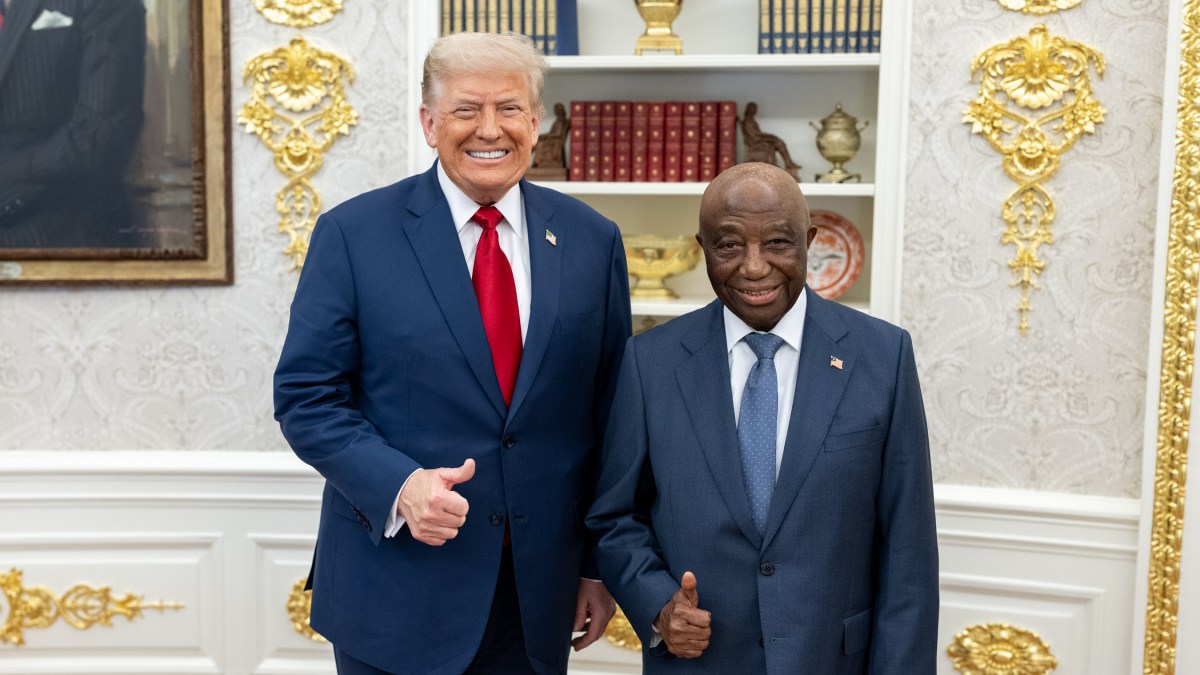
During a White House luncheon with African leaders on Wednesday, US President Donald Trump stirred unease with an offhand remark directed at Liberian President Joseph Boakai, praising his command of English, a language that is, in fact, Liberia’s official national language.
The event, held to strengthen diplomatic and economic ties with five West African nations, took an uncomfortable turn after President Boakai delivered his remarks. In response, Trump said, “Thank you, and such good English… Where did you learn to speak so beautifully? Where were you educated?”
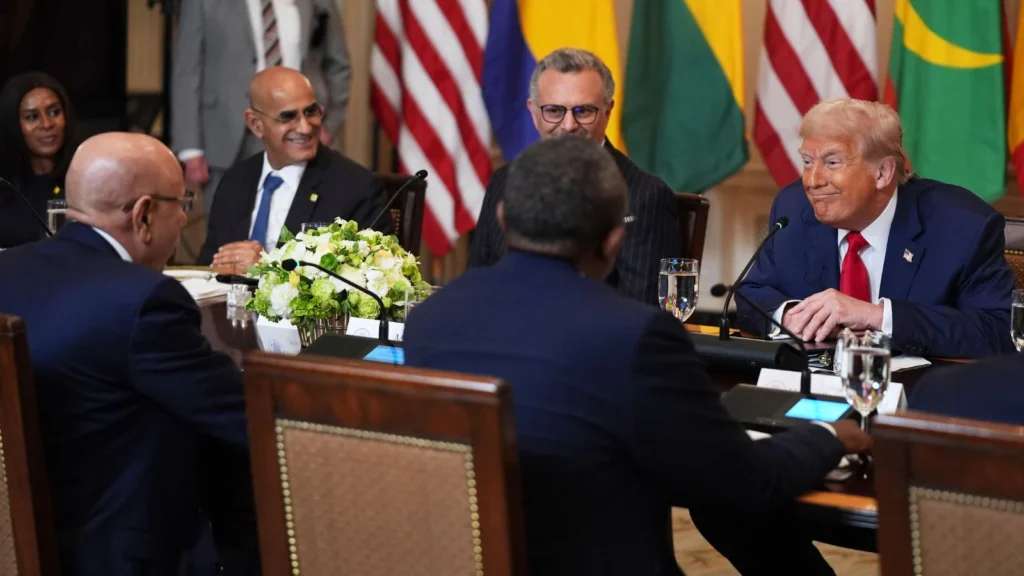
Boakai, a seasoned statesman and business graduate, responded softly that he had received his education in Liberia. While he did not show visible displeasure, his back turned toward the press, the low, measured tone of his response hinted at a sense of unease with the exchange.
President Trump, however, continued: “It’s beautiful English. I have people at this table can’t speak nearly as well.”
The comments, though likely meant as a compliment, drew raised eyebrows, especially given Liberia’s unique historical relationship with the United States. English has been the country’s official language since its founding in the 19th century, and Boakai, like most Liberians, is a native speaker.
Liberia’s history is tightly interwoven with that of the United States, dating back to the 1820s when freed African Americans were resettled on its shores under the American Colonization Society, eventually leading to the declaration of Liberia’s independence in 1847.
Despite its array of indigenous languages, with Kpelle being the most widely spoken, English remains Liberia’s lingua franca and the primary language used in schools, governance, and daily life. President Boakai himself is multilingual, reportedly literate in Mendi and Kissi, though English remains his dominant language of communication.
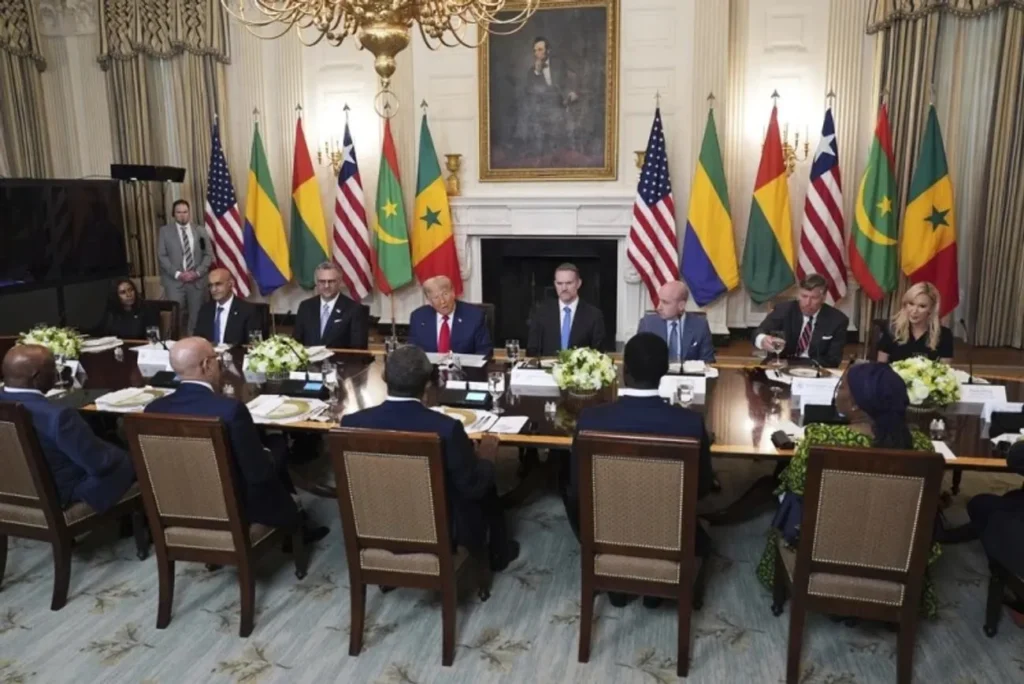
Trump’s remark came against the backdrop of a broader US diplomatic initiative focused on trade, investment, and regional security, particularly in light of growing Chinese and Russian influence in West Africa.
Present at the luncheon were leaders from Gabon, Mauritania, Guinea-Bissau, and Senegal, several of whom are native French speakers, which may have contributed to Trump’s misguided surprise at Boakai’s fluency.
While the event was intended to emphasize partnership and mutual respect, the moment underscored lingering gaps in cultural sensitivity and historical awareness in diplomatic settings, particularly between the US and African nations whose colonial and post-colonial narratives are often poorly understood in the West.
What you should know
Liberian President Joseph Boakai was awkwardly praised by US President Donald Trump for his English-speaking skills during a diplomatic lunch, despite English being Liberia’s official language.
The remark highlighted a common misunderstanding of Liberia’s deep-rooted historical and linguistic ties with the United States.