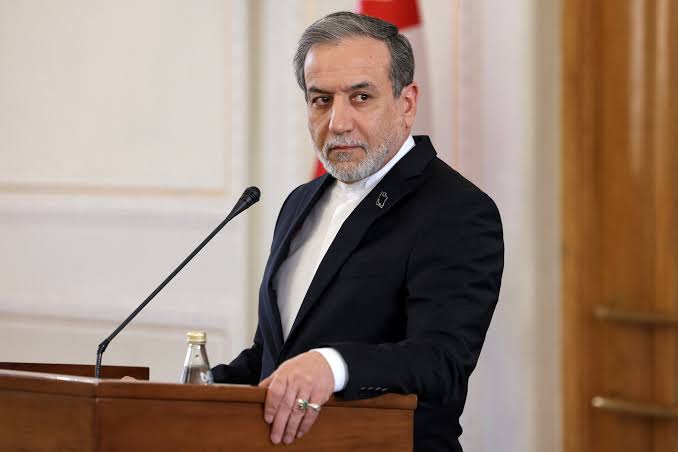
Iranian Foreign Minister Abbas Araghchi announced on Thursday that the country’s nuclear infrastructure suffered significant damage during the recent 12-day military conflict with Israel.
The disclosure marks Tehran’s first formal acknowledgment of the scale of destruction to its sensitive nuclear installations amid ongoing post-conflict evaluations.
Speaking during a broadcast on Iranian state television, Araghchi stated that an in-depth damage assessment was being conducted by specialists from the Atomic Energy Organization of Iran (AEOI). According to him, the extent of destruction is considerable and has now become a key focus of Iran’s diplomatic engagement with the international community.
“A detailed assessment of the damage is being carried out by experts from the Atomic Energy Organization,” Araghchi said. “Now, the discussion of demanding damages and the necessity of providing them has been placed as one of the important issues on the country’s diplomatic agenda.”
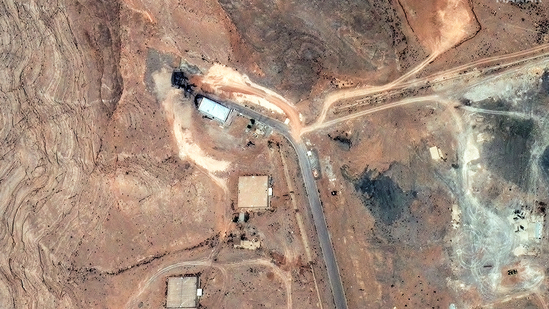
He further emphasized that the impact on Iran’s nuclear facilities was not superficial. “These damages are serious, and expert studies and political decision-making are underway at the same time,” he noted.
This confirmation follows multiple statements by U.S. President Donald Trump, who has touted the effectiveness of U.S. air strikes on Iranian nuclear facilities during the recent conflict.
Trump, whose administration openly supported Israel during the escalation, has claimed that the U.S.-led strikes “obliterated” Iran’s nuclear infrastructure. His remarks have drawn international attention and raised concerns over potential violations of international law and the long-term implications for regional security.
The 12-day conflict between Iran and Israel represented one of the most volatile confrontations in years, with cross-border missile strikes, aerial bombardments, and cyber-attacks. While both nations have since observed a tentative ceasefire, the aftermath of the war continues to unfold diplomatically and militarily.
Iran’s diplomatic corps, according to Araghchi, is already preparing to press for compensation through international legal and political channels. It remains unclear how such claims would be pursued or enforced, especially given the fraught state of Iran’s relations with many Western governments.
The Atomic Energy Organization is expected to publish a formal technical report on the scale of damage in the coming weeks. Analysts say that the credibility and comprehensiveness of that report could shape Iran’s next steps on the global stage — particularly in negotiations concerning nuclear non-proliferation and sanctions relief.
Meanwhile, international observers and watchdogs, including the International Atomic Energy Agency (IAEA), have yet to confirm access to or independently assess the affected facilities.
The latest revelations add a new layer of complexity to the regional security environment, where tensions between Iran, Israel, and the United States continue to simmer even in the shadow of a ceasefire agreement. Tehran’s willingness to vocalize its diplomatic pursuit for reparations suggests that the political battle over this conflict is far from over.
What You Should Know
Iran’s Foreign Minister Abbas Araghchi says the country’s nuclear facilities suffered “serious” damage during the recent 12-day war with Israel, with assessments ongoing.
Iran is now prioritizing the pursuit of compensation as a diplomatic issue, while U.S. President Donald Trump claims the strikes “obliterated” Iran’s nuclear infrastructure.