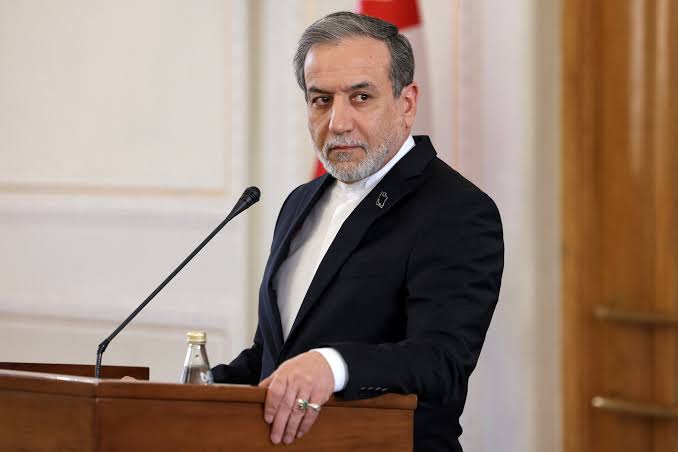
Iran’s Foreign Minister, Abbas Araghchi, has issued a stern warning in the aftermath of coordinated airstrikes on the country’s nuclear facilities by the United States and Israel, declaring that a critical threshold had been breached.
Speaking Sunday at the Organisation of Islamic Cooperation (OIC) meeting in Istanbul, Araghchi said the latest attack constituted a direct assault on Iran’s sovereignty and a severe blow to global stability.
“They crossed a very big red line by attacking (Iran’s) nuclear facilities,” Araghchi declared, just hours after US President Donald Trump confirmed that American warplanes struck three nuclear sites in Iran. The operation came nine days into an Israeli-led bombing campaign targeting the Islamic Republic’s atomic infrastructure.
Araghchi described the latest strike — which reportedly hit Fordow, an underground uranium enrichment site buried deep within a mountain — as the most severe to date. While he noted that the full scale of the damage remains unclear, he insisted the magnitude of the attack transcends the physical toll.
“I still do not have exact information about the level of damages, but I don’t think it matters… Last night’s attack was a grave crime,” he said. “Through this action, the United States has dealt a serious blow to international peace and security.”
The Iranian foreign minister revealed that he would depart for Moscow later in the day for urgent talks with Russian President Vladimir Putin, expected to take place on Monday morning. “I’m going to Moscow this afternoon,” Araghchi said, adding that he intends to hold “serious consultations” with the Kremlin on the path forward.
President Trump, in a statement following the strikes, claimed that Iran must now agree to “end this war,” implying a shift in the strategic equation and calling for a possible return to negotiations. But Araghchi quickly dismissed the overture as disingenuous and disconnected from the realities on the ground.
“Any demand to return to negotiations is irrelevant,” Araghchi said pointedly. “The world must not forget that it was the United States which — in the midst of a process to forge a diplomatic outcome — betrayed diplomacy by supporting the genocidal Israeli regime’s launch of an illegal war of aggression on the Iranian nation.”
He framed the strikes not as isolated military actions but as evidence that Washington and its allies have forsaken diplomacy in favor of brute force. “So we were in diplomacy, but we were attacked… They have proved that they are not men of diplomacy, and they only understand the language of threat and force.”
As regional tensions reach new highs, Turkey, the host of the OIC summit, echoed the alarm in a strongly worded statement warning of the potential for a global escalation. “The ongoing developments could cause the regional conflict to escalate to a global level. We do not want this catastrophic scenario to come to life,” said the Turkish foreign ministry.
The strikes have sent shockwaves across international diplomatic and security circles, further fraying already tense relations between Iran and the West. Iran’s signal of seeking Russian support also underscores the possibility of shifting alliances as Tehran looks to counterbalance what it sees as a Western assault on its sovereignty.
What you should know
Iran’s top diplomat, Abbas Araghchi, has warned that the US and Israel have “crossed a red line” by striking Iranian nuclear sites, calling the action a “grave crime” against international peace.
With plans to meet Russia’s President Putin for high-level talks, Iran is preparing a diplomatic and possibly military response, signaling a new and volatile phase in the region’s unfolding crisis.