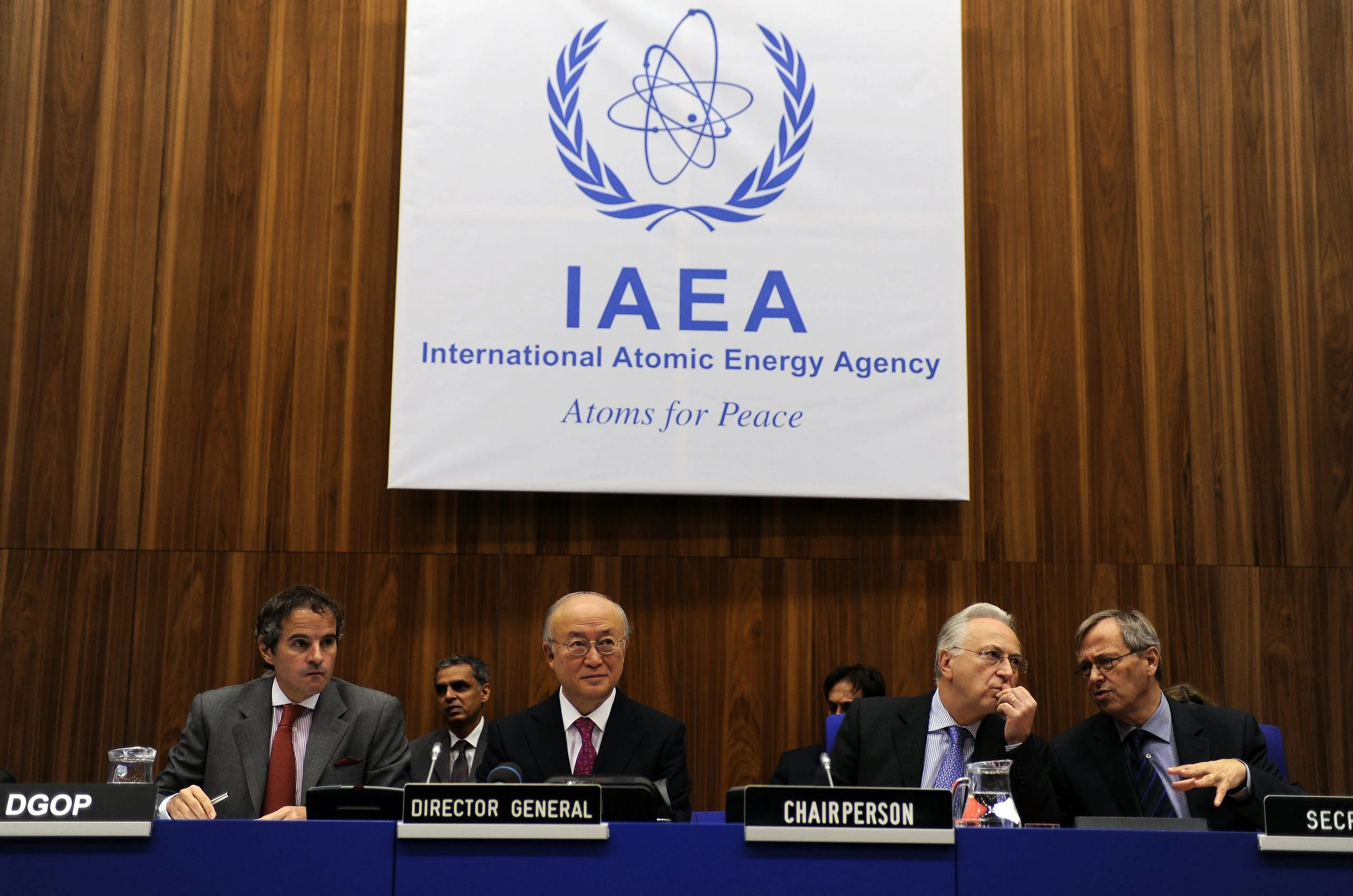
The head of the International Atomic Energy Agency (IAEA), Rafael Grossi, has issued a stark warning to the United Nations Security Council, revealing that Israel’s ongoing military actions against Iran have severely compromised the safety of several nuclear installations across the country.
Speaking on Friday, Grossi described the situation as increasingly dangerous, highlighting the potential for large-scale radiological hazards if hostilities continue unchecked.
Grossi pointed to direct attacks on the Natanz facility, a key site for uranium enrichment, stating that Israeli strikes had destroyed vital electrical infrastructure and damaged sections of the enrichment halls.
According to him, these strikes led to internal contamination, though no radiological material has so far been detected beyond the facility’s perimeter. Nonetheless, Grossi emphasized that the presence of exposed uranium compounds inside the complex now posed significant health risks to workers and surrounding areas.
Elsewhere, at the Isfahan site, which includes a uranium conversion plant and a metal processing facility, Grossi confirmed that multiple structures were targeted and sustained damage. Similarly, the Khondab reactor at Arak was affected, although it was not currently in operation.
Despite this, Grossi warned that damage to nuclear-related structures—even inactive ones—could have long-term implications for containment and monitoring.
Grossi reserved his most serious concern for the Bushehr Nuclear Power Plant, the only fully operational nuclear power station in Iran. He cautioned that a direct strike on the plant could result in a major release of radioactive material into the environment.
Even in the absence of a direct hit, he warned that if external power to the plant were cut off, the result could be a catastrophic core meltdown, with potentially devastating consequences for civilian populations far beyond Iran’s borders.
“The risk of radiation spreading hundreds of kilometers is real,” Grossi warned. “This would necessitate massive evacuations and lead to long-term environmental damage.”
He also highlighted the danger posed to the Tehran Nuclear Research Reactor, situated within the heavily populated capital. Any attack on the reactor, Grossi warned, would endanger millions of lives and severely complicate emergency response efforts.
Appealing for calm, Grossi declared, “Nuclear facilities and material must not be shrouded by the fog of war.” He urged all involved parties to prioritize communication, transparency, and restraint.
Reaffirming the IAEA’s commitment to monitoring nuclear safety in Iran, Grossi stated that the agency remains ready to serve as a neutral intermediary to help prevent escalation. He emphasized that, through its stringent inspection protocols, the IAEA could continue to ensure Iran’s nuclear program remains peaceful and in line with international agreements.
However, he cautioned that prolonged military engagement risks not only immediate destruction but also the unraveling of decades of global efforts to prevent nuclear proliferation.
“The alternative,” Grossi warned, “is a protracted conflict and a looming nuclear threat that would erode the global non-proliferation regime.”
What you should know
IAEA chief Rafael Grossi has raised concerns over Israel’s ongoing strikes on Iranian nuclear sites, citing contamination and a heightened risk of radiation. He stressed that an attack on the operational Bushehr plant could cause widespread radioactive fallout, urging restraint and dialogue to avoid a global nuclear crisis.