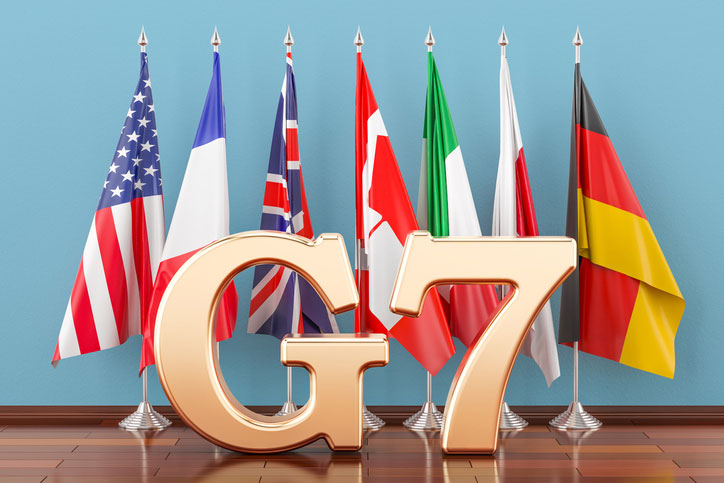
Finance ministers and central bank governors from the Group of Seven (G7) nations—Britain, Canada, France, Germany, Italy, Japan, and the United States—gather today in Alberta’s scenic Banff region for high-stakes talks running through Thursday.
The agenda is packed with pressing global issues, but the shadow of U.S. President Donald Trump’s sweeping tariffs and the ongoing war in Ukraine loom large, threatening to fracture the group’s once-unified stance.
The meeting, hosted in Canada’s western province, comes at a pivotal moment. The G7, long a bastion of economic coordination among advanced democracies, is grappling with internal divisions exacerbated by Trump’s return to the White House.
His administration’s aggressive trade policies, including a blanket 10 percent tariff on most U.S. trading partners and targeted levies on steel, aluminum, and autos, have rattled allies. The International Monetary Fund recently slashed its global growth forecast, citing these tariffs as a drag on economies, with Canada and the European Union among the hardest hit.
“This is an unusual G7,” said Ananya Kumar, deputy director at the Atlantic Council, a Washington-based think tank. “The economic impact of Trump’s tariffs has cast a pall over the talks, making it the elephant in the room.” Kumar emphasized that while trade agreements are unlikely to be finalized this week, the U.S. appears open to negotiations, which could signal progress.
At the heart of the discussions is the war in Ukraine, now in its third year since Russia’s 2022 invasion. Ukrainian Finance Minister Sergii Marchenko, a guest at the summit, is expected to address the media today, amplifying Kyiv’s call for sustained G7 support.
Canadian Prime Minister Mark Carney, who invited Ukrainian President Volodymyr Zelensky to the G7 leaders’ summit in June, has signaled strong backing for Ukraine. However, Trump’s recent outreach to Russian President Vladimir Putin, including claims of imminent peace talks between Russia and Ukraine, has sown uncertainty.
A source briefed on U.S. participation warned that Washington is not interested in issuing a communique “just for the sake of it,” insisting that any consensus must align with the Trump administration’s priorities.
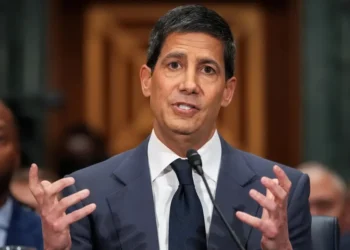
U.S. Treasury Secretary Scott Bessent, a key figure at the summit, is under pressure to deliver on Trump’s agenda while navigating tensions with allies. Bessent, who recently brokered a de-escalation in tit-for-tat tariffs with China, is seen as a pragmatic voice. “He has shown that he can be the adult in the room,” said Carl Weinberg, chief economist at High Frequency Economics. Yet, Weinberg noted, Bessent faces the challenge of balancing Trump’s demands with the need for G7 cohesion.
The talks will also tackle China’s excess industrial capacity, which the G7 views as a threat to domestic markets. “It’s unacceptable that countries allow China’s overcapacity to flood their sectors,” the U.S. source said. Bessent is expected to push for a “back-to-basics” approach, focusing on addressing economic imbalances and non-market practices.
Canadian Finance Minister Francois-Philippe Champagne, co-chairing sessions on the global economy, economic resilience, and security, will also lead discussions on financial crime and artificial intelligence. These topics underscore the G7’s broad mandate.
WHAT YOU SHOULD KNOW
As the G7 navigates this turbulent moment, the world watches to see whether these economic powerhouses can bridge their differences or if Trump’s policies will further strain the alliance.
ALSO READ TOP STORIES FROM VERILY NEWS