Japanese financial markets found themselves at the epicenter of political and economic uncertainty on Monday as Prime Minister Shigeru Ishiba’s ruling coalition suffered a stunning defeat in upper house elections, losing its parliamentary majority just as the country faces mounting pressure to reach a critical trade agreement with the United States.
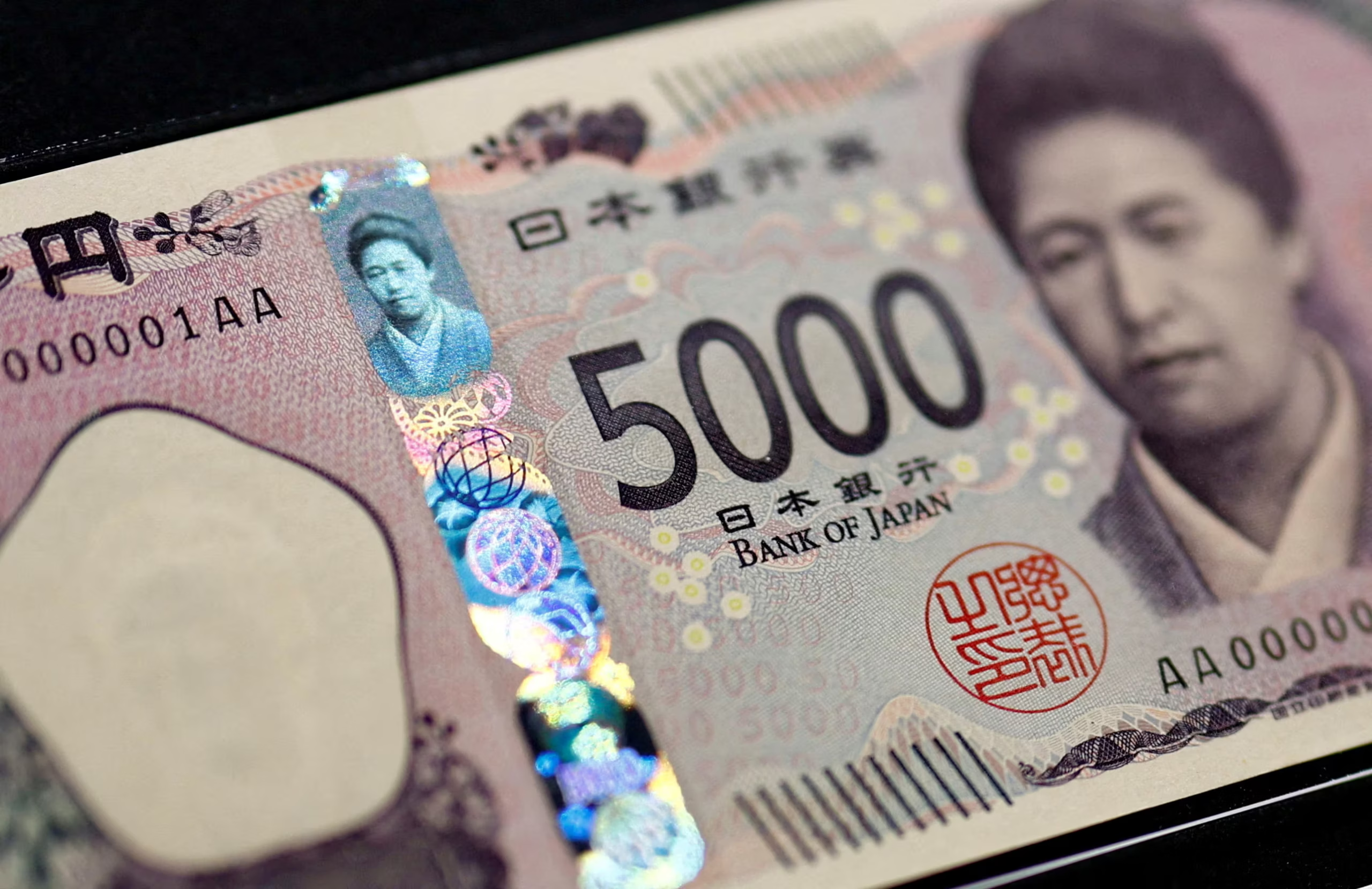
The yen strengthened across major currency pairs despite the political turmoil, gaining 0.9% against the dollar to 147.52—a counterintuitive move that analysts suggest indicates the election outcome had been largely anticipated by investors. However, the currency remains precariously close to its recent 3½-month low of 149.19, reflecting deeper concerns about Japan’s political stability and fiscal trajectory.
Coalition Collapse Creates Policy Paralysis
The Liberal Democratic Party’s return of just 47 seats in the 248-member upper chamber fell short of the 50 needed to maintain control, marking a blow to Ishiba’s leadership barely months into his tenure as prime minister. The defeat has triggered immediate speculation about his political future, with opposition parties weighing a no-confidence motion while members of his party privately discuss potential leadership changes.
“The political picture has become more complicated,” said Roberto Mialich, global FX strategist at UniCredit, highlighting how the election results compound existing challenges facing Japan’s economic policymakers.
The timing could hardly be worse. Japan finds itself racing against an August 1 deadline to secure a trade deal with President Donald Trump‘s administration, which has threatened to impose steep new tariffs on Japanese goods. The political uncertainty now raises serious questions about Tokyo’s ability to negotiate effectively from a position of domestic weakness.
Central Bank Constrained by Political Fragility
The election outcome is expected to significantly hamper the Bank of Japan’s monetary policy flexibility, particularly its gradual shift toward tightening after years of ultra-accommodative measures. David Chao, global market strategist for Asia Pacific at Invesco, warned that the central bank “may be reluctant to add further pressure to an already volatile landscape.”
This constraint comes at a crucial juncture for Japanese monetary policy. The BoJ has been carefully calibrating its exit from negative interest rates while managing currency volatility and supporting economic recovery. Political instability now threatens to derail this delicate balancing act.
Global Trade Tensions Intensify
The Japanese political crisis unfolds against a backdrop of escalating global trade tensions. Trump’s administration has been pushing for comprehensive tariff reforms, with Commerce Secretary Howard Lutnick maintaining Sunday that August 1 represents a “hard deadline” for new levies to take effect if negotiations fail.
The Financial Times reported last week that the administration is also targeting European Union products with steep new tariffs, prompting EU diplomats to explore countermeasures even as they continue to seek a negotiated solution.
Currency Markets Reflect Broader Uncertainties
Monday’s currency movements painted a picture of markets grappling with multiple crosscurrents. While the yen’s strength might seem paradoxical given Japan’s political turmoil, analysts like Marc Chandler of Bannockburn Forex suggest investors had been “caught leading the wrong way” on dollar-yen positioning.
The euro gained 0.4% to $1.1681, while sterling advanced 0.6% to $1.3488, contributing to a 0.5% decline in the dollar index. These moves reflect broader uncertainty about U.S. trade policy and its global implications.
Central Banks Navigate Uncertain Waters
The European Central Bank faces its challenges this week, with policymakers expected to hold rates steady despite recent euro strength and ongoing tariff concerns. ECB President Christine Lagarde will likely maintain a cautious stance ahead of the summer break, though trade policy developments could force more dramatic action.
In the United States, the Federal Reserve continues to resist pressure from Trump to cut interest rates, with Chair Jerome Powell having narrowly avoided dismissal last week. Markets are fully pricing in a rate cut by October, though prospects for additional easing remain uncertain.
Looking Ahead: Critical Week for Global Markets
With Japanese markets set to reopen Tuesday following the Marine Day holiday, investors worldwide will be watching closely for signs of how domestic traders digest the election results. The confluence of political instability, trade deadline pressure, and central bank policy uncertainty creates a potentially volatile environment.
“We have to see what happens tomorrow: how the markets respond,” Chandler noted, emphasizing that Tuesday’s trading session could provide crucial insights into investor sentiment and market stability.
As Japan grapples with its political future, the broader implications for regional stability, trade relationships, and monetary policy coordination remain profound. The coming days will test not only Japan’s resilience but also the global financial system’s ability to navigate an increasingly complex web of political and economic uncertainties.
The stakes could not be higher as Tokyo attempts to chart a course through domestic political upheaval while managing critical international relationships and economic pressures. The outcome will likely reverberate far beyond Japan’s borders, influencing trade policies, currency relationships, and monetary strategies across the globe.
WHAT YOU SHOULD KNOW
Japan now faces the challenging task of navigating crucial international trade negotiations while dealing with domestic political paralysis, creating significant uncertainty for both Japanese markets and global trade relationships.