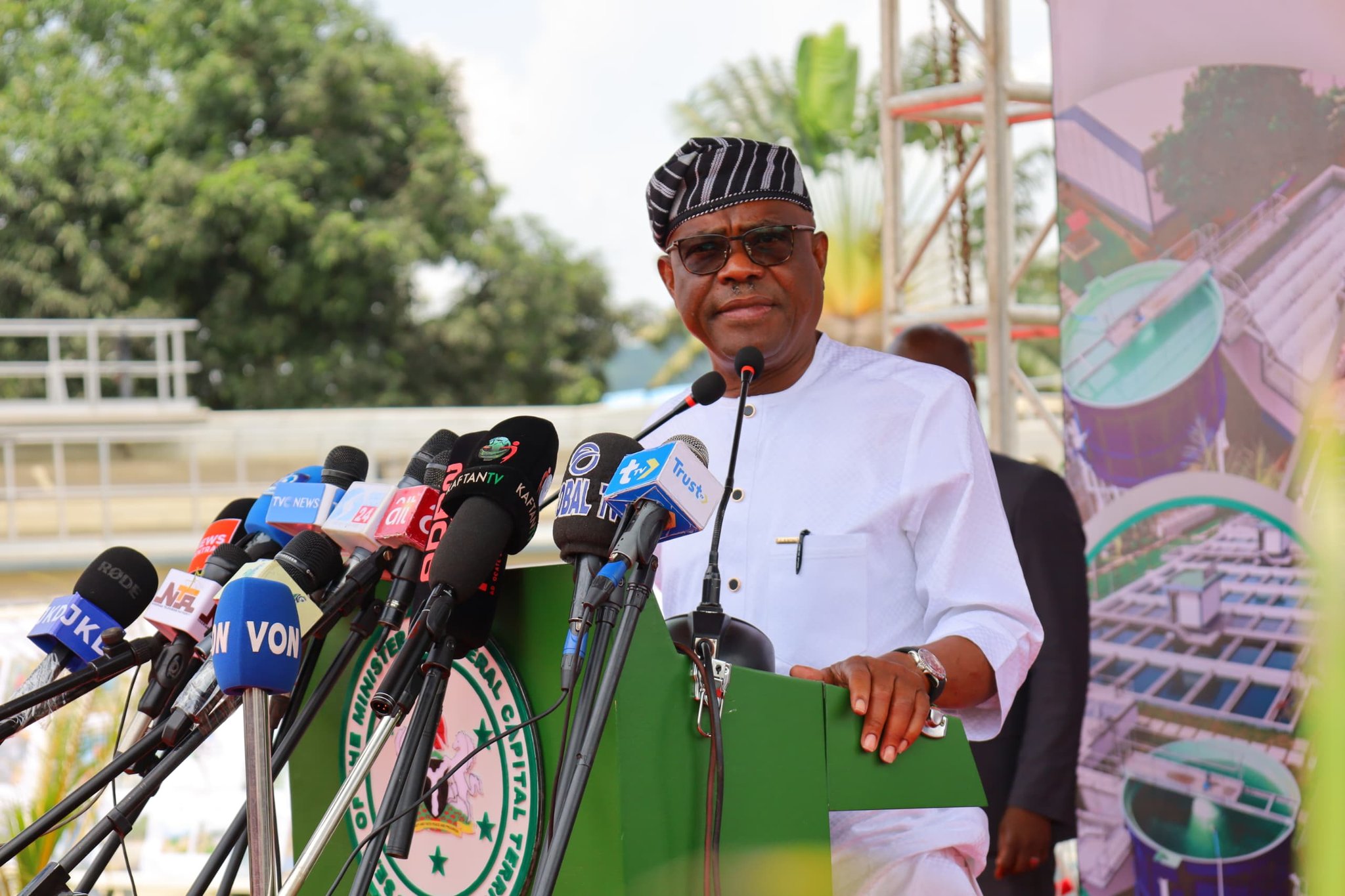
Minister of the Federal Capital Territory, Nyesom Wike, has alleged that certain political figures are deliberately misleading Rivers State Governor, Siminalayi Fubara, amid the lingering political tension in the state.
Speaking before a gathering of supporters in the Ogu/Bolo Local Government Area, Wike maintained that agreements reached to resolve the crisis in the oil-rich state must be fully respected and implemented.
Wike stressed that the understanding brokered in the presence of President Bola Tinubu was not informal or speculative, but a clearly defined accord endorsed by all parties involved.
He accused Governor Fubara of failing to adhere to the terms of the agreement, noting that it was formally signed by prominent stakeholders, including former Rivers State Governor Peter Odili, the National Security Adviser, Nuhu Ribadu, leaders of major political parties, and other senior government officials.
According to the former Rivers governor, it was deeply troubling that individuals who openly endorsed the agreement later turned around to misrepresent it to the public. He described such conduct as reckless and warned that it posed a serious threat to political stability in the state.
“People think they can just say anything in politics and it will not matter. It matters. If it did not matter yesterday, it will matter today, and if not today, it will matter tomorrow,” he said.
Wike emphasized that the agreement was collectively accepted and freely signed, arguing that it was dishonest for any of the signatories to later deny or contradict what they had agreed to behind closed doors.
He described Rivers State as a strategic political stronghold in the South-South region and urged leaders to exercise responsibility and truthfulness when addressing issues that could affect peace and cohesion.
Reflecting on past political battles in the state, Wike recalled earlier attempts by certain groups to dismantle the structure of the Peoples Democratic Party in Rivers during a national convention. He said those efforts ultimately failed, adding that subsequent political developments had clearly demonstrated the futility of such actions.
The minister reiterated that his political choices have consistently been guided by fairness, equity, and justice, rather than personal gain or blind party loyalty. He told the gathering that his stance on Rivers politics was rooted in principle and a desire to preserve stability in the state.
Wike also expressed appreciation to the people of Ogu/Bolo for their unwavering support over the years, particularly during periods of intense political pressure.
He went on to commend President Bola Tinubu for what he described as unprecedented appointments of Rivers State indigenes into key federal roles, saying the President had shown sincerity by honouring commitments made to stakeholders in the state.
In his remarks, the Chairman of the Rivers Ijaw Peoples Congress, George Sekibo, openly criticised Governor Fubara, describing him as ungrateful and declaring full support for Wike. He stated that Ijaw leaders were determined to ensure that the governor would not secure a second term and pledged their backing for the FCT Minister.
Similarly, the Executive Director of Finance at the Niger Delta Development Commission, Boma Iyaye, assured Wike of the continued loyalty of the Ogu/Bolo people. He praised the minister for facilitating key federal appointments and driving development initiatives that have benefited the area.
Earlier, the Chairman of Ogu/Bolo Local Government Area, Vincent Nemieboka, outlined several development projects attracted to the council through Wike’s influence. He reaffirmed the council’s loyalty and that of the local population to the former Rivers governor.
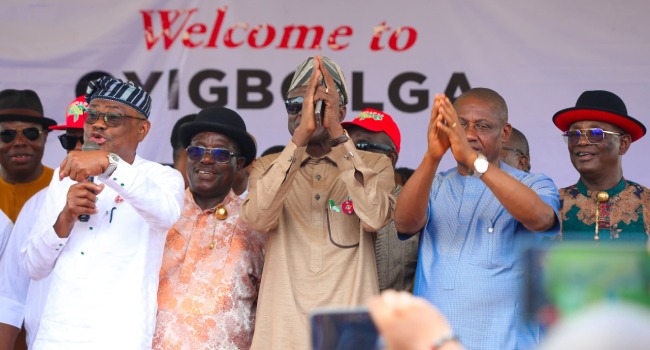
The meeting drew a wide range of attendees, including political leaders, traditional rulers, chiefs, and other stakeholders, and was marked by cultural and traditional performances staged to welcome Wike and his entourage.
What you should know
The renewed exchange highlights the deepening political rift in Rivers State, with Wike positioning himself as the guardian of agreements reached to restore peace.
His remarks underscore growing tensions between key political actors and signal that unresolved disputes could shape future alignments, governance stability, and electoral outcomes in one of Nigeria’s most politically influential states.