The Federal Government has come under heavy criticism after approving a new registration fee of N50,000 for candidates writing the West African Examinations Council (WAEC) and the National Examinations Council (NECO) Senior School Certificate Examinations, beginning in 2027.
The new fee represents an increase of about 82 per cent from the current N27,500, making it one of the biggest increases in public examination fees in recent years.
Education experts, private school owners and political leaders warned that the increase could place more financial pressure on families, increase the number of out-of-school children and undermine efforts to improve access to education.
The approval was conveyed in a letter dated June 18, 2026, signed by the Director of Senior Secondary Education at the Federal Ministry of Education, Adeniji Ibrahim, following a request by WAEC for a review of examination fees.
According to the ministry, the approval followed a meeting held on March 31, 2026, between the Minister of Education and examination bodies, where the rising cost of conducting public examinations was discussed.
The minister directed WAEC and NECO to adopt a uniform registration fee for their Senior School Certificate Examinations.
The ministry stated: “You may recall that at a meeting of examination bodies held with the honourable minister of education on 31 March, 2026, where the need for upward review of examination fees was discussed, the honourable minister directed that WAEC and NECO should adopt a uniform fee for the conduct of WAEC and NECO SSCE.
“Consequently, I am directed to convey the honourable minister of education’s approval of the sum of fifty thousand naira (N50,000.00) only, as the new examination fee per candidate, with effect from NECO SSCE (Internal), 2027.”
The ministry also directed the Registrar of NECO to inform relevant stakeholders ahead of the implementation.
Confirming the decision, the Director of Press and Public Relations at the Federal Ministry of Education, Folasade Boriowo, said the increase had received official approval.
“I can confirm the approval of an upward review of the examination fees. I spoke with the director in charge a few minutes ago and he said the approval was done,” Boriowo said.
Although the ministry did not give a detailed explanation for the increase, examination bodies have consistently pointed to rising costs of printing examination materials, logistics, security, supervision, technology, transportation and administration.
However, many education stakeholders argued that parents are already struggling with rising school fees, transportation costs, textbooks, uniforms and other educational expenses.
They warned that the new fee could make secondary school examinations unaffordable for many students, especially those from low-income families.
There are also concerns that states sponsoring candidates for WAEC and NECO may have to increase their education budgets significantly to continue such programmes.
Education stakeholders oppose increase
The National Mobilisation Officer of the Education Rights Campaign, Adaramoye Michael Lenin, described the decision as harmful and contrary to efforts to improve access to education.
Speaking to Daily Trust, Lenin said the increase could worsen Nigeria’s out-of-school children crisis.
“This increase is not going to help curb the out-of-school crisis the government is trying to stop; rather, it will increase it. How does this help make education attractive to an already existing group of Nigerians who don’t fancy education?” he asked.
“With this increase, it seems education has been commercialised and it’s now a danger, looking at the existing poor infrastructure and learning environment.
“We have Nigerians facing economic challenges and adding this extra burden will see parents who can’t afford the fees withdraw their kids to come and join them on the farm, in markets or wherever they make a living. Students will be discouraged.
“As a group, we demand an immediate reversal of the fees. We condemn it in totality.”
Lenin added that introducing higher examination fees during a period of high inflation and economic hardship could discourage school enrolment and reduce the number of students completing secondary education.
The President of the National Association of Proprietors of Private Schools, FCT chapter, Mrs Dorothy Okwuenu, also criticised the decision.
“It is a terrible move from the government. It is quite unfortunate that the government will be increasing the fees now and, unfortunately, we are stuck.
“The increase has a multiplier effect as it will discourage students from going to school, thus increasing the number of out-of-school children.
“We have struggling parents who can’t afford this increase. Will the government pay for the public school students?
“I understand the other policy on the JSS and SSS, which is a good one for students to have 12 years of straight education, but this increase can derail that policy.”
She said the proposed 12-year uninterrupted basic education programme could be undermined if examination costs become too expensive for parents.
The Executive Director of Chalcedony Prime School, Abuja, Dr Mary Chinwuba, said the increase raises concerns about fairness and equal access to education.
“Many Nigerian families are already struggling with inflation and the rising cost of living. A sharp increase in examination fees could prevent thousands of qualified students from sitting for WAEC or NECO exams, especially those from low-income homes.
“Some students who cannot afford the examination fees may become discouraged and leave school altogether, increasing the number of out-of-school youths.
“Parents are already paying tuition, textbooks, uniforms, transportation and feeding costs. An additional ₦50,000 per candidate will place significant pressure on household finances.
“Children from wealthier families will continue their education with little difficulty, while those from poorer homes may be left behind, widening the gap in educational opportunity.
“My position as an educationist is that quality education should remain accessible, affordable and inclusive,” she said.
Similarly, the Proprietress of The Winners Joy International Academy, Kubwa, Abuja, Rosemary Onyenagubo, warned that education is becoming increasingly unaffordable.
“Gradually, education is becoming only for the rich. The increase will cause so many students to drop out, especially those who can’t afford it.
“The increase is also coming at a time when many families are struggling to feed, and this may push them to abandon education totally,” she said.
Atiku condemns fee increase
The presidential candidate of the African Democratic Congress (ADC), Atiku Abubakar, also criticised the decision, describing it as harsh and insensitive to the country’s economic realities.
In a statement issued by his media aide, Phrank Shaibu, Atiku condemned both the increase in fees at Federal Unity Colleges and the approval of a ₦50,000 registration fee for WAEC and NECO candidates from 2027.
He argued that making education more expensive while Nigerians face inflation, rising food prices, transport costs, electricity tariffs, unemployment and stagnant incomes contradicts the government’s responsibility to make education accessible.
According to Atiku, education remains one of the most effective ways to reduce poverty and improve social mobility, warning that every additional financial burden on parents could deny another child the opportunity to complete secondary education.
Tinubu’s old video resurfaces
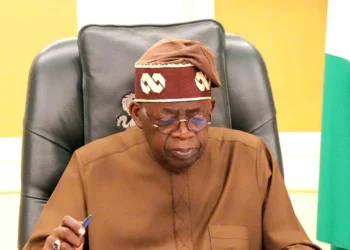
Following the announcement, an old video of President Bola Tinubu speaking during his time as Governor of Lagos State resurfaced online.
In the 2001 video, Tinubu explained why his administration decided to pay WAEC examination fees for students after discovering that many parents could not afford the cost.
VerilyNews recalls that Tinubu served as Governor of Lagos State from 1999 to 2007.
He said: “Before we came into office, students were asked to pay WAEC fees of between N1,000 and N2,000. But during the campaign, about 17 people told me they could not afford the fees and had asked their children to stay at home.
“At that point, I said never again. We decided that the government would pay the examination fees for the students.
“When we started paying over ₦100m, they introduced separate fees for science practicals, but I said I would not pay that one.”
Tinubu also recalled seeing schoolchildren hawking after school hours, saying the experience influenced his decision.
“I had left office around 5 p.m. In Mile 12, I saw women selling bread and sachet water with children still in their school uniforms. One of the children was carrying a tray of groundnuts on the head.
“I asked myself, if we don’t pay these fees, how can these children become pharmacists, doctors or engineers?
“I went back to the office and approved the payment. But paying examination fees alone is not enough. If we don’t provide laboratories in schools, it won’t make sense because the students also need practical training and the necessary learning materials,” he added.
While the Federal Government maintains that the increase is necessary to sustain the quality and administration of public examinations, many education stakeholders insist that affordability must remain a priority in any reform affecting millions of Nigerian students.