Voting has officially concluded in the Lagos State local government elections held on Saturday, covering chairmanship, vice-chairmanship, and councillorship positions across the state’s 20 Local Government Areas (LGAs) and 37 Local Council Development Areas (LCDAs).
The six-hour voting exercise, which commenced at 9:00 a.m. and ended at 3:00 p.m., was conducted under the supervision of the Lagos State Independent Electoral Commission (LASIEC). The commission had earlier stipulated the duration, urging voters to participate actively in electing grassroots leaders who oversee essential governance at the local level.
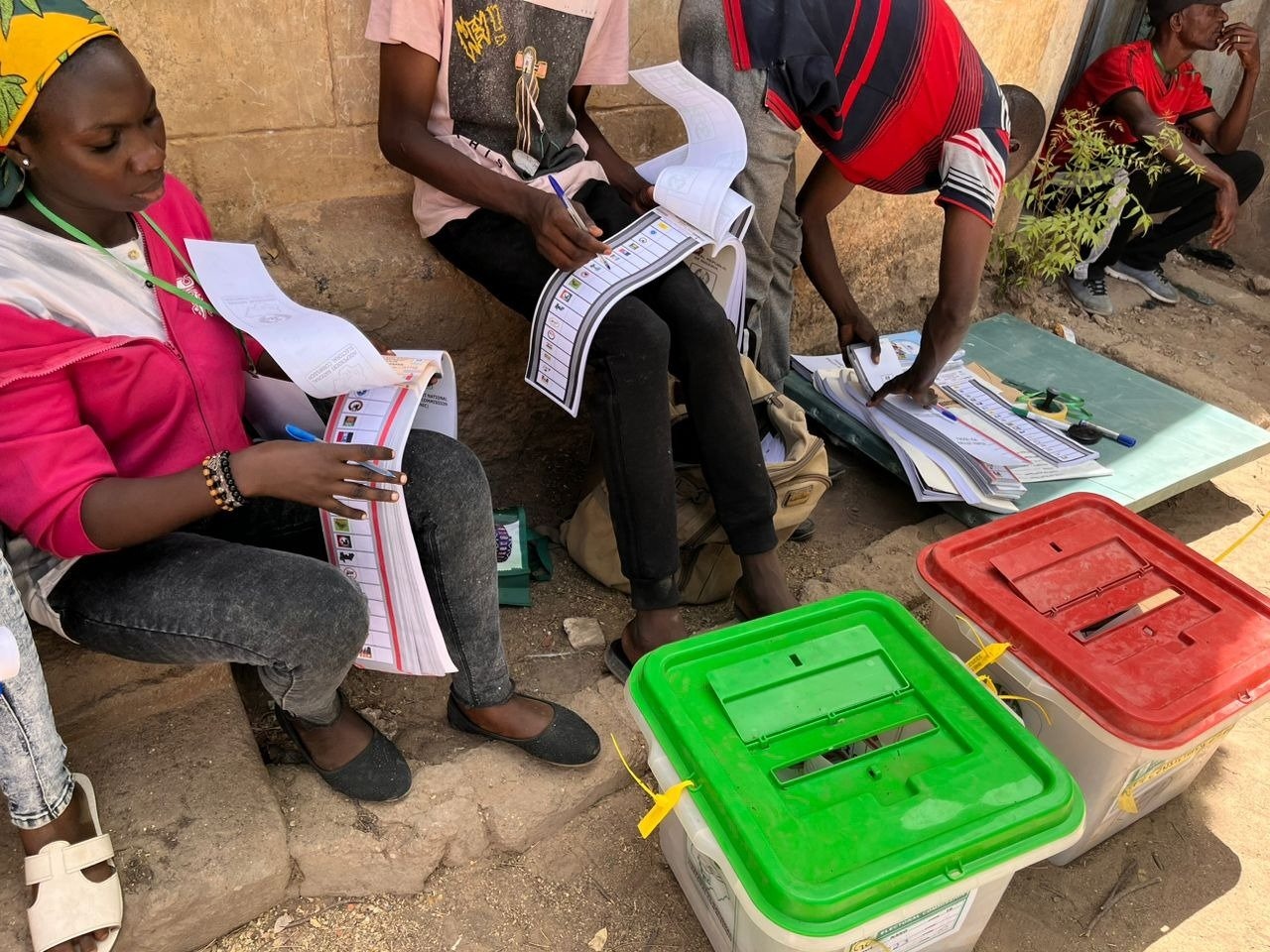
Following the close of polls, electoral officers across the state moved swiftly into the next critical phase of the process—ballot sorting and counting. These procedures were carried out in full view of party agents, election observers, and a number of citizens who remained at the polling units to monitor the transparency of the process.
At Polling Unit 17, situated in the Alhaji Masha, Small London area of Surulere LGA, LASIEC officials began sorting and counting at exactly 3:04 p.m. The unit had a total of 1,166 registered voters, out of which only 550 participated in the election, highlighting the broader issue of voter apathy that marred the day’s proceedings.
The collation process will now proceed from polling units to the ward level before being transferred to local government LASIEC offices, and ultimately to the commission’s headquarters in Yaba, where final results will be compiled and announced.
Despite the peaceful conduct reported across much of the state, low voter turnout stood out as a major concern. Only 15 political parties were confirmed to have participated, and in many locations, including those considered political hotspots, turnout remained dismally low.
Prominent figures also voiced their concerns. Femi Gbajabiamila, the Chief of Staff to President Bola Ahmed Tinubu and a former Speaker of the House of Representatives, expressed his disappointment after casting his vote at Fowler Memorial School, also in Surulere.
“There is a general low turnout from what I’ve seen,” Gbajabiamila said. “Perhaps because people don’t understand fully the importance of local government elections, which is even more important than any other election. We need to sensitise our people. We need to educate them about the importance of grassroots government. But so far, it’s peaceful and quiet. It’s free and fair. There are no skirmishes anywhere, and that’s what we all want for any election.”
The local government elections in Lagos have long been plagued by limited participation and perceived lack of awareness about the significance of governance at the local level. Analysts suggest that political parties and civic education bodies need to ramp up efforts to mobilise the electorate and shift the narrative that local elections are less important than national or gubernatorial contests.
Although the election was conducted without any major incidents or violence, reports from various polling units consistently pointed to an underwhelming voter response. Many attributed this to poor voter education, a lack of trust in the electoral process, or apathy born from years of unfulfilled campaign promises.
As LASIEC officials work into the evening to compile results and determine the winners in all the contested positions, attention will now shift to the quality of governance and leadership that emerges from this exercise. Observers say it is time for the elected chairpersons and councillors to justify the mandate of the people by delivering on their responsibilities at the most immediate level of governance.
What You Should Know
The Lagos State local government elections ended peacefully with reports of low voter turnout across the state. Voting took place in all 20 LGAs and 37 LCDAs. Officials have now begun ballot sorting and counting, with results expected after collation at LASIEC’s Yaba headquarters.
Despite the smooth conduct, political leaders like Femi Gbajabiamila called for greater voter sensitisation to strengthen grassroots democracy.