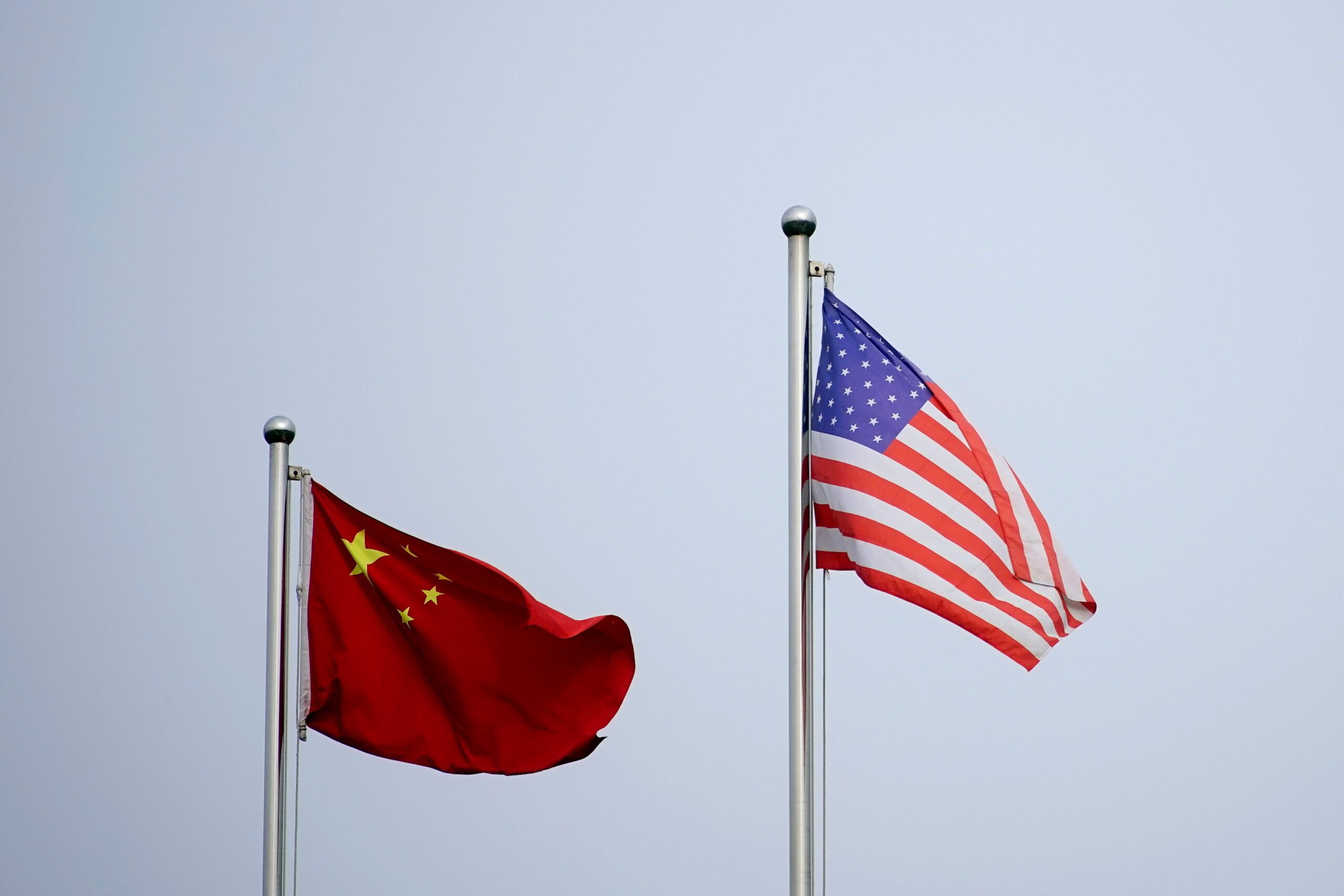
Senior American and Chinese trade officials will convene in the Swedish capital on Monday for what analysts are calling the most significant round of bilateral trade negotiations since the world’s two largest economies stepped back from the brink of an all-out trade war earlier this summer.
U.S. Treasury Secretary Scott Bessent and Chinese Vice Premier He Lifeng are leading delegations tasked with hammering out a durable agreement before an August 12 deadline that could otherwise trigger the reimposition of crushing tariffs exceeding 100% on both sides. The stakes could hardly be higher, with global supply chains still reeling from months of escalating trade tensions that have rippled through industries from technology to rare earth minerals.
The Stockholm meeting comes just one day after President Donald Trump hosted European Commission President Ursula von der Leyen at his Scottish golf course, where the two leaders discussed a separate trade framework that would impose a 15% baseline tariff on most European Union goods. The back-to-back diplomatic encounters underscore the administration’s aggressive push to reshape America’s trade relationships across multiple fronts simultaneously.
A Fragile Truce Under Pressure
The current negotiations build on a preliminary agreement reached in June that temporarily halted what had become a destructive cycle of tit-for-tat tariffs. Previous talks in Geneva and London focused primarily on de-escalation—bringing retaliatory duties down from triple-digit levels and restoring the flow of critical goods, including Chinese rare earth minerals and American semiconductor technology that had been caught in the crossfire.
“Stockholm will be the first meaningful round of U.S.-China trade talks,” observed Bo Zhengyuan, a Shanghai-based partner at consultancy firm Plenum, suggesting that earlier meetings were more about crisis management than substantive negotiation.
The urgency is palpable. Without a breakthrough, American tariffs on Chinese goods would snap back to 145%, while Chinese retaliatory measures would reach 125%—levels that trade experts warn could fragment global supply chains and drive up consumer prices worldwide.
Beyond Tariffs: Structural Economic Disputes
While the immediate focus remains on preventing tariff escalation, the underlying disputes run far deeper than trade volumes and duty rates. American negotiators are expected to press longstanding complaints about China’s state-led economic model, which Washington argues floods global markets with artificially cheap goods through massive government subsidies.
Beijing, meanwhile, continues to challenge U.S. national security export controls on advanced technology, arguing that such measures represent a deliberate attempt to constrain Chinese economic growth and technological development.
China currently faces a complex web of American tariffs totaling 55% on most goods—including a 20% levy related to the fentanyl crisis, a 10% reciprocal tariff, and 25% duties on industrial products imposed during Trump’s first presidential term.
Leverage and Strategic Assets
China’s dominance in rare earth minerals and magnets—critical components in everything from military hardware to automotive systems—has emerged as a key bargaining chip. Beijing’s ability to restrict these materials has given Chinese negotiators significant leverage over American industries that depend on steady supplies.
The rare earth issue exemplifies how trade disputes have evolved beyond traditional commercial concerns into matters of national security and industrial policy. Both sides are acutely aware that any agreement must address not just immediate trade flows but also long-term strategic dependencies.
The Xi-Trump Factor
Hovering over the Stockholm talks is the possibility of a face-to-face meeting between Trump and Chinese President Xi Jinping later this year, potentially in October. Such a summit could provide the political momentum needed to resolve the most intractable disputes, but it would likely require significant progress in lower-level negotiations first.
“The Stockholm meeting is an opportunity to start laying the groundwork for a Trump visit to China,” noted Wendy Cutler, vice president at the Asia Society Policy Institute, highlighting the diplomatic choreography underlying the technical trade discussions.
Broader Pattern of Trade Pressure
The China negotiations unfold against the backdrop of Trump’s broader trade offensive. The administration has already pressured Japan, Vietnam, and the Philippines into accepting higher U.S. tariffs of 15% to 20%, demonstrating a willingness to use economic leverage across multiple relationships simultaneously.
Treasury Secretary Bessent has indicated he seeks an extension of the August 12 deadline, buying time for more comprehensive negotiations. However, Chinese officials are expected to demand concrete concessions, including reductions in existing tariff levels and relaxation of technology export controls.
Structural Economic Rebalancing
American negotiators are also likely to push for fundamental changes in China’s economic structure, particularly a shift away from export-driven growth toward domestic consumption. Such a transformation would require Beijing to address its prolonged property crisis and strengthen social safety nets to encourage household spending—changes that have been U.S. policy goals for two decades.
“Can we effectively use tariffs to get China to fundamentally change its economic strategy? That remains to be seen,” cautioned Michael Froman, former U.S. Trade Representative under Barack Obama and current president of the Council on Foreign Relations.
High Stakes, Modest Expectations
Trade analysts on both sides of the Pacific maintain realistic expectations for the Stockholm talks, suggesting that while breakthroughs are unlikely, the meetings could prevent further escalation and create conditions for higher-level diplomatic engagement.
The negotiations represent a critical test of whether the world’s two largest economies can find a path toward stable economic coexistence or whether they will continue down a road of increasing economic decoupling that could reshape global commerce for years to come.
As negotiators settle in for what promises to be intensive discussions, the international business community watches nervously, knowing that the outcome could determine whether global supply chains face renewed disruption or finally achieve some measure of stability in an increasingly uncertain economic landscape.
WHAT YOU SHOULD KNOW
The U.S. and China are racing against an August 12 deadline to prevent devastating tariffs from snapping back to over 100%, which would severely disrupt global supply chains and drive up consumer prices worldwide. While Stockholm talks aim to extend this truce, the underlying disputes run much deeper than tariffs—involving China’s state-led economic model, U.S. technology export controls, and China’s leverage through rare earth minerals.
Without progress in these negotiations, consumers and businesses globally could face significant economic disruption within weeks, making this one of the most consequential trade discussions in recent years. Success could pave the way for a Trump-Xi summit; failure could trigger a new phase of economic warfare between the world’s two largest economies.