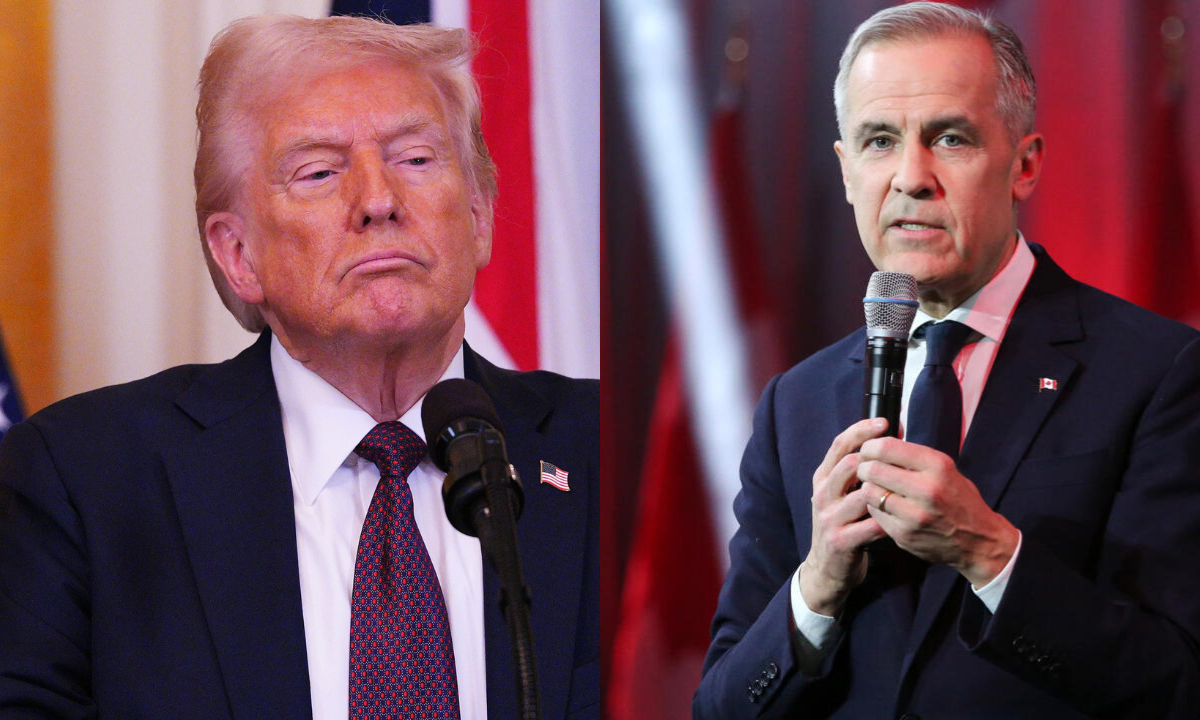
US President Donald Trump on Saturday issued a sharp warning to Canada, saying the United States would impose a 100 per cent tariff on all Canadian goods if Ottawa goes ahead with a trade agreement with China.
Ties between Washington and Ottawa have remained strained since Trump returned to the White House a year ago, marked by recurring disputes over trade and foreign policy. Canadian Prime Minister Mark Carney has openly criticised what he described as a “rupture” in the US-led global order.
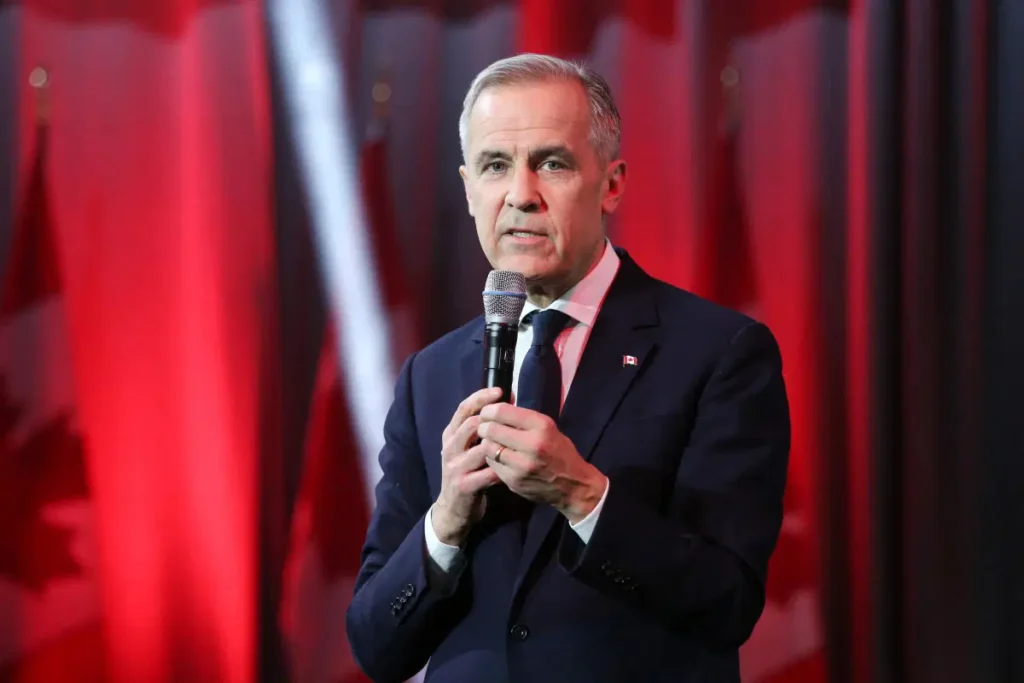
During a visit to Beijing last week, Carney announced what he called a “new strategic partnership” with China, revealing that discussions had produced a “preliminary but landmark trade agreement” aimed at reducing tariffs. Trump, however, cautioned that finalising such a deal would trigger severe retaliation from the United States.
Writing on his Truth Social platform, Trump warned that if Carney “thinks he is going to make Canada a ‘Drop Off Port’ for China to send goods and products into the United States, he is sorely mistaken.”
“China will eat Canada alive, completely devour it, including the destruction of their businesses, social fabric, and general way of life,” Trump said.
He added: “If Canada makes a deal with China, it will immediately be hit with a 100% Tariff against all Canadian goods and products coming into the USA.”
Trump also referred to Carney as “Governor,” a pointed jab linked to his repeated remarks suggesting Canada should become the 51st state of the United States.
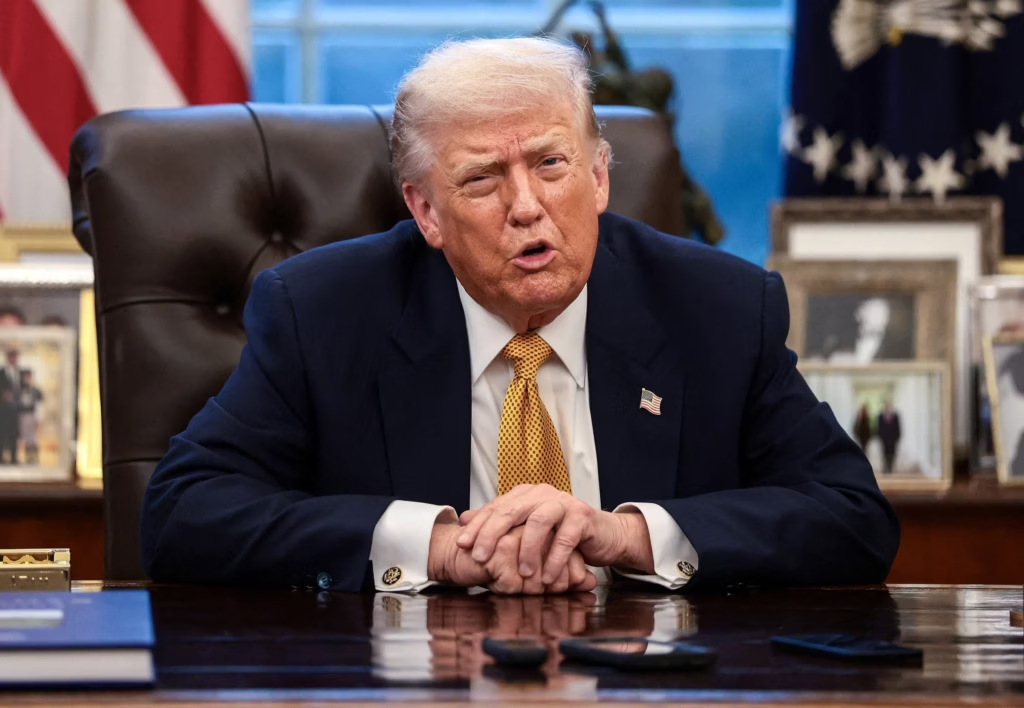
Earlier this week, the US president shared an image online depicting a map with Canada, Greenland and Venezuela overlaid with the American flag, further fuelling tensions.
Tensions between the two leaders have escalated in recent days. Carney, speaking at the World Economic Forum in Davos on Tuesday, received a standing ovation after describing a “rupture” in the global order led by the United States, a comment widely interpreted as a criticism of Trump’s approach to international affairs.
Trump responded a day later in his own Davos remarks and subsequently withdrew an invitation for Carney to join his so-called “Board of Peace,” a body initially focused on postwar Gaza but now seen as having broader ambitions that some critics say could rival the United Nations.
“Canada lives because of the United States. Remember that, Mark, the next time you make your statements,” Trump said.
Carney responded on Thursday, stating: “Canada doesn’t live because of the United States. Canada thrives because we are Canadian,” while still acknowledging what he described as the “remarkable partnership” between the two countries.
Canada remains deeply dependent on trade with the United States, which accounts for more than three-quarters of its exports. Major sectors such as automobiles, aluminium and steel have already been affected by Trump’s global sectoral tariffs, though the impact has been softened by provisions under the existing North American free trade agreement.
Talks to revise that agreement are expected to begin early this year, with Trump repeatedly asserting that the United States does not need Canadian products—a position that could have far-reaching implications for Canada’s economy.
The United States, Canada and Mexico are also set to co-host the World Cup later this year, adding another layer of complexity to the increasingly tense bilateral relationship.
What you should know
The latest standoff between Donald Trump and Mark Carney highlights rising tensions over trade, geopolitics and global influence.
Trump’s threat of sweeping tariffs underscores Washington’s determination to block China from gaining indirect access to US markets through allies.
For Canada, the warning exposes the risks of balancing its heavy economic reliance on the United States with efforts to diversify trade partnerships, particularly with China, at a time when global trade rules and alliances are under growing strain.