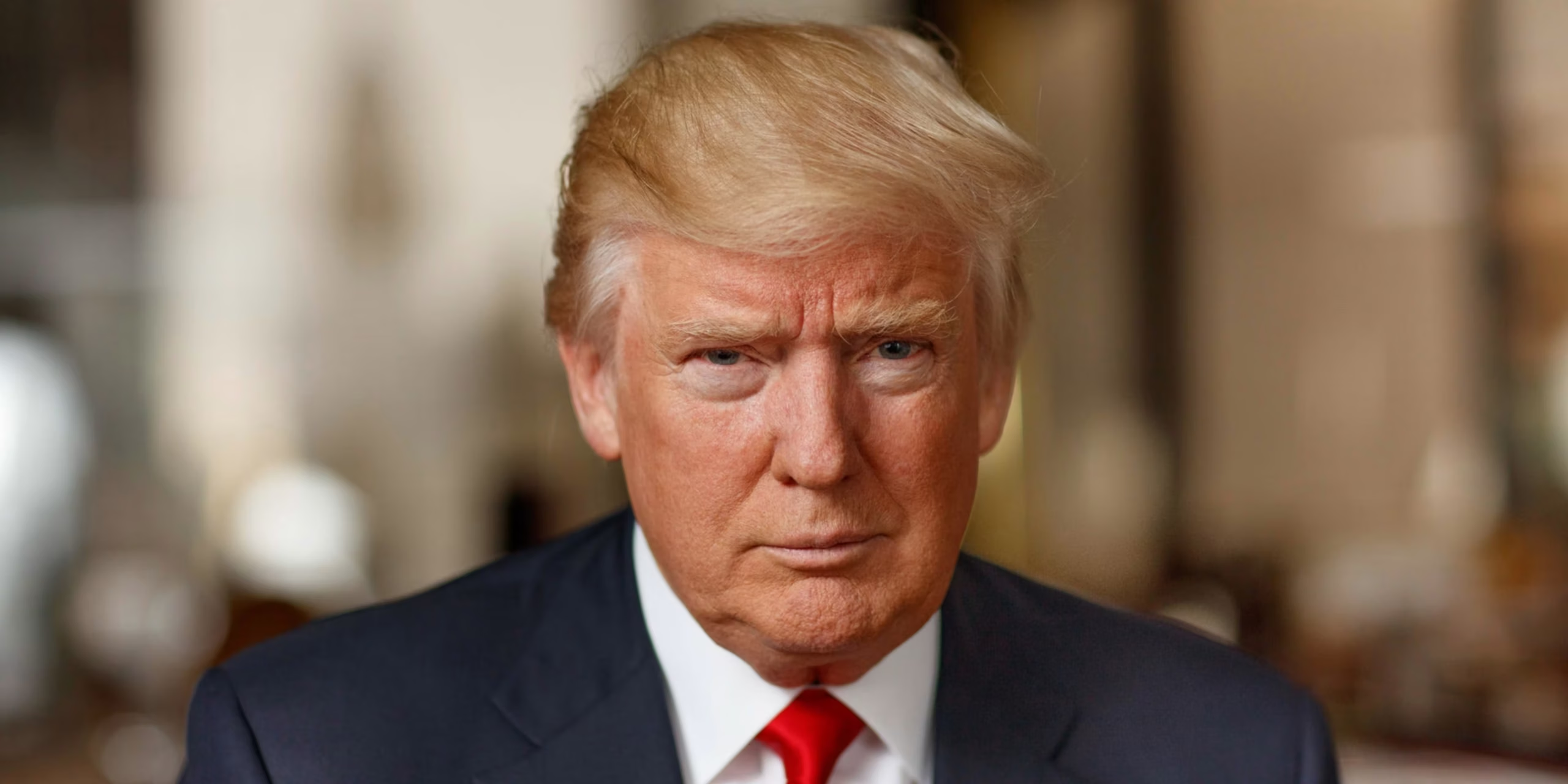
President Donald Trump indicated on Friday that he would postpone considering retaliatory tariffs against China for its purchases of Russian oil but cautioned that such measures could be implemented “in two or three weeks,” depending on developments in the Ukraine conflict.
Speaking with Fox News host Sean Hannity, Trump cited what he characterized as a successful summit with Russian President Vladimir Putin in Alaska as grounds for the reprieve. “Well, because of what happened today, I think I don’t have to think about that,” Trump said. “Now, I may have to think about it in two weeks or three weeks or something, but we don’t have to think about that right now.”
The president’s comments come amid escalating pressure on countries that continue importing Russian energy, with Trump having already implemented punitive measures against some of Moscow’s key trading partners. Last week, the administration imposed an additional 25% tariff on Indian goods, specifically targeting New Delhi’s continued imports of Russian oil despite Western sanctions.
China and India remain the largest purchasers of Russian crude oil, providing Moscow with crucial revenue streams that help sustain its military operations in Ukraine. However, Trump has notably refrained from taking similar action against Beijing, despite China’s significantly larger economic relationship with Russia.
The disparity in treatment reflects the complex economic and geopolitical calculations facing the Trump administration. China’s economy, already experiencing a slowdown under President Xi Jinping’s leadership, would face severe consequences if Trump follows through on his broader threats of Russia-related sanctions and tariffs. Such measures could potentially derail ongoing trade negotiations between Washington and Beijing aimed at reducing tensions between the world’s two largest economies.
Trump has previously threatened both primary sanctions against Moscow and secondary sanctions against nations that continue purchasing Russian oil, positioning these measures as leverage to force an end to the Ukraine conflict. The president’s latest comments suggest that while his meeting with Putin may have yielded some progress, the window for diplomatic resolution remains narrow.
The president’s characterization of the Alaska summit as having “gone very well” provides the first indication of potential movement in what has been a largely stagnant diplomatic process. However, the failure to produce an immediate agreement to resolve or pause the conflict leaves the door open for renewed economic pressure on Russia’s trading partners.
For Beijing, the stakes are particularly high. Beyond its role as Russia’s largest oil customer, China faces the prospect of becoming “the biggest remaining target, outside of Russia” if Trump decides to escalate punitive measures, as one analysis noted. The timing of any such decision could prove crucial for ongoing trade discussions that both sides hope will lower import taxes and reduce bilateral tensions.
The two-to-three-week timeline cited by Trump suggests the administration is closely monitoring developments from the Putin meeting while maintaining pressure for concrete progress on Ukraine. This approach reflects a calculated strategy of offering limited diplomatic breathing room while keeping economic consequences as a credible threat.
As global markets watch for signs of either escalation or de-escalation, Trump’s measured response indicates that while immediate action against China has been shelved, the fundamental policy framework linking energy purchases to geopolitical consequences remains firmly in place.
WHAT YOU SHOULD KNOW
President Trump is giving China a temporary pass on tariffs for buying Russian oil, citing progress from his Alaska summit with Putin. However, he’s keeping the threat alive with a 2-3 week deadline, while already hitting India with 25% tariffs for the same behavior.
This creates a narrow diplomatic window—if the Ukraine situation doesn’t improve soon, China could face severe economic consequences that would hurt its already struggling economy and derail ongoing U.S.-China trade negotiations.