
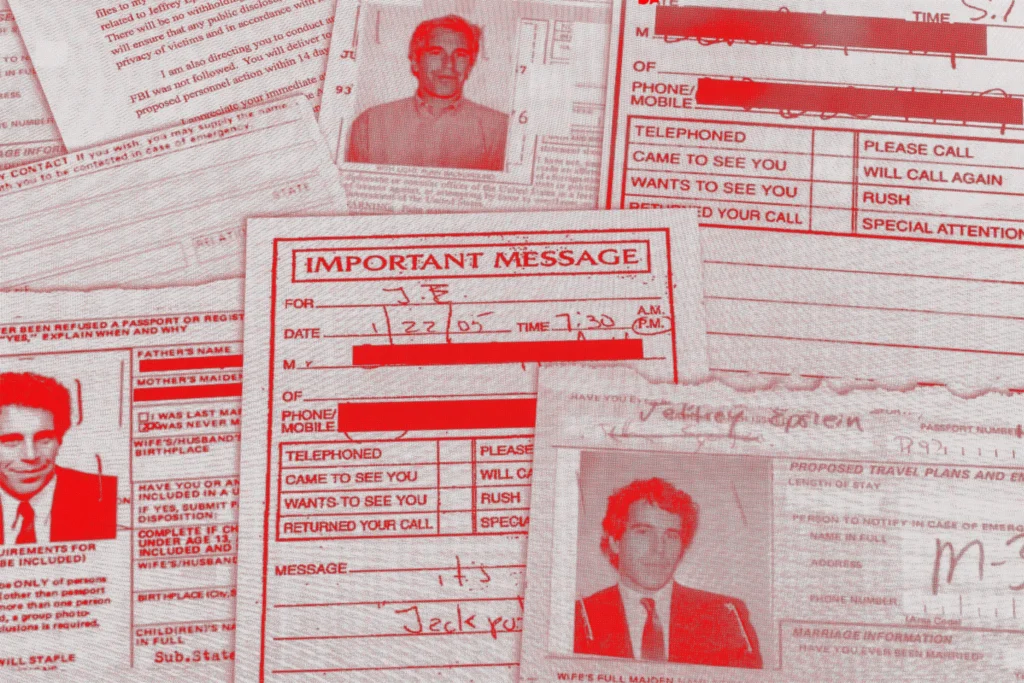
Thousands of additional documents connected to convicted sex offender Jeffrey Epstein were released on Tuesday by the United States Department of Justice, as pressure intensified over the slow pace of disclosure and the extensive redactions applied to the materials.
More than 8,000 files were made publicly accessible, including hundreds of video and audio records. Among them was surveillance footage from August 2019, the same month Epstein was discovered dead in his jail cell while awaiting trial on sex-trafficking charges.

In total, the DOJ uploaded roughly 11,000 document links, although several of those links appeared to be inactive or led to no content.
The disclosures are being made under the Epstein Files Transparency Act, which was passed by Congress with near-unanimous support and signed into law by President Donald Trump. The legislation required that all Epstein-related files be fully released by the previous Friday. However, the Justice Department failed to meet that deadline, prompting criticism from lawmakers across party lines.

Deputy Attorney General Todd Blanche attributed the delay to the scale of the materials involved and the need to protect the identities of more than 1,000 victims. He said the government holds hundreds of thousands of documents and photographs, many of which require careful redaction before public release.
Frustration over the delay has continued to grow. Over the weekend, EFTA co-sponsors Ro Khanna and Thomas Massie warned they may pursue contempt of Congress proceedings against Attorney General Pam Bondi for failing to comply with the law. On Monday, Senate Minority Leader Chuck Schumer went further, introducing a resolution that calls for legal action against the Trump administration for not releasing the full set of Epstein files.
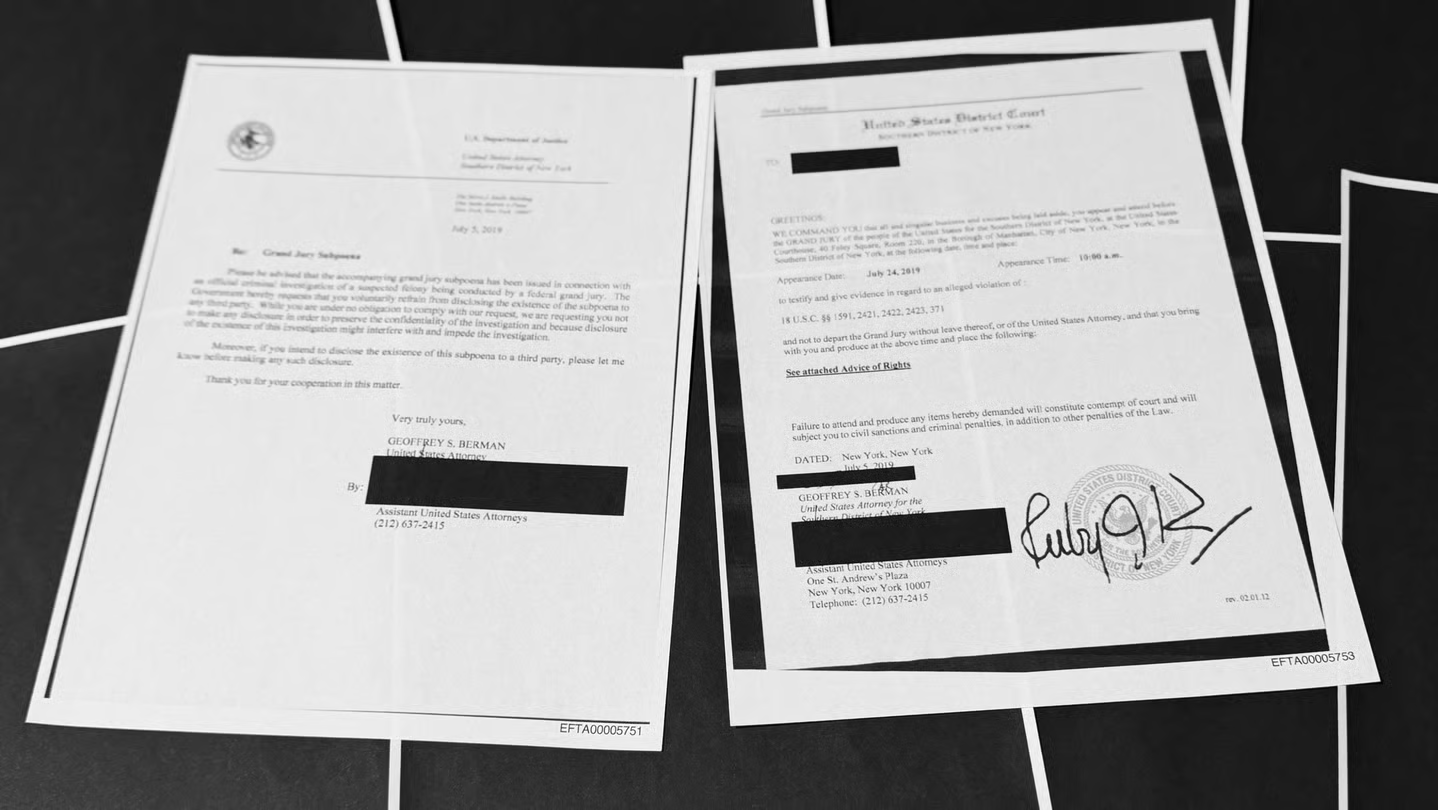
“Instead of transparency, the Trump administration released a tiny fraction of the files and blacked out massive portions of what little they provided,” Schumer said in a statement. “This is a blatant cover-up. Pam Bondi and Todd Blanche are shielding Donald Trump from accountability, and the Senate has a duty to act.”
Blanche rejected claims that the redactions were designed to protect the president, who was once socially connected to Epstein. Speaking on NBC’s “Meet the Press,” he said, “We are not redacting information around President Trump.” He explained that a photograph of Trump was temporarily removed out of concern for potential victims, before being restored when officials concluded there was “no evidence that any Epstein victims are depicted.”
Trump had initially resisted calls for the files to be released, but later yielded to pressure from Congress and signed the law mandating disclosure. Although he severed ties with Epstein years before the financier’s arrest and has not been accused of wrongdoing, skepticism has grown over the administration’s handling of the release.
The heavy redactions and tightly managed publication process have fueled doubts about whether the disclosures will end long-standing suspicions of a broader cover-up involving powerful figures. The first batch of files released last Friday included photographs of former president Bill Clinton and several high-profile celebrities, including Mick Jagger and Michael Jackson, all of whom were known to have crossed paths with Epstein socially.
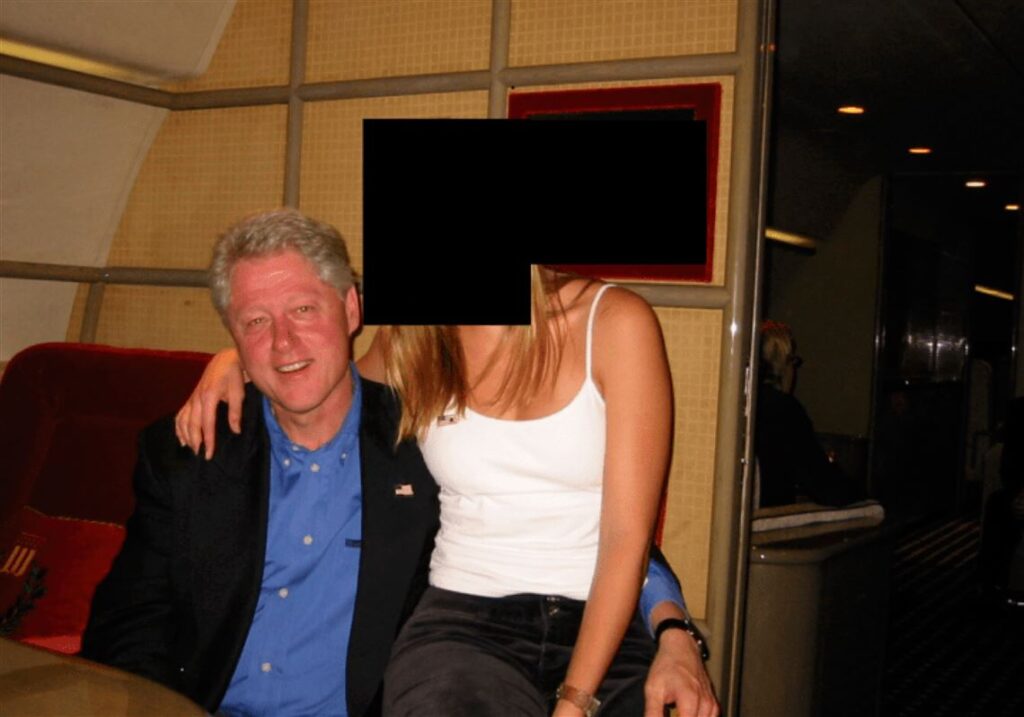
Clinton, responding through his spokesman Angel Urena, urged the Justice Department to make public any documents related to him, insisting he had nothing to hide. “Someone or something is being protected. We do not know who, what, or why. But we do know this: We need no such protection,” Clinton said. He added that the DOJ’s approach was “not about transparency, but about insinuation using selective releases to imply wrongdoing about individuals who have already been repeatedly cleared by the very same Department of Justice.”
Epstein, a wealthy financier with extensive connections to political and social elites, died in custody in 2019 in what authorities ruled a suicide. His former girlfriend, Ghislaine Maxwell, remains the only person convicted in relation to his crimes and is currently serving a 20-year prison sentence for recruiting underage girls on his behalf.
What you should know
The release of additional Epstein-related files is part of a legal requirement under the Epstein Files Transparency Act, which mandates full disclosure of government records linked to the case.
While thousands of documents have now been made public, delays, broken links, and heavy redactions have sparked bipartisan criticism and accusations of a cover-up. Lawmakers argue the Justice Department has failed to comply fully with the law, while officials say they are protecting victims’ identities.
The controversy highlights ongoing public distrust surrounding Epstein’s connections and the government’s handling of sensitive information.