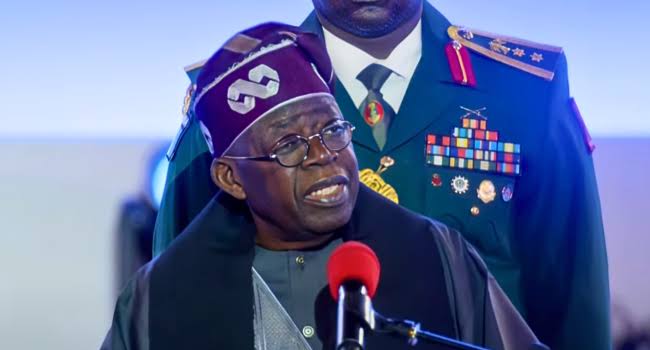
President Bola Ahmed Tinubu has made a bold call for a shift in the economic structure of West African nations, urging them to abandon the long-standing practice of exporting raw mineral resources without value addition.
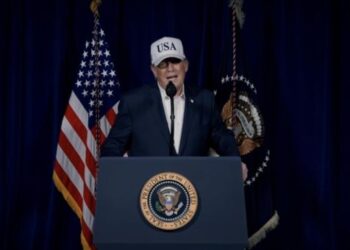
Speaking at the inaugural West Africa Economic Summit (WAES) on Saturday, held at the Bola Ahmed Tinubu International Conference Centre in Abuja, the Nigerian leader emphasized the pressing need to transform regional wealth into tangible economic development.
In his keynote address, President Tinubu, who currently chairs the ECOWAS Authority of Heads of State and Government, stressed that exporting unprocessed mineral resources — a model he termed the “pit-to-port” approach — is no longer sustainable if the region hopes to generate employment, drive innovation, and secure long-term prosperity. He said, “The era of warm pit to the port must end. We must turn our mineral wealth into domestic economic value, jobs, technology, and manufacturing.” According to Tinubu, resource abundance is no longer enough in an era where competitiveness depends on the ability to process and innovate. “To be resource-rich is not enough — we must become value chain smart and invest in local processing and regional manufacturing,” he added.
The WAES, a precursor to the 67th Ordinary Summit of ECOWAS scheduled for Sunday at the State House Conference Centre in Abuja, was conceptualized to push forward the agenda of regional economic integration. President Tinubu lamented the low level of trade among West African countries, stating that intraregional trade continues to lag below 10 per cent. He attributed this not to a lack of political will but to gaps in policy alignment and infrastructural coordination. “Opportunity alone does not guarantee transformation. The global economy will not wait for West Africa to get its hands together — nor should we,” he said.
Highlighting the urgency of the region acting in unison, Tinubu advocated for the strengthening of regional value chains and the harmonization of national policies. He explained that collective investment in infrastructure such as energy, transportation, and data systems would be essential for the region’s economic stability and growth. “Rather than competing in isolation or relying on external partners, we must strengthen our regional value chain, invest in infrastructure, and coordinate our policies,” the president stressed.
Central to his vision is the region’s young population, which Tinubu described as its most powerful asset — but one that requires strategic support to avoid becoming a burden. He emphasized investment in education, digital technology, and entrepreneurship as non-negotiables if the youth are to become engines of transformation rather than symbols of neglect. “Our prosperity depends on regional supply chains, energy networks, and data frameworks. We must design them together, or they will collapse separately,” he warned.
Using existing joint projects like the Lagos-Abidjan highway, the West African Power Pool, and regional creative industry initiatives as examples, Tinubu stated that West Africa already has the blueprint for effective cooperation. What remains, he insisted, is the political and institutional will to move beyond policy declarations to actual implementation. “We must move from declarations to concrete deals — from policy frameworks to practical implementation,” he urged.
As global attention shifts to the next wave of industrial revolutions, Tinubu warned against Africa missing out yet again, recalling how the continent was excluded during Europe’s earlier waves of industrial advancement. “Europe left Africa behind in previous industrial revolutions. We cannot afford to be left behind again,” he said. He noted that though rare minerals have become the backbone of modern technology, their real value lies in the capacity to harness them for industrial use through innovation and a conducive business environment. “We must unleash our people’s entrepreneurial spirit, supported by market-friendly policies and the rule of law,” Tinubu concluded.
The summit drew high-level participation from across the region. Presidents from eight West African countries — Ghana, Liberia, Sierra Leone, Senegal, The Gambia, Benin, Togo, and Guinea-Bissau — were in attendance. The gathering also brought together ministers from ECOWAS member states overseeing finance, trade, infrastructure, and foreign affairs. Representatives of regional bodies, including the West African Monetary Agency (WAMA), West African Monetary Institute (WAMI), ECOWAS Bank for Investment and Development (EBID), the West African Economic and Monetary Union (UEMOA), and the African Continental Free Trade Area (AfCFTA) Secretariat, joined private sector stakeholders and policy experts in the conversation.
To reinforce inclusivity, President Tinubu extended formal invitations to countries in the Alliance of Sahelian States as well as Mauritania, signaling a broader vision for collective development across West Africa. Special envoys led by Ambassador Bianca Odumegwu-Ojukwu and Ambassador Sola Enikanolaiye had earlier visited neighboring nations to deliver the invitations, underscoring Nigeria’s commitment to broad-based dialogue and regional collaboration.
With expectations high, the WAES is anticipated to deliver tangible strategies to drive regional growth, positioning West Africa as a more cohesive, investible, and competitive economic bloc in an increasingly complex global landscape.
What you should know
President Tinubu used the West Africa Economic Summit to push for the end of raw mineral exports and to advocate for local processing and regional manufacturing.
He warned that West Africa must act quickly and collectively to build strong infrastructure and economic coordination or risk falling behind once again in the global industrial race.