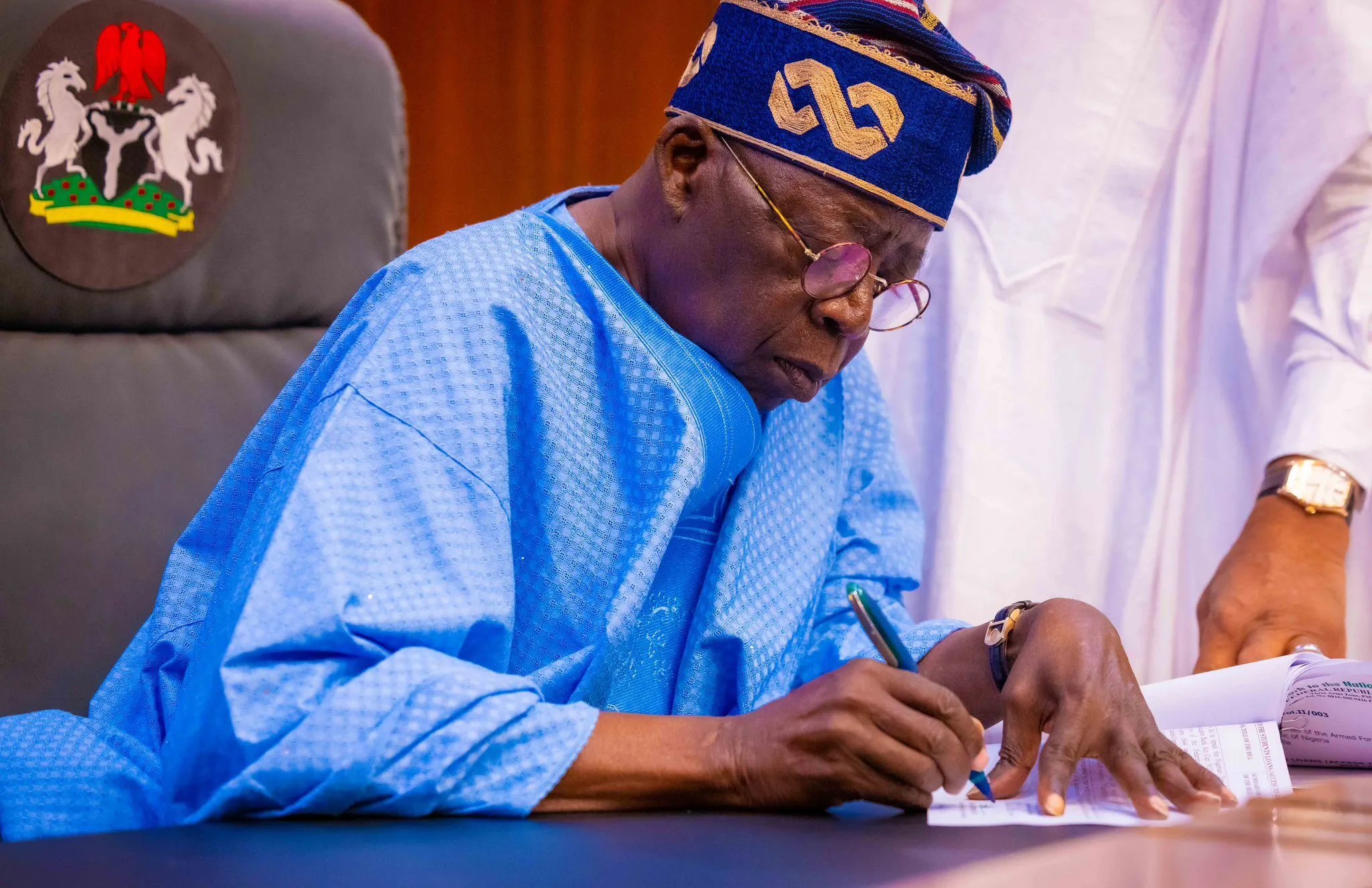
President Bola Ahmed Tinubu has officially signed into law four major tax reform bills recently passed by the National Assembly, marking what the presidency describes as a transformative milestone in Nigeria’s fiscal administration.
The signing ceremony, held Thursday at the Presidential Villa, was attended by the leadership of the National Assembly, including the Senate President and Speaker of the House of Representatives, as well as state governors, cabinet ministers, presidential aides, and a cross-section of lawmakers.
The newly signed legislations include the Nigeria Tax Bill, the Nigeria Tax Administration Bill, the Nigeria Revenue Service (Establishment) Bill, and the Joint Revenue Board (Establishment) Bill. The bills had earlier passed through rigorous legislative scrutiny and stakeholder consultations involving the private sector, economic experts, and civil society groups.
In a statement released by the presidency shortly after the ceremony, the administration emphasized that the new tax framework aims to overhaul Nigeria’s current tax system. It is designed to enhance efficiency, broaden the tax base, and encourage compliance, all while creating a more investor-friendly climate.
“These laws are expected to transform tax administration in Nigeria by boosting revenue generation, improving the ease of doing business, and attracting both local and foreign investment,” the presidency said.
The statement further noted that the legislative move aligns with Tinubu’s broader economic reform agenda, which includes improving fiscal discipline, curbing leakages, and building a more transparent and accountable tax system.
The tax reforms are also seen as critical to reducing the country’s reliance on borrowing and oil revenues, which have proven volatile in recent years. With a more robust tax structure, the government hopes to stabilize public finances and provide more resources for critical infrastructure and social services.
While full implementation details are yet to be released, officials say the federal government will soon roll out executive guidelines and regulatory frameworks to ensure the smooth execution of the new tax regime.
The tax reform initiative has been in development since the early months of Tinubu’s presidency, with a special Presidential Committee on Fiscal Policy and Tax Reforms driving the effort. That committee worked closely with the Federal Inland Revenue Service (FIRS), state tax authorities, and the Ministry of Finance to produce bills aimed at consolidating various tax laws and clarifying tax obligations across the three tiers of government.
What you should know
President Tinubu has signed into law four key tax reform bills aimed at modernizing Nigeria’s tax system. The reforms are intended to enhance revenue generation, improve business operations, and attract investments, forming a central part of Tinubu’s broader economic revival strategy.